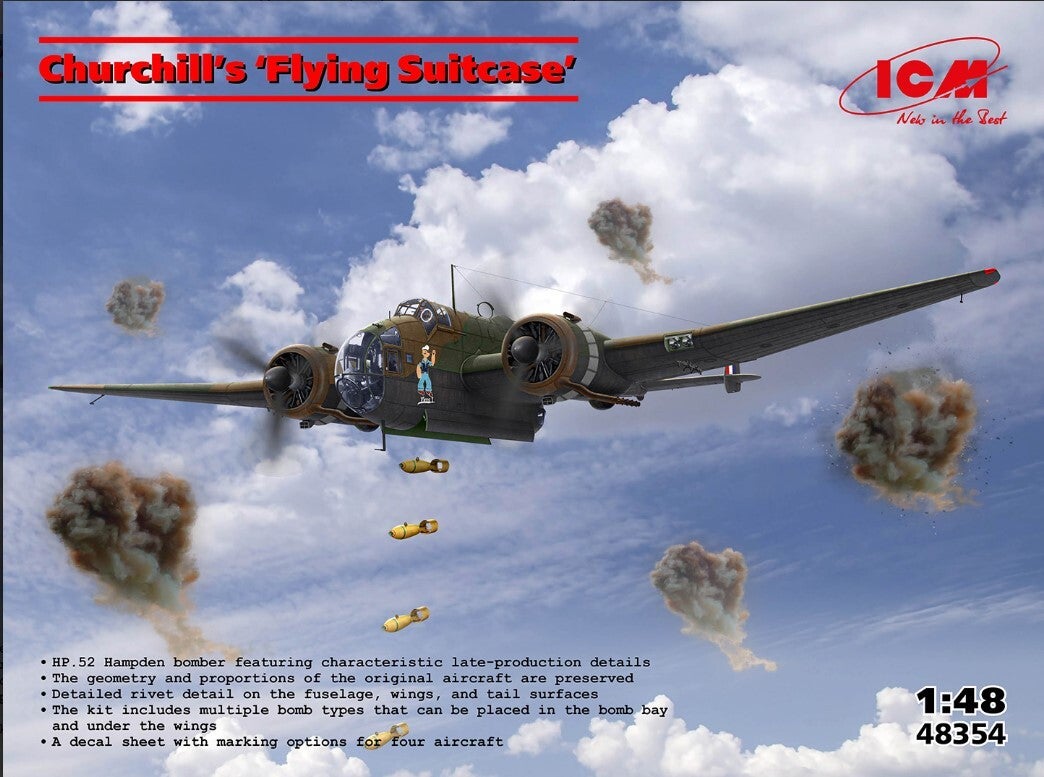
ICM : REF : 48354 : 1:48 : AIRCRAFT KIT : UK (RAF) : HANDLEY PAGE : HP.52 Hampden TB.Mk.I (LATE) (Churchill’s “Flying Suitcase”)
ICM REF :
48354
Manufacturer : ICM (Ukraine).
EAN : 4823044412051.
Scale-Model release Date : 17.04.2026.
Box Size : 410 x 260 x 55 mm.
Model Size : 341 х 442 mm.
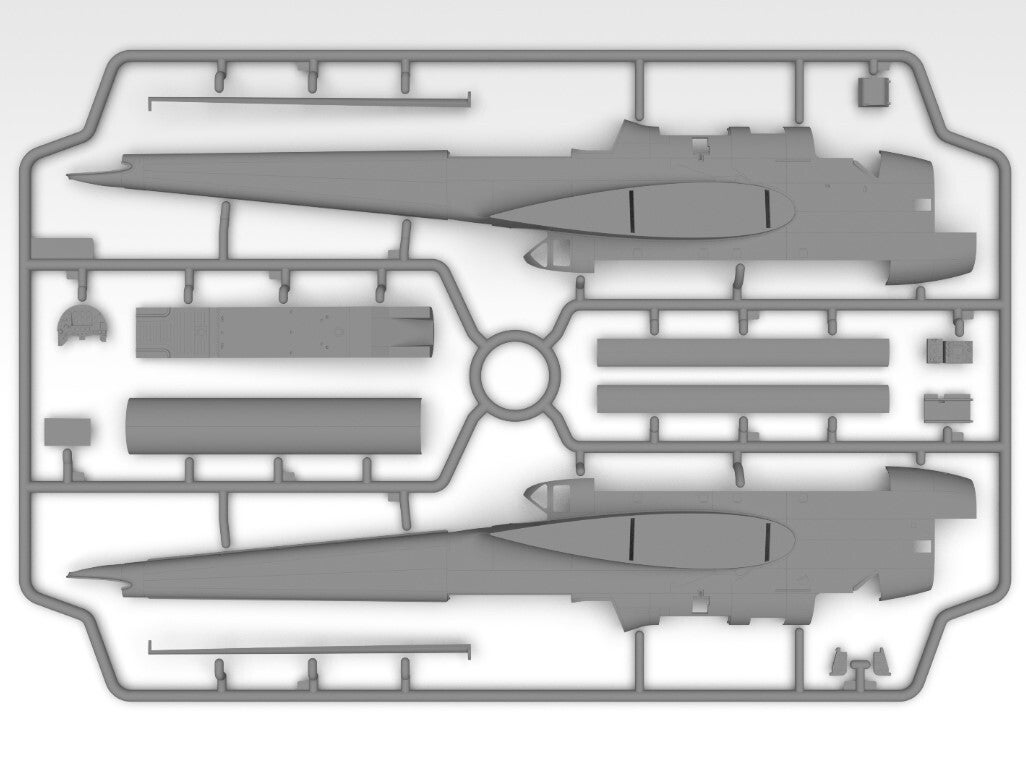
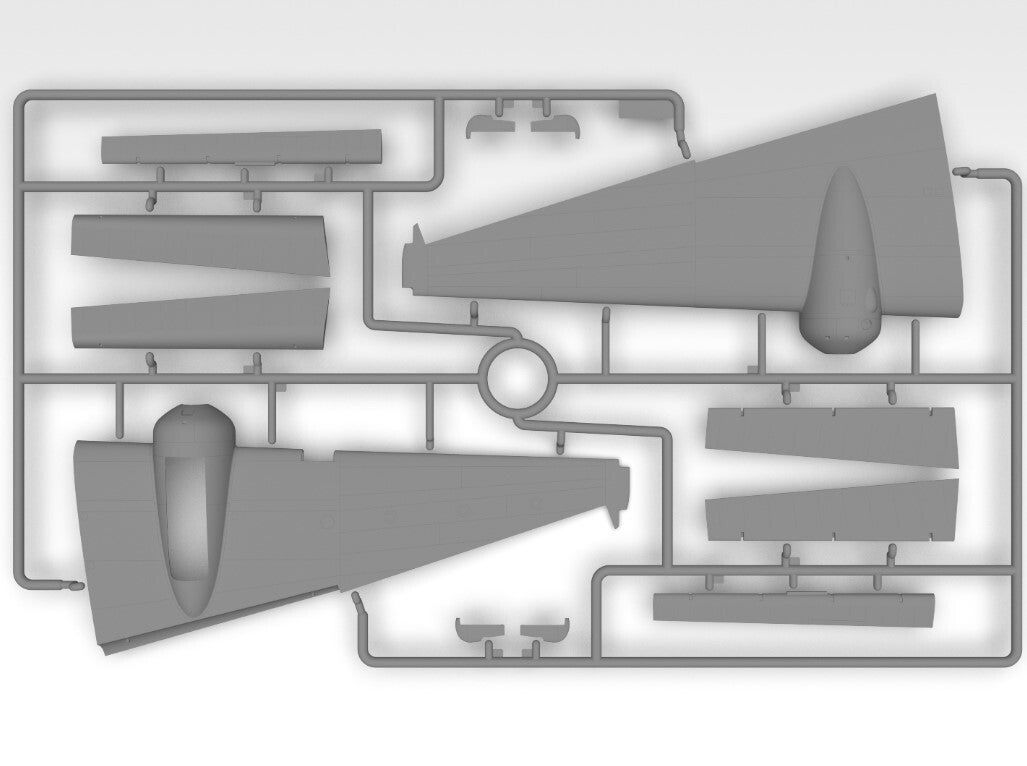
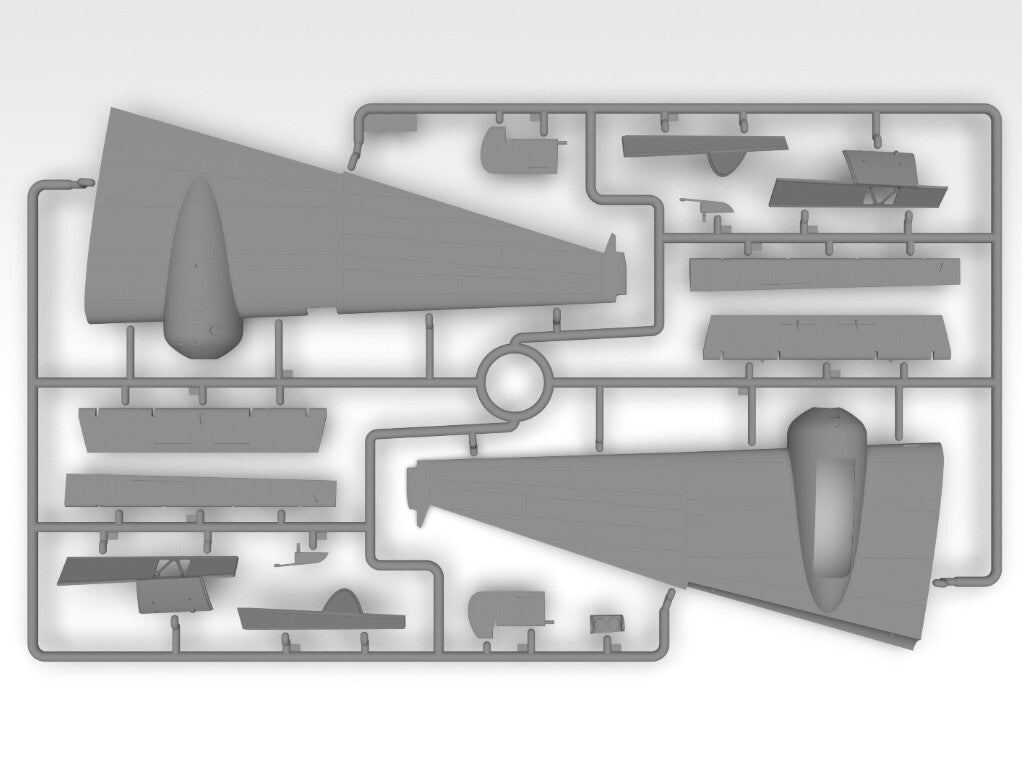
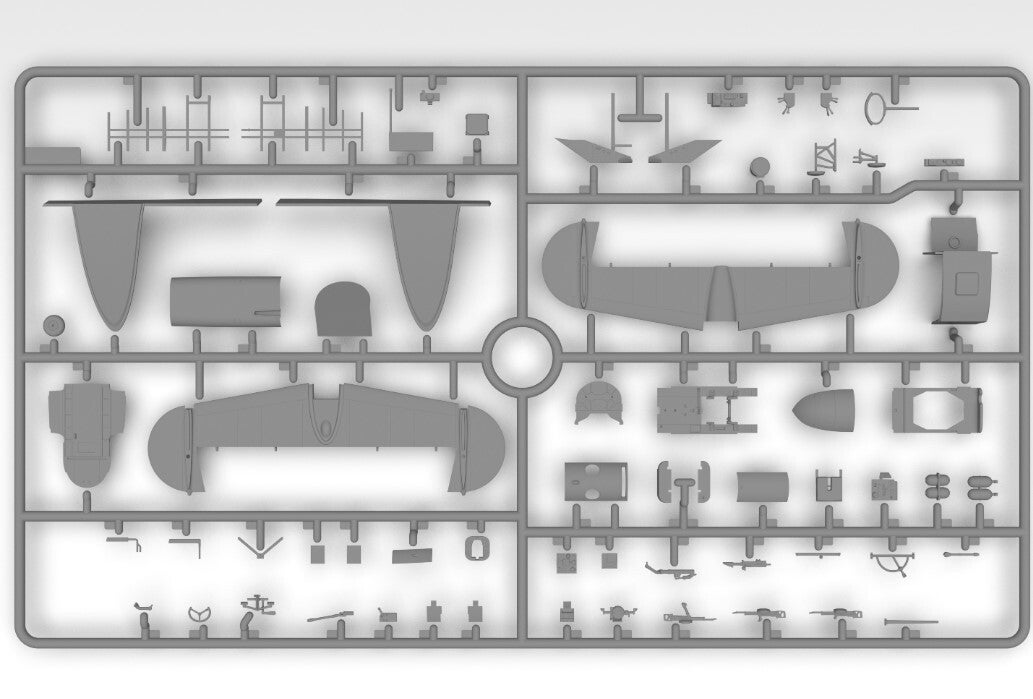
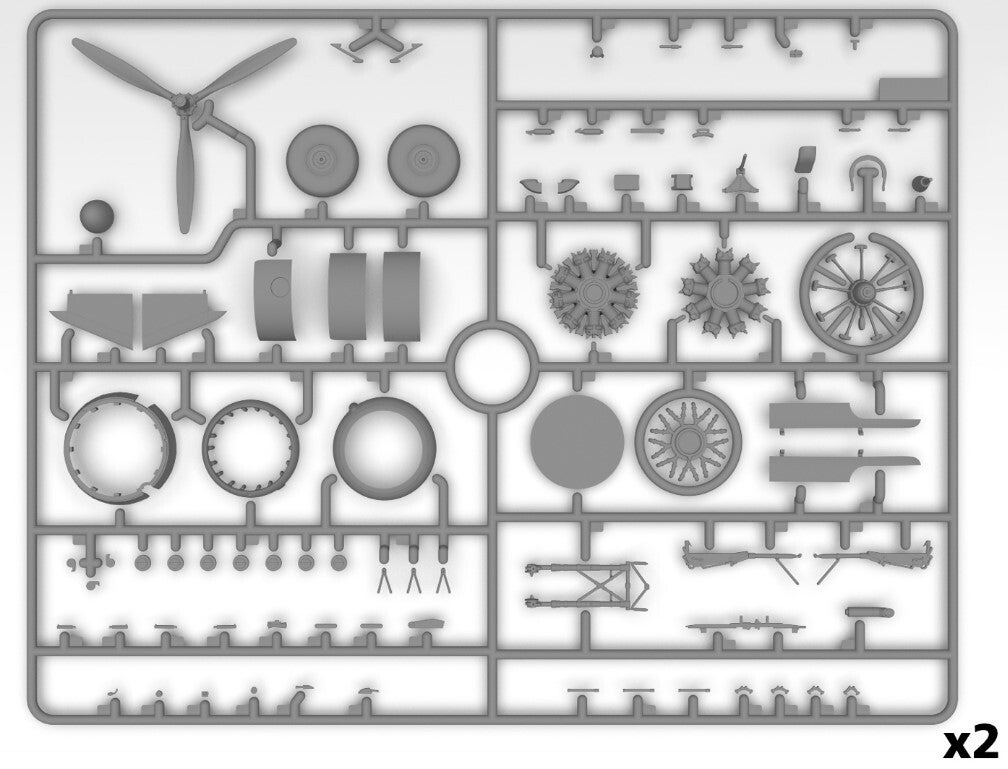
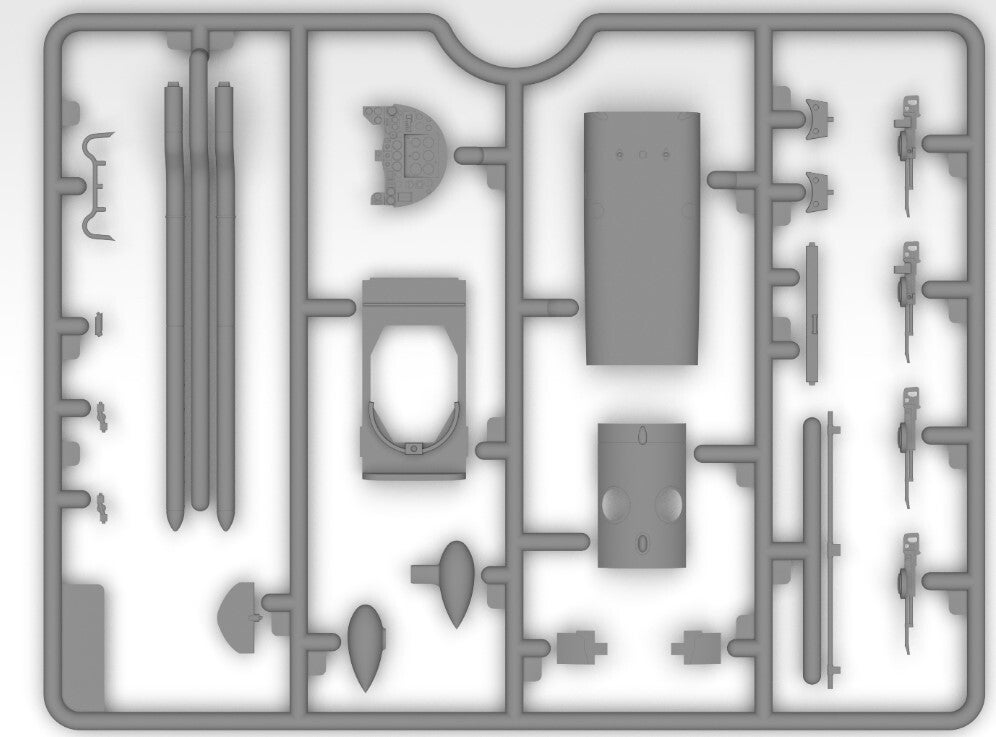
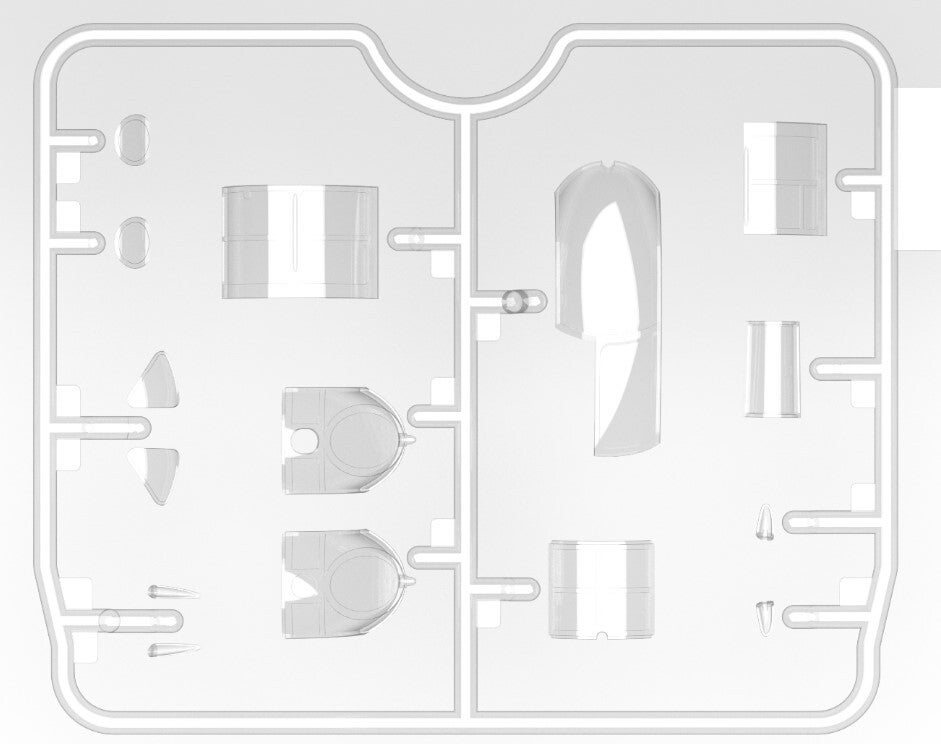
Number of details : 271.
Scale : 1:48
---
Churchill’s “Flying Suitcase”.
In June 1936, the prototype of a new bomber, developed in response to updated British Air Ministry requirements, took to the skies. The Royal Air Force required a twin-engine strike aircraft with an enclosed cockpit, retractable landing gear, and the capability to carry a relatively large bomb load over long distances. The aircraft was designed by a team led by Dr. Gustav Lachmann.
Following a series of trials, serial production of the new bomber began in the spring of 1938. The aircraft received the designation HP.52 and the name Hampden, in honor of John Hampden, a 17th-century defender of civil liberties. The first production aircraft entered operational service in the autumn of the same year, and by July 1940, Handley Page had produced 500 units.
Starting in February 1940, English Electric also joined production, manufacturing an additional 770 aircraft by March 1942.
The bomber featured a distinctive fuselage design — narrow and vertically deep — which earned it the nickname “Flying Suitcase.” Over time, the HP.52 Hampden underwent several external modifications, including redesigns of the nose section and cockpit glazing.
With the introduction of newer heavy bombers, the Hampden was gradually withdrawn from RAF Bomber Command service. However, it continued to operate with RAF Coastal Command, where it served effectively as a long-range torpedo bomber.
---
La « Valise volante » de Churchill.
En juin 1936, le prototype d'un nouveau bombardier, conçu pour répondre aux exigences actualisées du ministère de l'Air britannique, effectua son vol inaugural. La Royal Air Force avait besoin d'un avion d'attaque bimoteur doté d'un cockpit fermé, d'un train d'atterrissage rétractable et capable d'emporter une charge de bombes relativement importante sur de longues distances. L'appareil fut conçu par une équipe dirigée par le Dr Gustav Lachmann.
Après une série d'essais, la production en série du nouveau bombardier débuta au printemps 1938. L'avion reçut la désignation HP.52 et le nom de Hampden, en hommage à John Hampden, défenseur des libertés civiles du XVIIe siècle. Le premier appareil de série entra en service opérationnel à l'automne de la même année et, en juillet 1940, Handley Page en avait produit 500 exemplaires.
À partir de février 1940, English Electric participa également à la production, fabriquant 770 appareils supplémentaires jusqu'en mars 1942.
Le bombardier se distinguait par son fuselage étroit et haut, ce qui lui valut le surnom de « Valise volante ». Au fil du temps, le HP.52 Hampden subit plusieurs modifications externes, notamment au niveau du nez et du vitrage du cockpit.
Avec l'arrivée de bombardiers lourds plus modernes, le Hampden fut progressivement retiré du service du Bomber Command de la RAF. Il continua cependant à opérer au sein du Coastal Command de la RAF, où il servit efficacement comme bombardier-torpilleur à long rayon d'action.
---