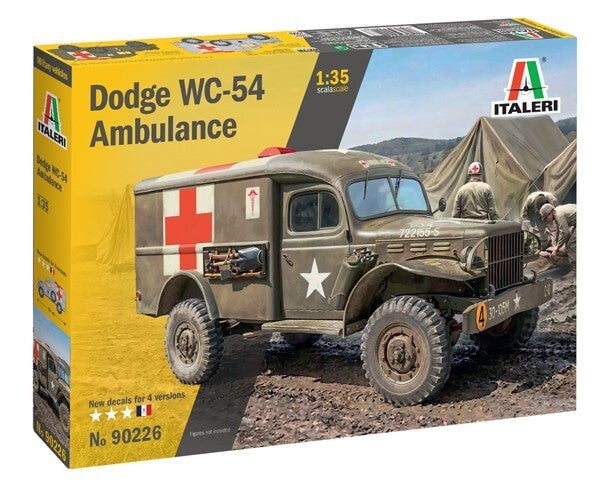
ITALERI : REF : 90226 : 1:35 : US : DODGE : WC54 (Ambulance)
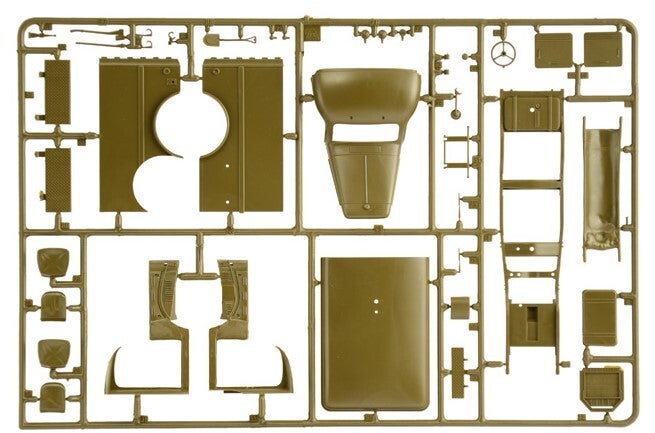
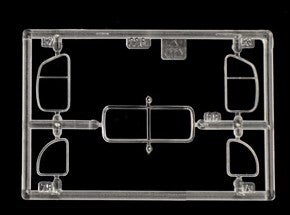
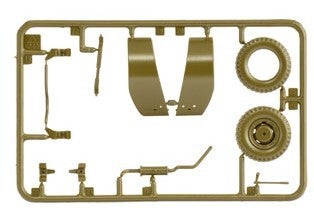
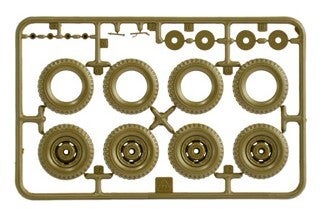
ITALERI REF :
90226
Manufacter :
ITALERI (Italy).
EAN : 8001283902267.
Scale :
1:35
---
Description :
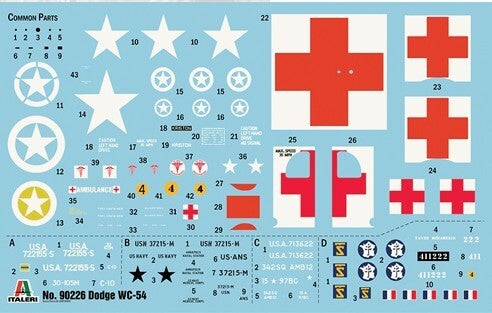
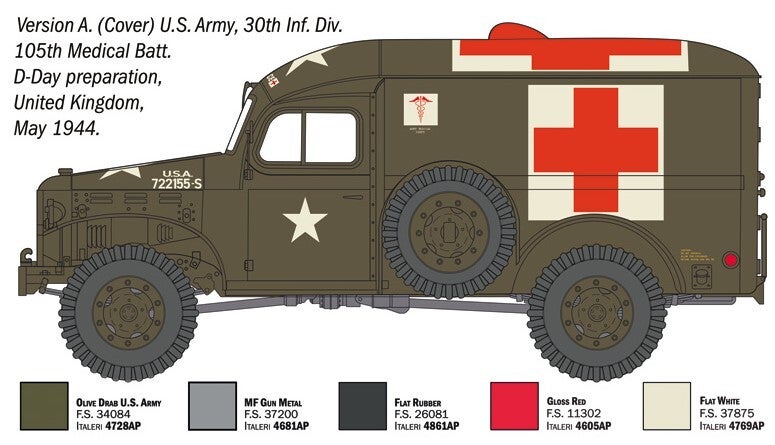
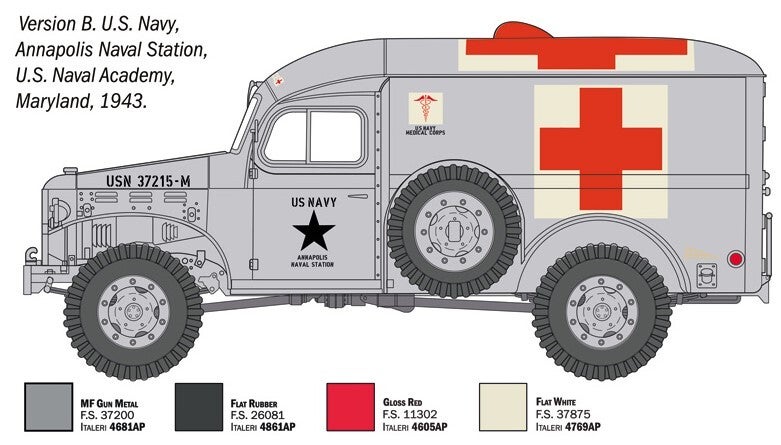
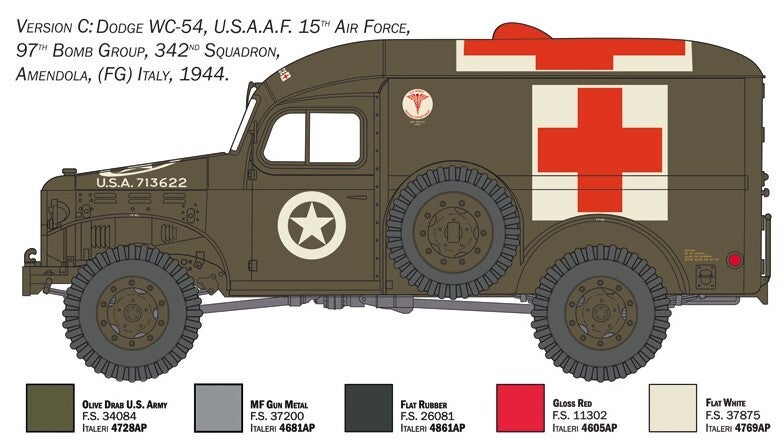
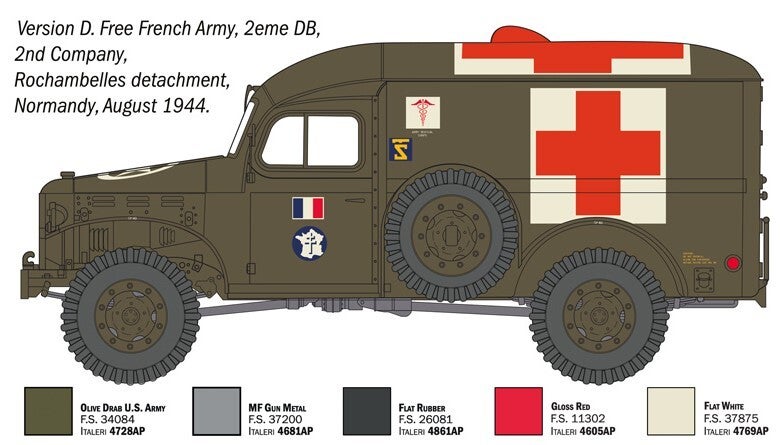
NEW DECALS FOR 4 VERSIONS - COLOR INSTRUCTION SHEET.
FIGURE NOT INCLUDED.
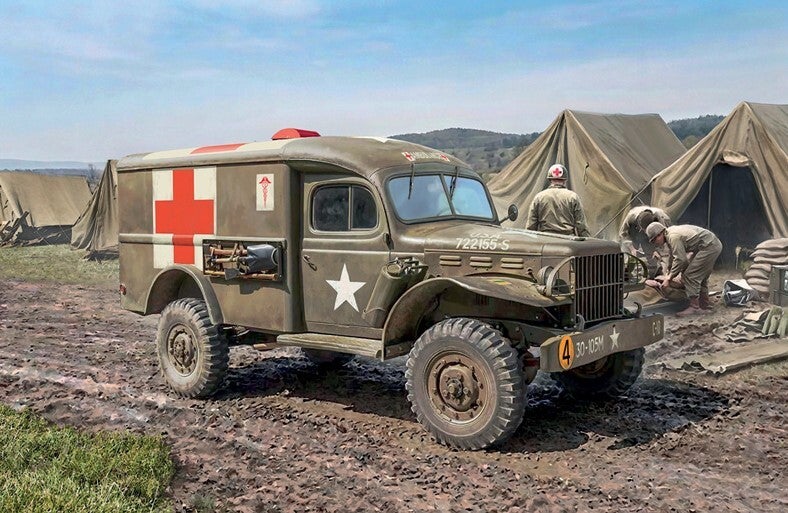
The Dodge WC range of military transport vehicles was produced on a large scale by American industry during the Second World War. The design proved extremely successful and, together with the famous ¼-ton Willys Jeep, the ¾-ton Dodge WC “Beeps” was one of the most widely produced vehicles manufactured by American factories during World War II. It made a significant contribution to meeting the logistical needs of the U.S. Army on the various fronts of the conflict. Among its many versions, the Dodge WC-54 “Ambulance” was one of the most widely used medical and rescue vehicles employed during the Second World War. With its 4x4 configuration, it could operate on difficult terrain and, thanks to its specially designed interior, was capable of carrying up to four stretchers or transporting numerous wounded soldiers in a seated position. It effectively ensured the connection between the front lines and the field hospitals located behind the front.
---
Description :
NOUVEAUX DÉCALCOMANIES POUR 4 VERSIONS – NOTICE DE MONTAGE EN COULEUR.
FIGURINE NON INCLUSE.
La gamme de véhicules de transport militaire Dodge WC a été produite à grande échelle par l'industrie américaine durant la Seconde Guerre mondiale. Sa conception s'est révélée extrêmement réussie ; aux côtés de la célèbre Jeep Willys ¼ de tonne, le Dodge WC ¾ de tonne — surnommé « Beep » — fut l'un des véhicules les plus largement produits par les usines américaines pendant le conflit. Il a joué un rôle déterminant pour répondre aux besoins logistiques de l'armée américaine sur les différents théâtres d'opérations. Parmi ses nombreuses variantes, le Dodge WC-54 « Ambulance » fut l'un des véhicules sanitaires et de secours les plus utilisés durant la Seconde Guerre mondiale. Grâce à sa transmission 4x4, il pouvait évoluer sur des terrains difficiles ; son aménagement intérieur spécifique lui permettait de transporter jusqu'à quatre brancards ou un grand nombre de soldats blessés en position assise. Il assurait efficacement la liaison entre les lignes de front et les hôpitaux de campagne situés à l'arrière.
---