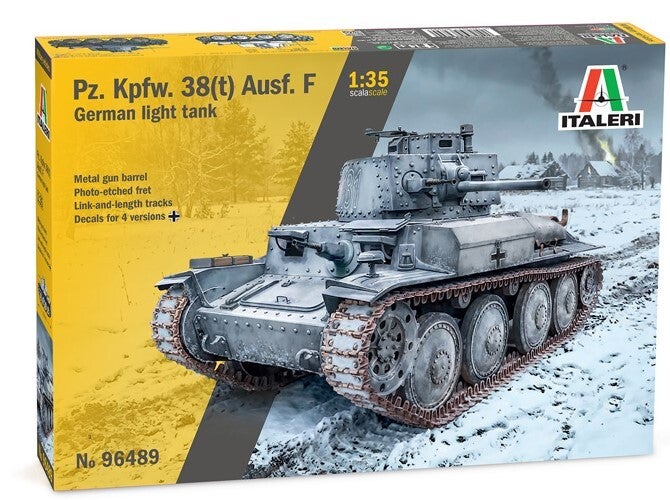
ITALERI : REF : 96489 : 1:35 : German PZ. KPFW. 38(T) AUSF. F ("Ghost Division")
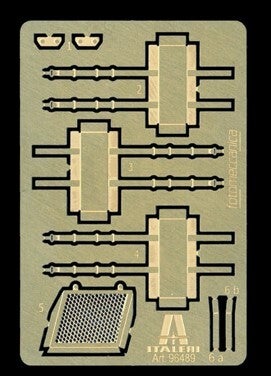
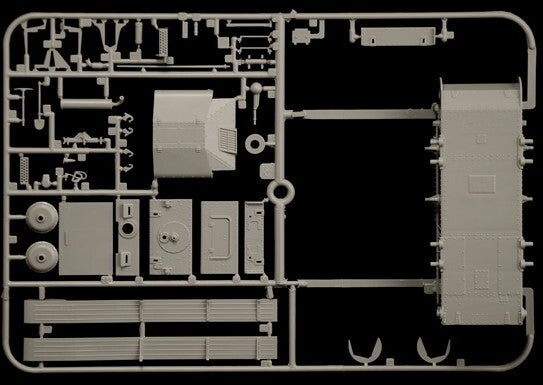
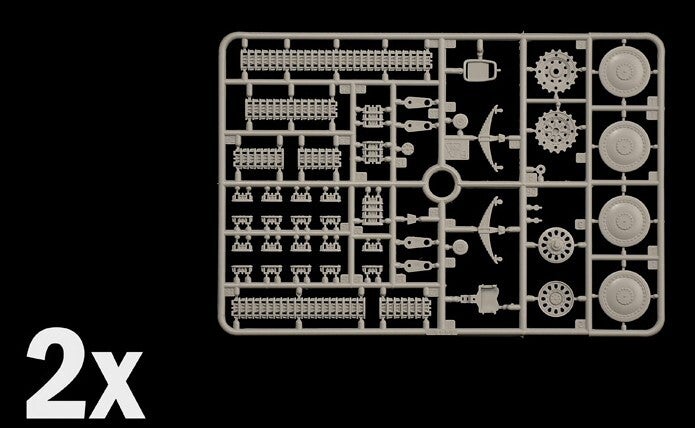
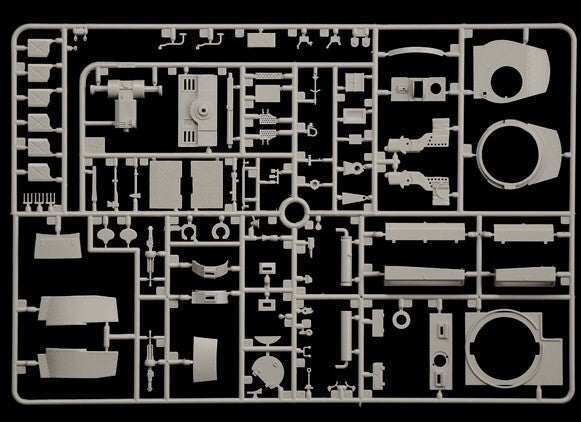
ITALERI REF :
96489
Manufacter :
ITALERI.
EAN : 8001283964890.
Scale :
1:35
---
Description :
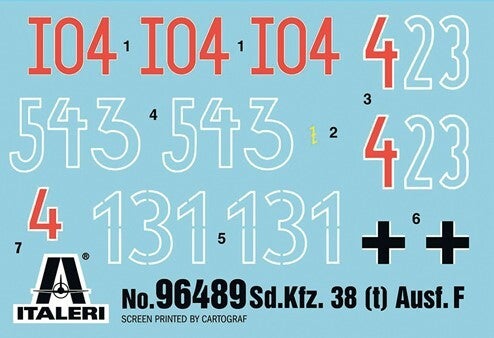
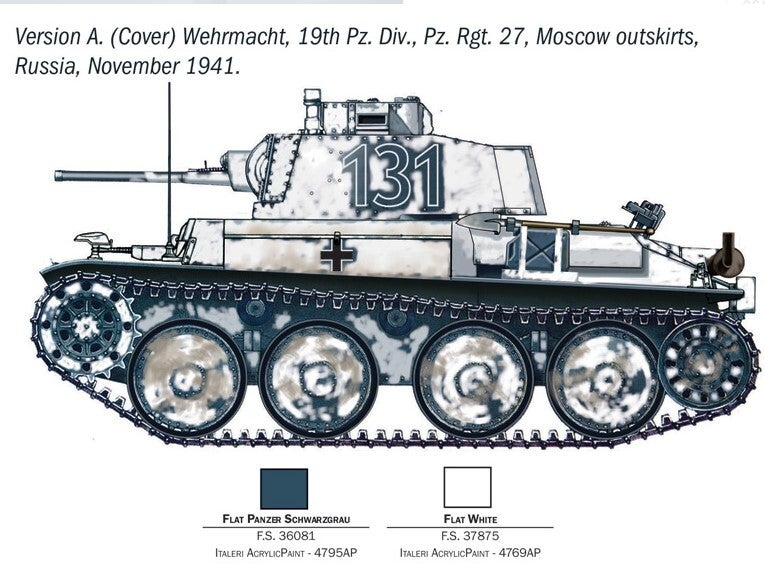
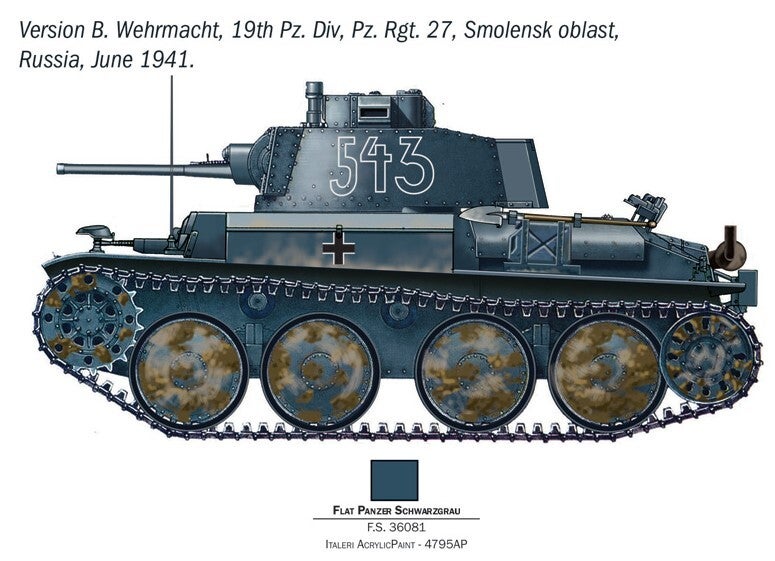
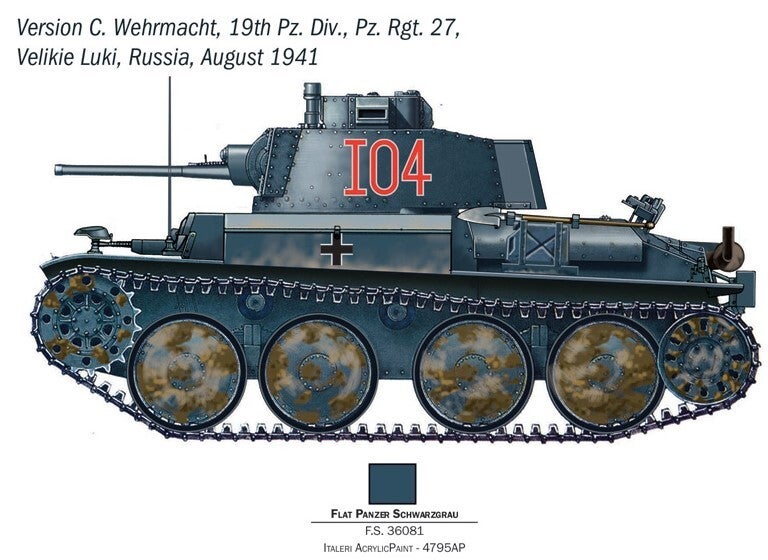
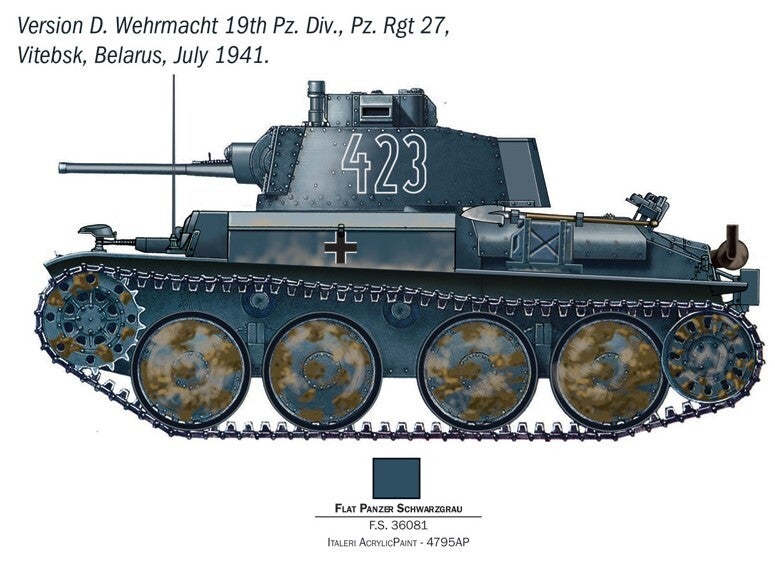
METAL GUN BARREL - PHOTO-ETCHED FRET - LINK-AND-LENGTH TRACKS - DECALS FOR 4 VERSIONS - COLOR INSTRUCTION SHEET.
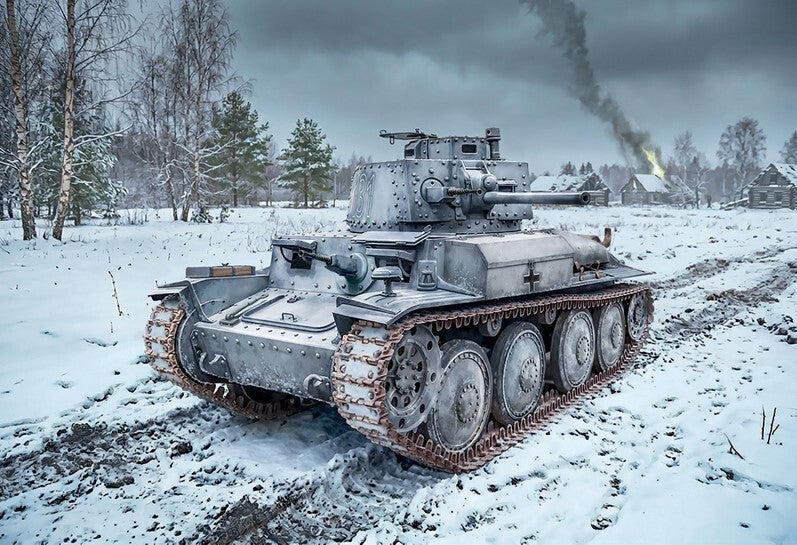
The Pz.Kpfw. 38(t) was one of the main light tanks employed by Germany at the beginning of the Second World War. Designed and produced in Czechoslovakia by ČKD, it was widely used by the Wehrmacht following the German occupation of the country in March 1939. A light and fast armoured vehicle, it proved ideal for the role of combat tank in support of the fast-moving German units during the early stages of the conflict. The armour was made of bolted plates, while the main armament consisted of a 37 mm gun mounted in the turret, suitable for engaging the enemy armoured vehicles of the period. The Pz.Kpfw. 38(t) was used during the Polish Campaign of 1939 and the French Campaign of 1940. It was also employed by the famous 7th Panzer Division, the “Ghost Division”, commanded by Erwin Rommel.
---
Description :
Canon en métal – Pièces en photodécoupe – Chenilles « maillon par maillon » (link-and-length) – Décalcomanies pour 4 versions – Notice de montage en couleur.
Le Pz.Kpfw. 38(t) fut l'un des principaux chars légers utilisés par l'Allemagne au début de la Seconde Guerre mondiale. Conçu et produit en Tchécoslovaquie par ČKD, il fut largement employé par la Wehrmacht après l'occupation du pays par l'Allemagne en mars 1939. Véhicule blindé léger et rapide, il s'avéra idéal pour servir de char de combat en soutien aux unités allemandes très mobiles durant les premières phases du conflit. Son blindage était constitué de plaques boulonnées, tandis que son armement principal consistait en un canon de 37 mm monté en tourelle, capable d'engager les véhicules blindés ennemis de l'époque. Le Pz.Kpfw. 38(t) fut engagé lors de la campagne de Pologne en 1939 et de la campagne de France en 1940. Il fut également utilisé par la célèbre 7e Panzerdivision, la « Division fantôme », commandée par Erwin Rommel.
---