RODEN : REF : 001 : 1:72 : German (Empire) : Albatros D.I (WWI)
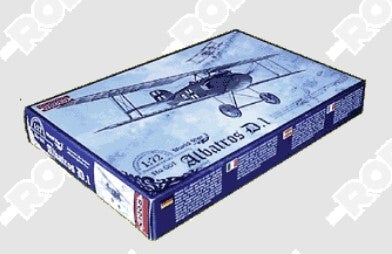
RODEN REF :
001
Manufacter :
RODEN MODEL (Ukraine).
EAN : 4823017700062.
Scale :
1:72
---
More History :
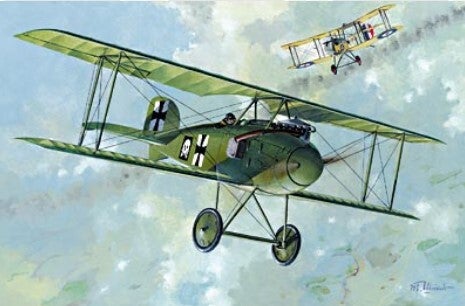
The famous Fokker Eindecker was Germany's main fighter in early 1916, but the appearance of the allies DeHavilland DH2 and Nieuport 11 Bebe finished Germany's dominance in the sky. The excellent performance of the allied biplanes demanded that Germany address the performance of its own airplanes. A new plane type, the D-type (D for Doppeldecker, or biplane), soon began to arrive at army aerodromes in large quantities. Halberstadt and Fokker mainly manufactured these aircraft, however among these aircraft were the latest designs from Roland and Albatros. One of the best aircraft at this time was built by Albatros Gesellschaft fur Flugzeugunternehmungen GmbH Company; it received the official name Albatros D.I.
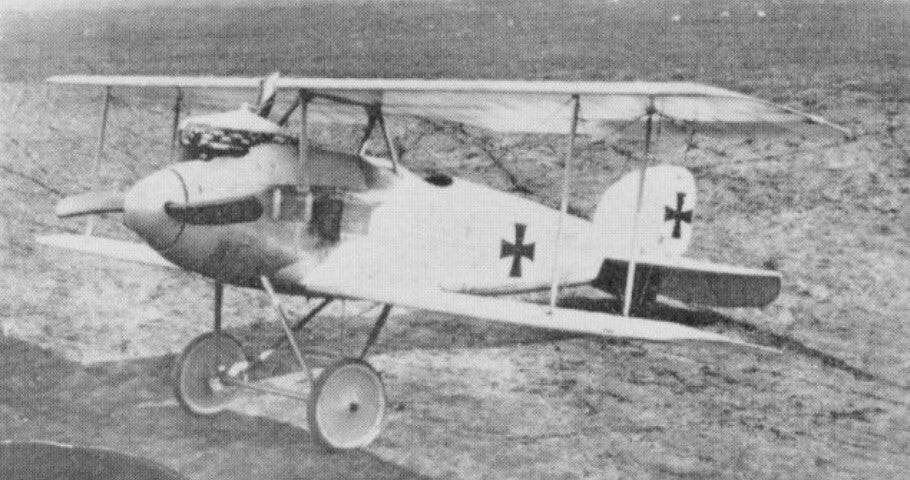
For its time the Albatros D.I was a revolutionary design (the first aircraft were delivered to the front lines in September of 1916). The six-cylinder in-line engine was enclosed in a very streamlined semi-monocoque plywood fuselage. Six spruce longerons positioned by plywood formers, and metal panels in the nose, produced a very strong engine support structure. The undercarriage consisted of strong steel tubes with shock absorbers installed in the axle assembly. The wings were of a constant chord and had ailerons mounted to the upper wing only.
The new aircraft received high ratings from combat pilots, but at the same time many problems were discovered. The upper wing was positioned too high, which hindered upward vision. Also the central struts (cabane struts) were attached to the center of the top wing, this prevented normal positioning of the armament components. The Windhoff side radiators were a constant problem and caused engine overheating at the most inopportune times.
In total, 50 aircraft of this type were delivered to the front. At the same time the Albatros company improved its construction of the D.I, a new version named the Albatros D.II soon replaced its predecessor in combat units.
---
Plus d'Histoire :
Le célèbre Fokker Eindecker était le principal chasseur allemand au début de 1916, mais l'apparition des De Havilland DH2 et Nieuport 11 Bebe alliés mit fin à la domination allemande dans les airs. Les excellentes performances des biplans alliés obligèrent l'Allemagne à améliorer celles de ses propres avions. Un nouveau type d'appareil, le biplan de type D (D pour Doppeldecker), commença bientôt à arriver en grand nombre sur les aérodromes militaires. Halberstadt et Fokker en furent les principaux constructeurs, mais on y trouvait également les derniers modèles de Roland et d'Albatros. L'un des meilleurs avions de l'époque fut construit par la société Albatros Gesellschaft für Flugzeugunternehmungen GmbH ; il reçut le nom officiel d'Albatros D.I.
Pour son temps, l'Albatros D.I était une conception révolutionnaire (les premiers exemplaires furent livrés au front en septembre 1916). Le moteur six cylindres en ligne était logé dans un fuselage semi-monocoque en contreplaqué très profilé. Six longerons en épicéa, maintenus par des couples en contreplaqué, et des panneaux métalliques à l'avant, formaient une structure de support moteur très robuste. Le train d'atterrissage était constitué de tubes d'acier résistants, avec des amortisseurs intégrés à l'essieu. Les ailes, à corde constante, étaient équipées d'ailerons montés uniquement sur l'extrados.
Le nouvel appareil reçut d'excellentes évaluations de la part des pilotes de chasse, mais de nombreux problèmes furent également constatés. L'extrados, positionné trop haut, gênait la visibilité vers le haut. De plus, les mâts centraux (entretoises de cabine) étaient fixés au centre de l'extrados, ce qui empêchait le positionnement normal des éléments d'armement. Les radiateurs latéraux Windhoff posaient un problème constant et provoquaient des surchauffes moteur aux moments les plus inopportuns.
Au total, 50 appareils de ce type furent livrés au front. Dans le même temps, la société Albatros améliora la construction du D.I, et une nouvelle version nommée Albatros D.II remplaça rapidement son prédécesseur dans les unités de combat.
---
Sources : Roden website.