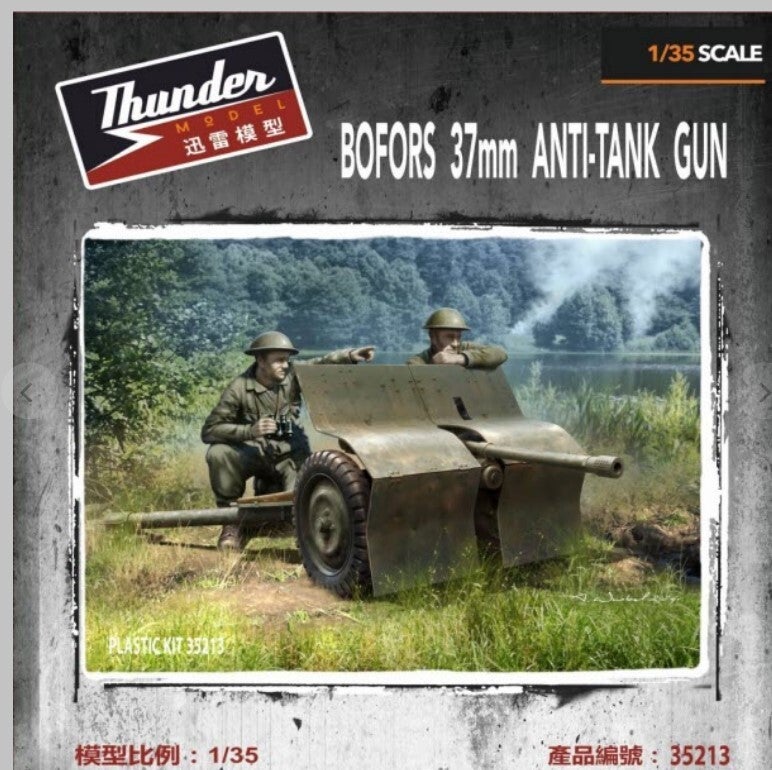
THUNDER MODEL : REF : 35213 : 1:35 : UK : 37mm Bofors (Sweden) Anti Tank Gun (Under UK Flag)
TUNDER MODEL REF :
35213
Manufacturer :
THUNDER MODEL (China).
GTIN : 5391532331492.
Scale :
1:35
---
Introduction - by Erik Ahlström.
After WW I The Swedish Army realized the need for an Infantry support gun as a response to the threat of modern armoured vehicles. Bofors AB developed a gun ready for trials 1932, it was now redesigned as an Anti tank gun. This gun eventually ended up as Bofors “37mm Anti-Tank gun L45”. In the Swedish Army it received the name “37mm Pansarvärnskanon m/38”. It was not only supplied to The Swedish Army but also offered commercially by Bofors. It proved to be very popular and were bought by many countries, including Great Britain, Finland, Poland and many others. The gun was produced not only by Bofors but licences were sold to several countries since Bofors production
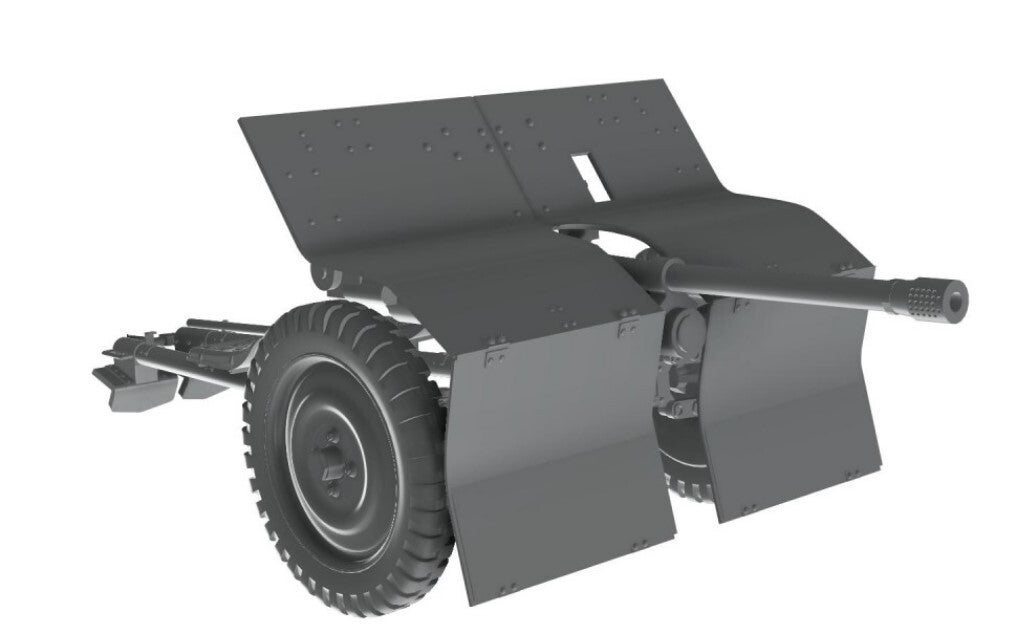
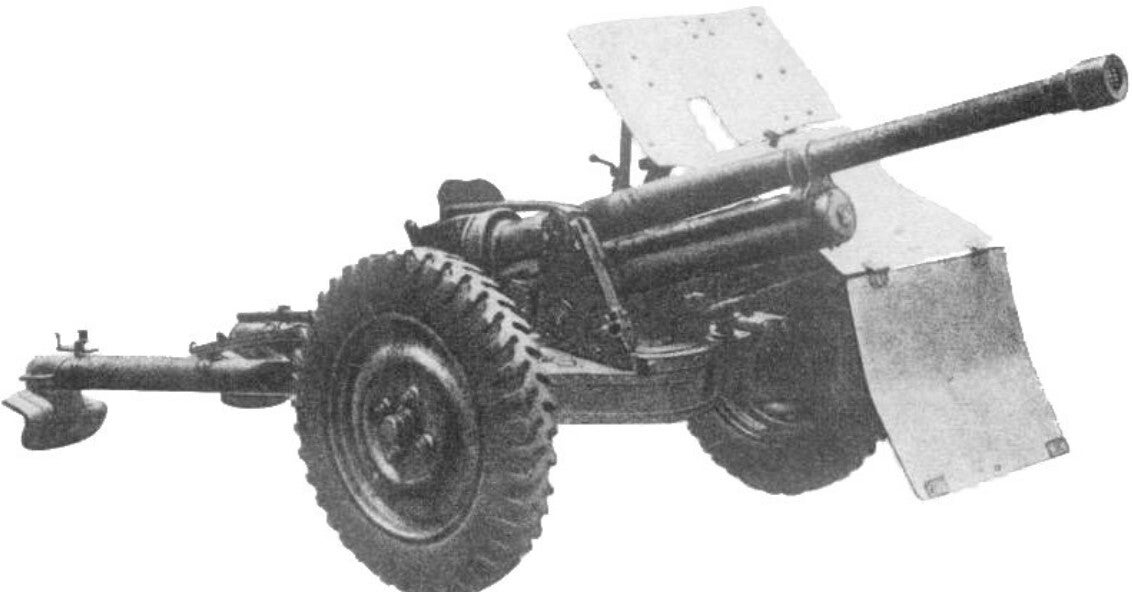
facilities were unable to meet the demands. (Bofors supplied In total 1251 guns to the Swedish Army, including guns for tanks) The largest other producer was Poland, who produced over 1000 guns, including guns for tanks. The difference between the different countries guns can mainly be seen in the wheels, Sweden having its characteristic HOHO pattern tyres, Denmark traditional “truck” hubs and the Polish and British guns shared a very “jeep like” wheel. Another difference is the Swedish guns gunshields that are uneven. These were individually cut with a blowtorch and doesent follow any pattern. Germany captured many guns during the 1939 campaign in Poland and these, just like many other captured guns from Denmark fex were supplied to Germanys allies.
Great Britain ordered 250 guns but the order was annulled after 80 guns were delivered, Sweden now in desperate need of all of Bofors production capacity. It seams like all of these British guns were sent to North Africa were they were carried portee on the small Morris-Comercial CS8 15 Cwt trucks. A small
number was also allocated to the LRDG and mounted on their Chevrolet WA and Ford F30 trucks. These LRDG guns were not carried Portee style, these guns were permanently mounted minus parts of the carriage and wheels. The most famous battle the Bofors gun took part in was the Battle for Beda Fomm where they were part of Comb Force. The small Bofors 37mm Atk gun was used by many countries, the first use was by the Republican forces in the Spanish Civil War, these guns most likely came from Polish production. During WW II it was used by many countries on both sides, sometimes captured samples.
---
Sources : Thunder Model Website.
---
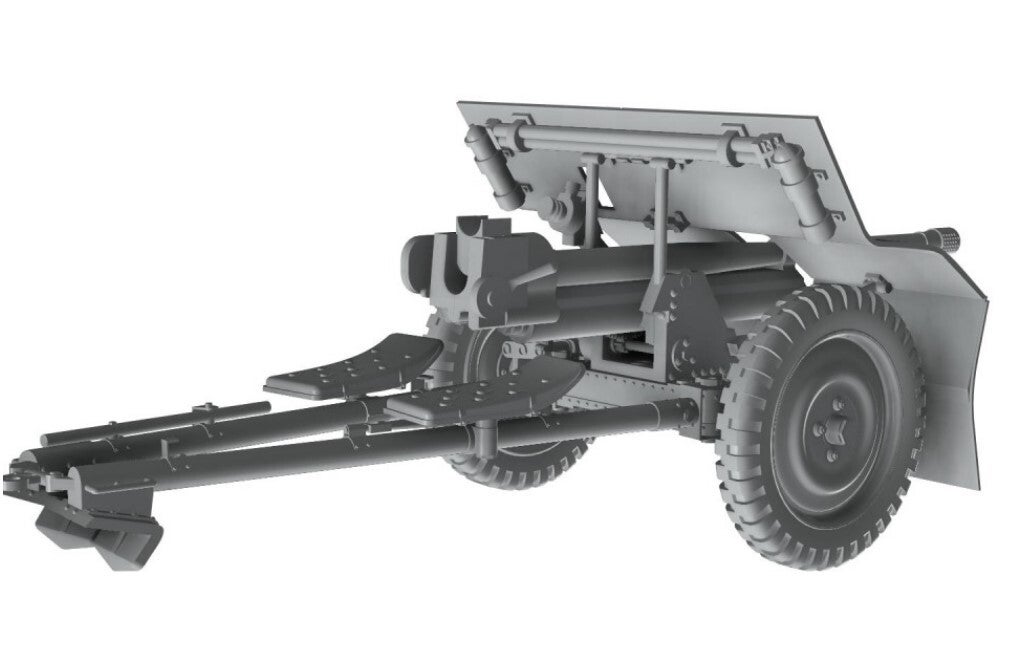
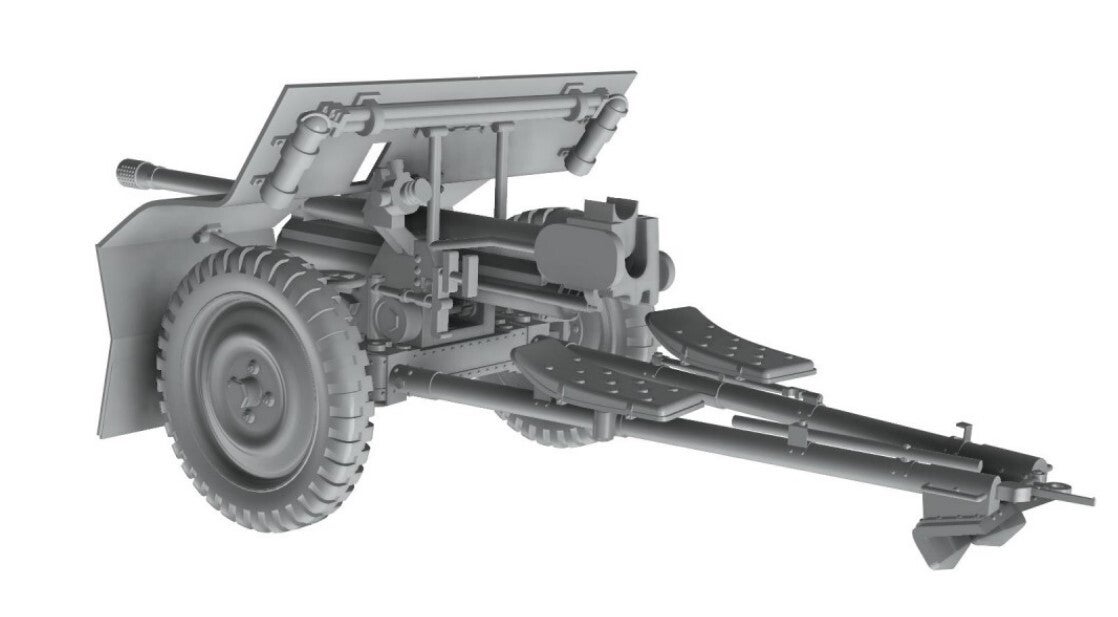
1/35 Bofors 37mm Anti -Tank gun.
-2 plastic sprues with 50 parts.
-accurately reproduced to the highest detail standard.
-PE detail sheet.
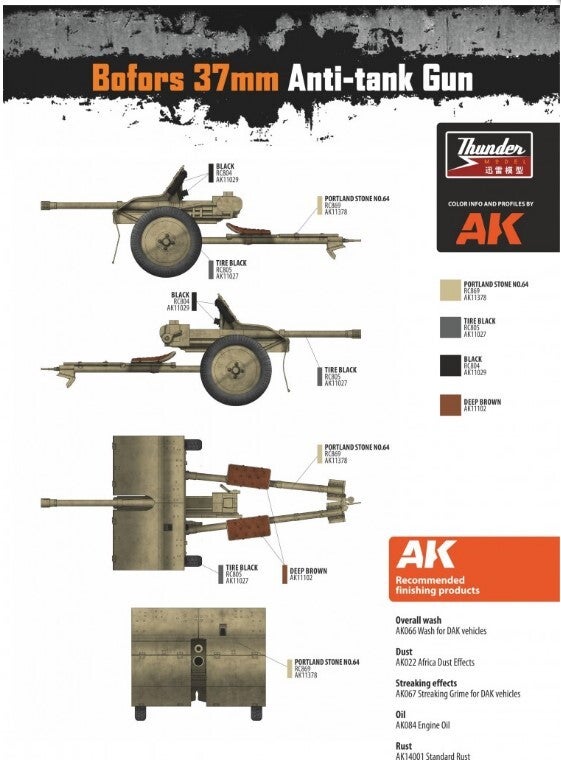
-2 painting options.
---
Introduction - par Erik Ahlström.
Après la Première Guerre mondiale, l'armée suédoise prit conscience de la nécessité d'un canon d'appui pour l'infanterie face à la menace des blindés modernes. Bofors AB développa un canon prêt pour les essais en 1932, qui fut alors repensé comme canon antichar. Ce canon devint le Bofors « canon antichar de 37 mm L45 ». Au sein de l'armée suédoise, il reçut la désignation « 37 mm Pansarvärnskanon m/38 ». Il fut non seulement fourni à l'armée suédoise, mais également commercialisé par Bofors. Il connut un grand succès et fut acquis par de nombreux pays, dont la Grande-Bretagne, la Finlande, la Pologne et bien d'autres. Le canon ne fut pas uniquement produit par Bofors ; des licences furent également vendues à plusieurs pays, les capacités de production de Bofors étant insuffisantes pour répondre à la demande.
Bofors a fourni au total 1 251 canons à l'armée suédoise, y compris des canons de chars. Le deuxième plus important producteur était la Pologne, qui a fabriqué plus de 1 000 canons, également pour chars. La principale différence entre les canons des différents pays réside dans les roues : les suédoises sont équipées de pneus à profil HOHO caractéristique, les danoises de moyeux traditionnels de type « camion », tandis que les canons polonais et britanniques partagent des roues très semblables à celles des jeeps. Autre différence : les boucliers des canons suédois sont irréguliers. Découpés individuellement au chalumeau, ils ne suivent aucun modèle précis. L'Allemagne a capturé de nombreux canons lors de la campagne de Pologne de 1939 et, à l'instar de nombreux autres canons danois capturés, elle les a fournis à ses alliés.
La Grande-Bretagne a commandé 250 canons, mais la commande a été annulée après la livraison de 80 d'entre eux. La Suède se trouvait alors dans une situation critique, ayant un besoin urgent de toute la capacité de production de Bofors. Il semble que tous ces canons britanniques aient été envoyés en Afrique du Nord où ils étaient transportés à l'avant sur de petits camions Morris-Commercial CS8 de 15 quintaux.
Un petit nombre fut également affecté au LRDG et monté sur leurs camions Chevrolet WA et Ford F30. Ces canons du LRDG n'étaient pas transportés à l'avant ; ils étaient montés de façon permanente, à l'exception de certaines parties de l'affût et des roues. La bataille la plus célèbre à laquelle participa le canon Bofors fut la bataille de Beda Fomm, où il faisait partie de la Force combinée. Le petit canon antichar Bofors de 37 mm fut utilisé par de nombreux pays. Son premier usage eut lieu par les forces républicaines pendant la guerre civile espagnole ; ces canons provenaient très probablement de production polonaise. Pendant la Seconde Guerre mondiale, il fut utilisé par de nombreux pays des deux camps, parfois à partir d'exemplaires capturés.
---
Canon antichar Bofors de 37 mm au 1/35.
- 2 grappes de plastique contenant 50 pièces.
- Reproduction fidèle et détaillée.
- Planche de photodécoupe.
- 2 options de peinture.
---
Sources : Thunder Model website.