SPECIAL HOBBY (SPECIAL ARMOUR) : REF : SA35001 : 1:35 : Czechoslovakia : Skoda : 3,7 cm KPUV vz.37 / 3,7 cm PAK 37(t)
SPECIAL HOBBY (SPECIAL ARMOR) REF :
100-SA35001 OR SA35001.
Manufacturer :
SPECIAL HOBBY (CZ REPUBLIC).
GTIN : 8594071085506.
Scale :
1:35
---
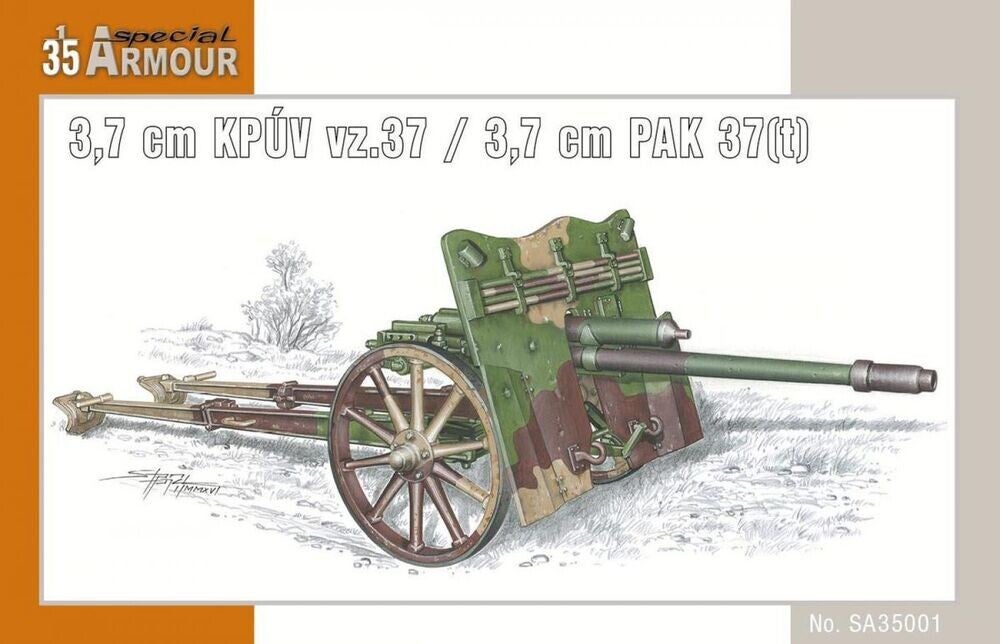
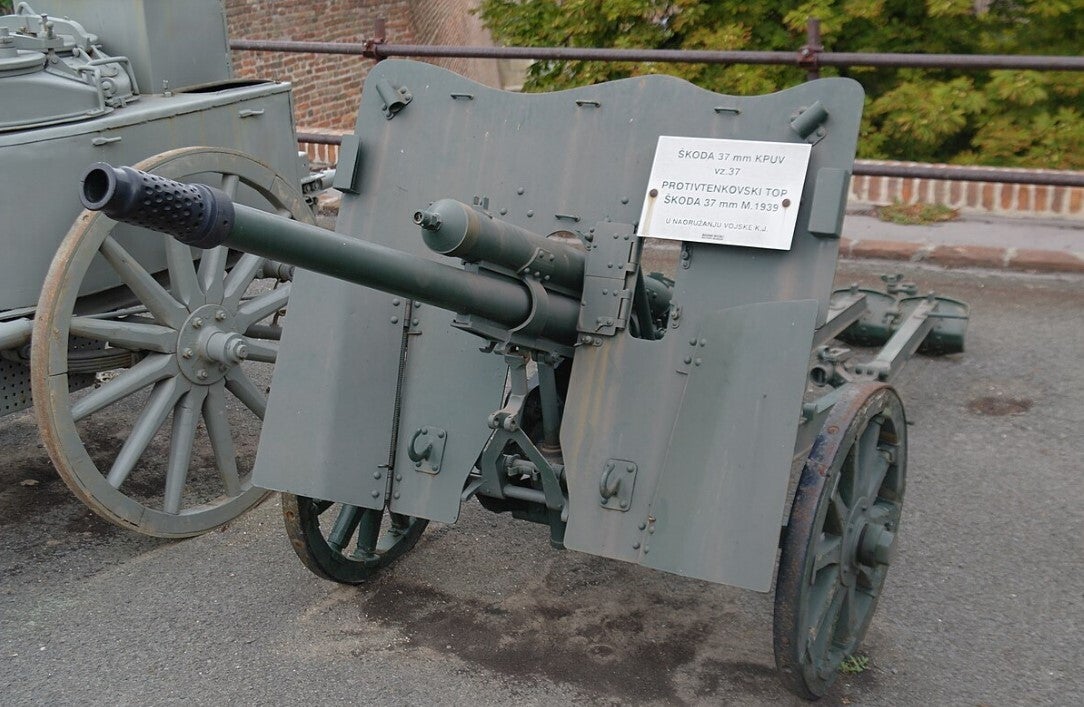
The Skoda Works in Pilsen had been a traditional gun manufacturer and supplier already since the times of the Austro-Hungarian Empire, and after the independent Czechoslovak Republic was established in 1918, the company continued in this tradition and became one of the major armament suppliers for the new Czechoslovak Army and also exported large numbers of weapons world wide. In the 1930s, the Skoda development department came up with a design for a modern 37mm A3 anti-tank gun, which was later accepted by the Army and used under designation 3,7cm KPUV vz.34, (KPUV standing for Kanon Proti Utocne Vozbe, or Anti-Tank Gun). The Skoda design team did not lie back on their laurels and developed a modernised type known as the A4 which gained excellent results while it was being tested and surpassed considerably the original 3,7cm KPUV gun. However, the new type used a different type of ammunition and therefore its breech had to be redesigned to be capable of using the earlier ammo as well. After that, nothing stood against the A4 gun being accepted by the Czechoslovak Army, which used it under 3,7cm KPUV vz.37 designation. At that time, this weapon was the world´s best in its category. The production guns were supplied in several varieties, as Type P for infantry units (P=pěchota, or Infantry) with spoked wheels, for cavalry units as Type J (J for jezdectvo, Cavalry) with pneumatic wheels with standard discs and as Type M which could have been transported behind a motorised vehicles. The A4 guns were also exported to Yugoslavia, Bulgaria and Hungary, besides others. In 1938, nearly one thousand KPUV guns of both types were ready to defend Czechoslovakia, 390 of them were of vz.37 Type P and 300 of vz.37 Type M. The 3,7cm KPUV Gun vz.37 was capable to shoot through the armour of all Wehrmacht´s tanks. However, in the end, these guns were first used in combat by the German Wehrmacht, which, having realised the Czechoslovak guns were superior to German ones, put them into service under 3,7cm PAK 37(t) designation. And, how effective these guns were, soldiers of Poland, France, Belgium, Luxembourg and the Netherlands found out to their detriment. In the end, only the attack against the Soviet Union made the 37mm guns obsolete as they were no longer effective against the new Soviet mid and heavy tank armours. Nevertheless, the guns remained on strenght almost until the end of the war. Amongst their users were also the army of the Slovak State, which had been built on the ruins of former Czechoslovakia, the Slovak Army deployed the 3,7cm guns also against the USSR, but with similar trouble as the Wehrmacht.
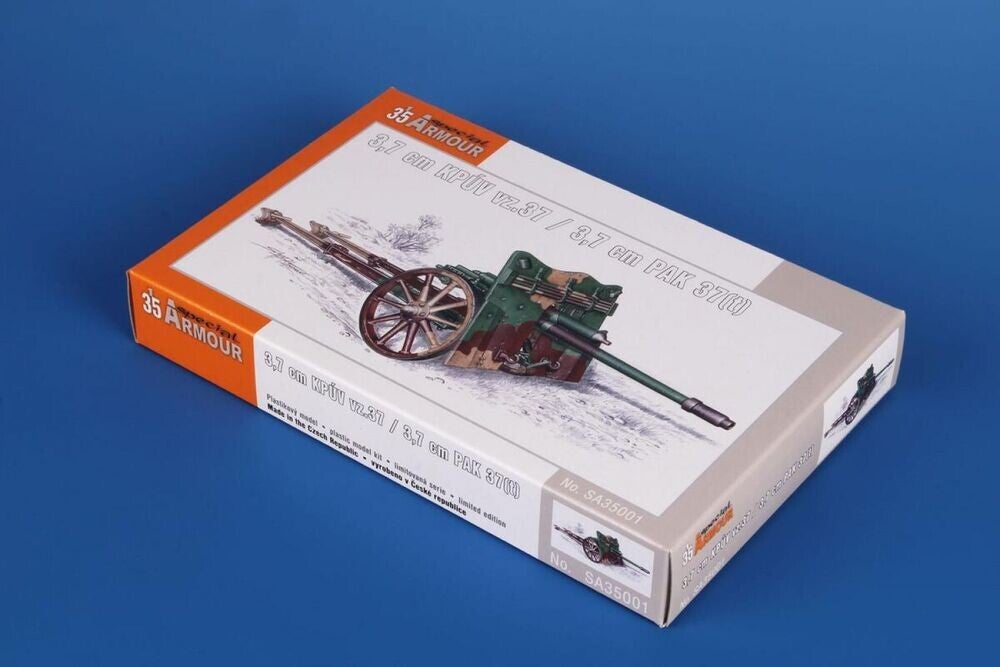
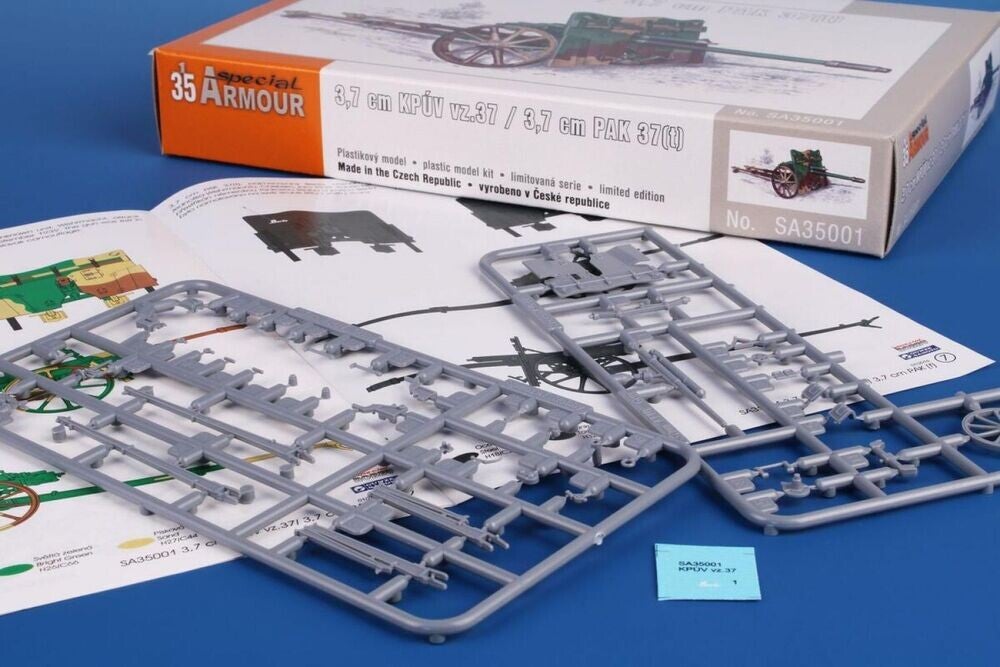
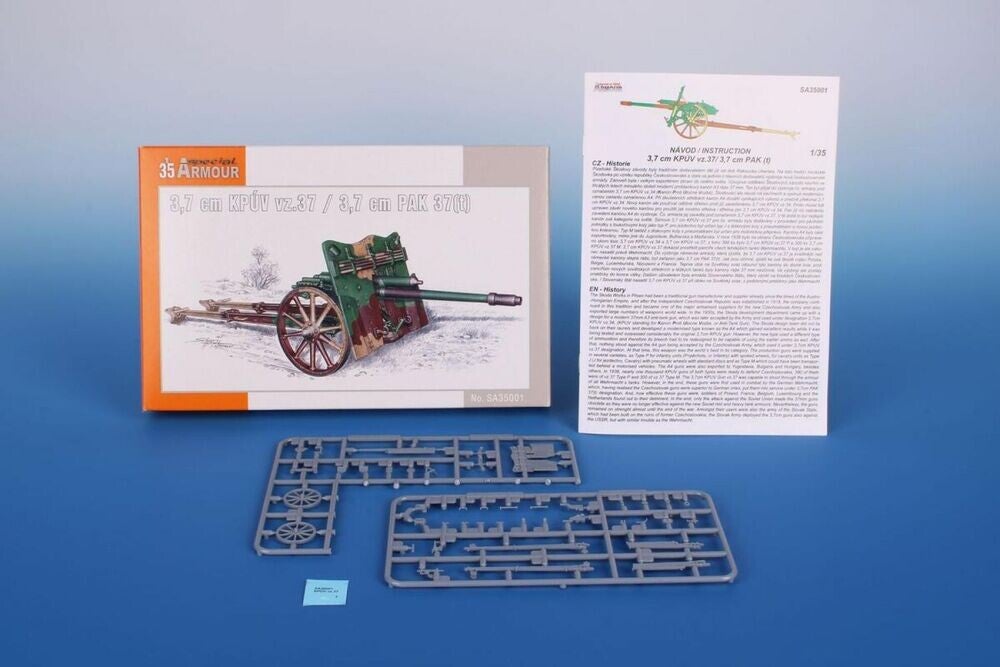
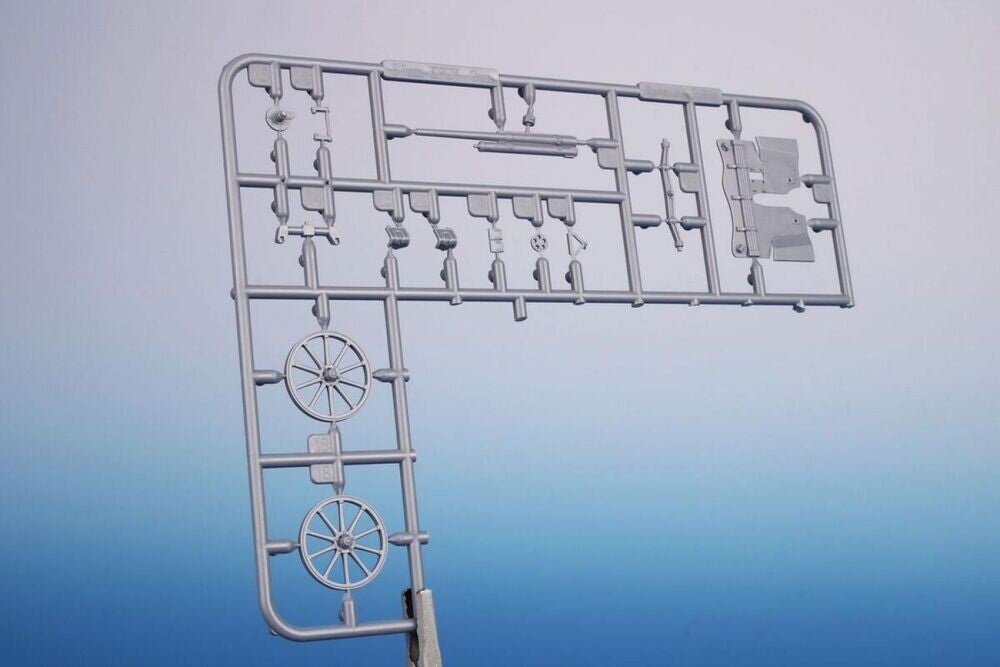
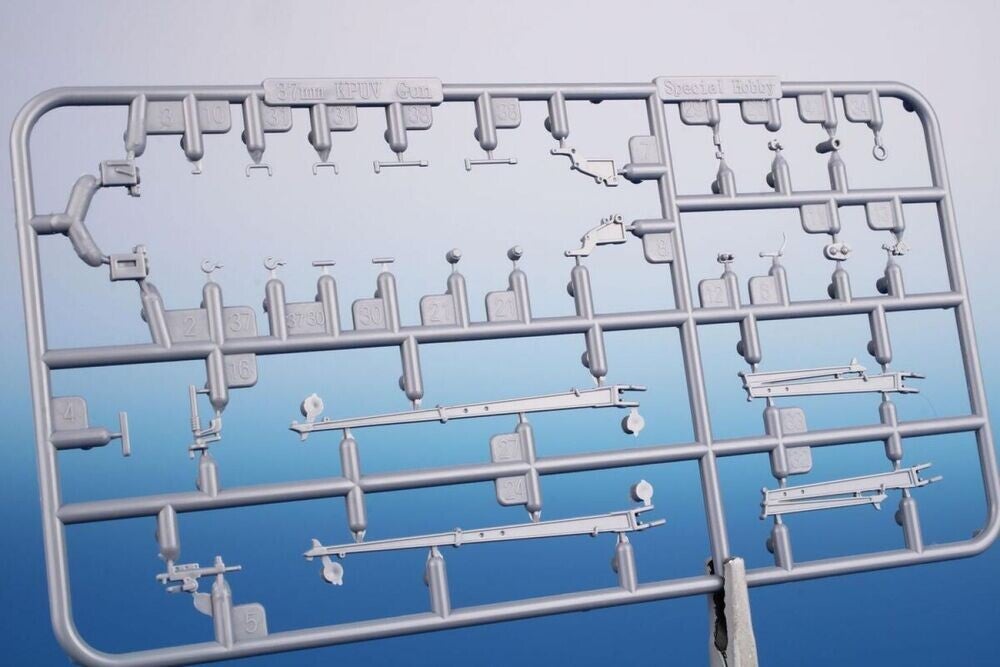
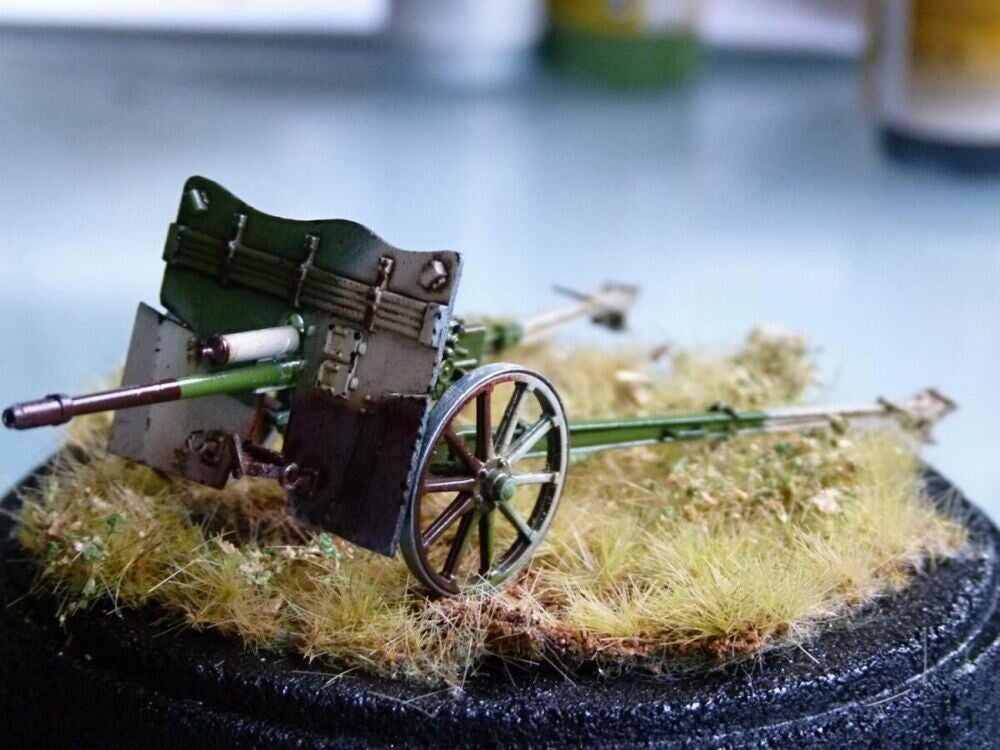
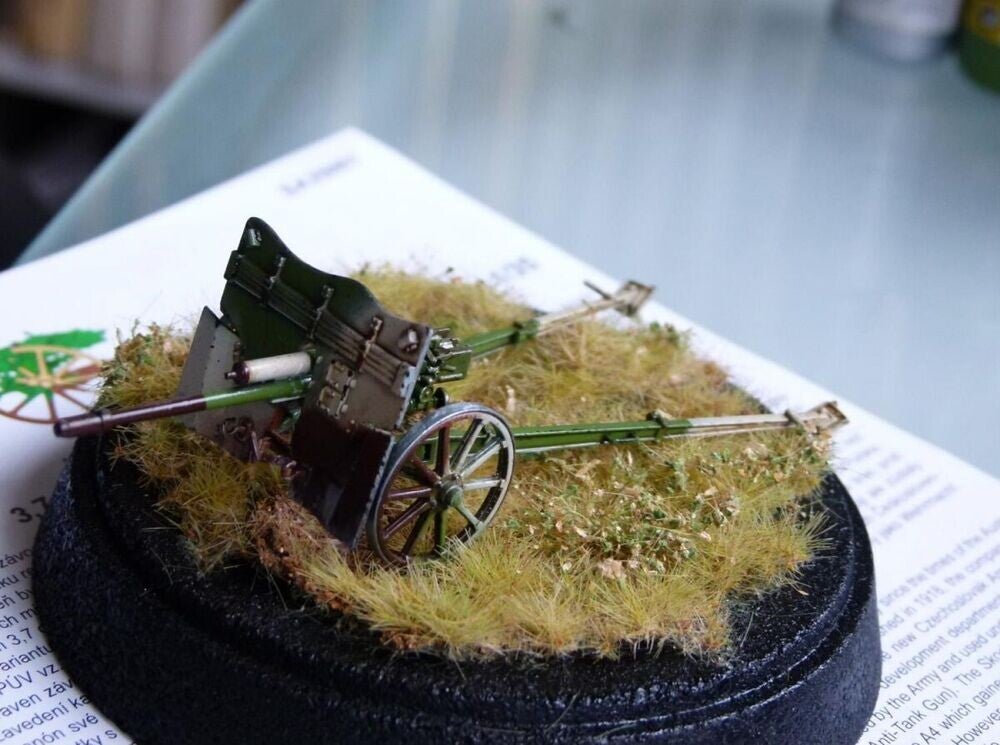
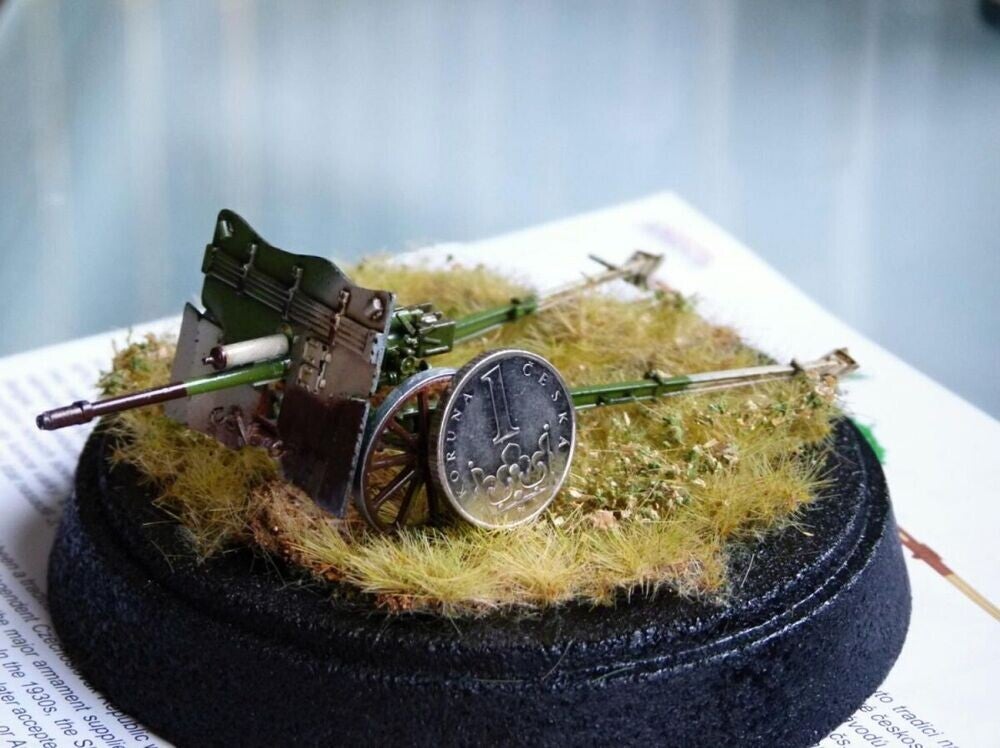
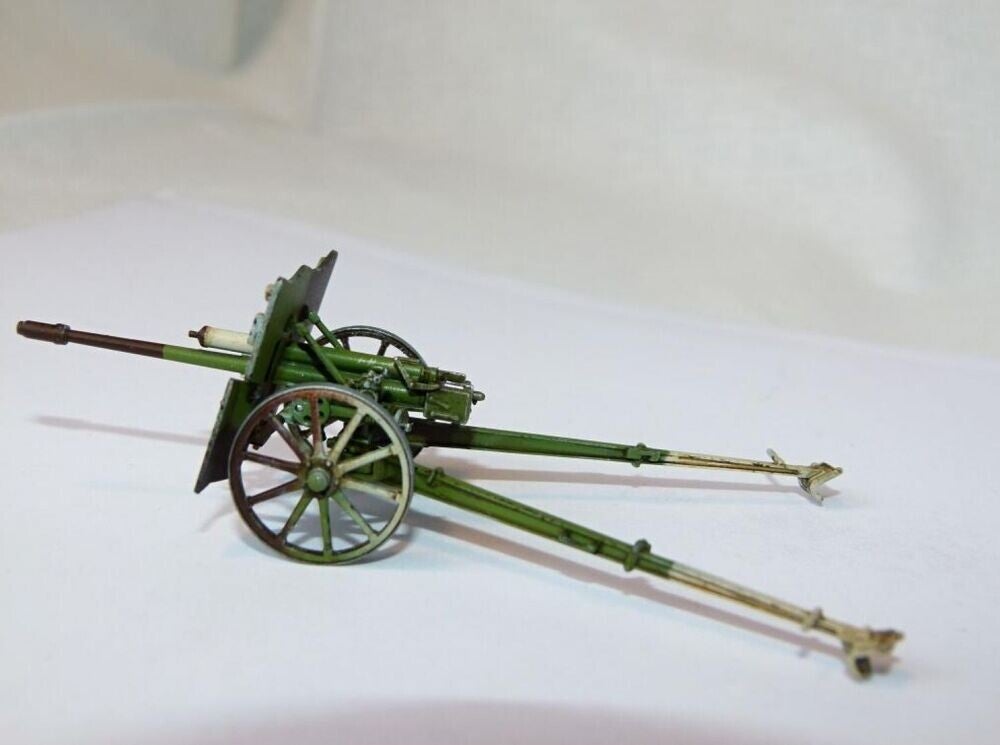
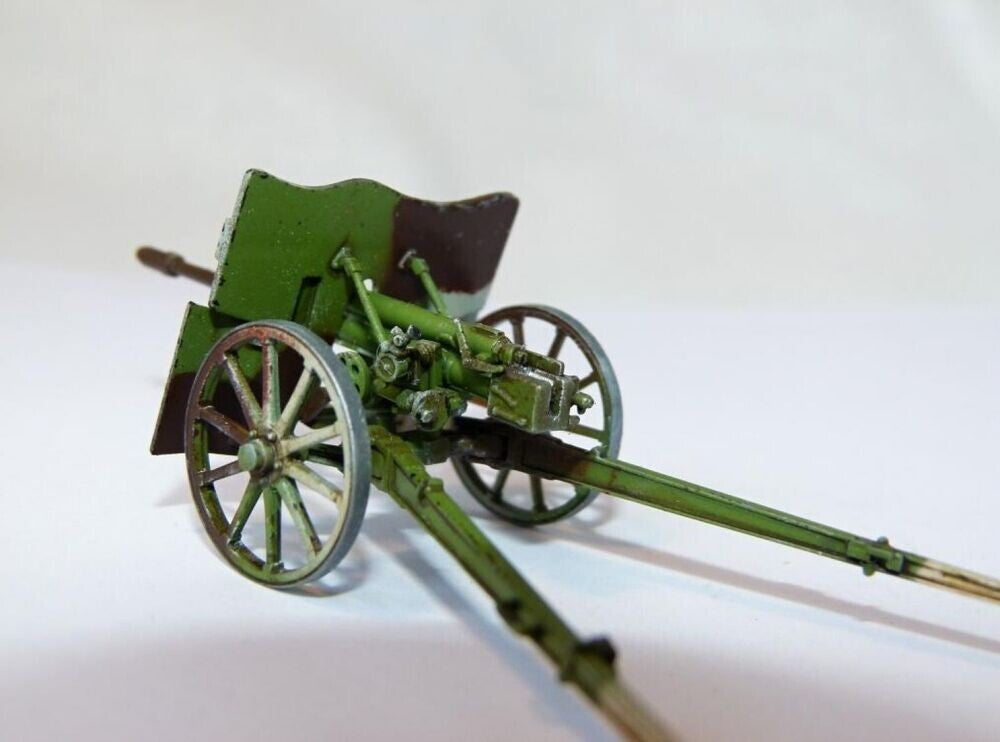
Parts of the model were designed in 3D and they‘re pressed in a steel mold. They are distributed into two frames made of grey plastic. Full colour manual offers three different kinds of cannons – one in tricolor camouflage of the Czechoslovak army and two cannons used by Wehrmacht. One of the captured cannons is in the original Czechoslovak army colouring, the second one – called Bertha – is in german panzer grau colouring.
---
L'usine Škoda de Pilsen était un fabricant et fournisseur d'armes traditionnel depuis l'époque austro-hongroise. Après la création de la République tchécoslovaque indépendante en 1918, l'entreprise perpétua cette tradition et devint l'un des principaux fournisseurs d'armement de la nouvelle armée tchécoslovaque, exportant également d'importantes quantités d'armes dans le monde entier. Dans les années 1930, le département de développement de Škoda conçut un canon antichar moderne de 37 mm, le A3, qui fut ensuite adopté par l'armée et utilisé sous la désignation 3,7 cm KPUV vz.34 (KPUV signifiant Kanon Proti Utocne Vozbe, ou canon antichar). L'équipe de conception de Škoda ne se reposa pas sur ses lauriers et développa une version modernisée, le A4, qui obtint d'excellents résultats lors des essais et surpassa largement le canon 3,7 cm KPUV d'origine. Cependant, le nouveau modèle utilisait un type de munitions différent, ce qui nécessita une refonte de sa culasse afin de pouvoir également utiliser les munitions précédentes. Dès lors, rien ne s'opposa à l'adoption du canon A4 par l'armée tchécoslovaque, qui l'utilisa sous la désignation 3,7 cm KPUV vz.37. À cette époque, cette arme était la meilleure au monde dans sa catégorie. Les canons de série furent produits en plusieurs versions : le type P pour l'infanterie (P pour « pěchota », infanterie) avec roues à rayons ; le type J pour la cavalerie (J pour « jezdectvo », cavalerie) avec roues pneumatiques à disques standard ; et le type M, transportable par véhicule motorisé. Les canons A4 furent également exportés vers la Yougoslavie, la Bulgarie et la Hongrie, entre autres. En 1938, près de mille canons KPUV des deux types étaient prêts à défendre la Tchécoslovaquie : 390 vz.37 Type P et 300 vz.37 Type M. Le canon KPUV de 3,7 cm vz.37 était capable de percer le blindage de tous les chars de la Wehrmacht. Cependant, ces canons furent finalement utilisés en premier au combat par la Wehrmacht allemande qui, ayant constaté la supériorité des canons tchécoslovaques, les mit en service sous la désignation 3,7 cm PAK 37(t). Les soldats polonais, français, belges, luxembourgeois et néerlandais découvrirent à leurs dépens l’efficacité de ces armes. Finalement, seule l’attaque contre l’Union soviétique rendit les canons de 37 mm obsolètes, car ils n’étaient plus efficaces contre les nouveaux blindages moyens et lourds des chars soviétiques. Néanmoins, ils restèrent en service presque jusqu’à la fin de la guerre. Parmi leurs utilisateurs figurait également l'armée de l'État slovaque, construite sur les ruines de l'ancienne Tchécoslovaquie. L'armée slovaque utilisa aussi les canons de 3,7 cm contre l'URSS, mais avec des difficultés similaires à celles rencontrées par la Wehrmacht.
Certaines parties de la maquette ont été conçues en 3D et moulées dans un moule en acier. Elles sont réparties dans deux grappes en plastique gris. Le manuel en couleurs propose trois types de canons différents : un avec le camouflage tricolore de l'armée tchécoslovaque et deux canons utilisés par la Wehrmacht. L'un des canons capturés arbore les couleurs d'origine de l'armée tchécoslovaque, le second, appelé Bertha, est peint en gris Panzer allemand.
---