HOBBY BOSS : REF : 82465 : 1:35 : German Land-Wasser-Schlepper (Early Type) (Amphibious Tractor / Tracteur Amphibie) (LWS)
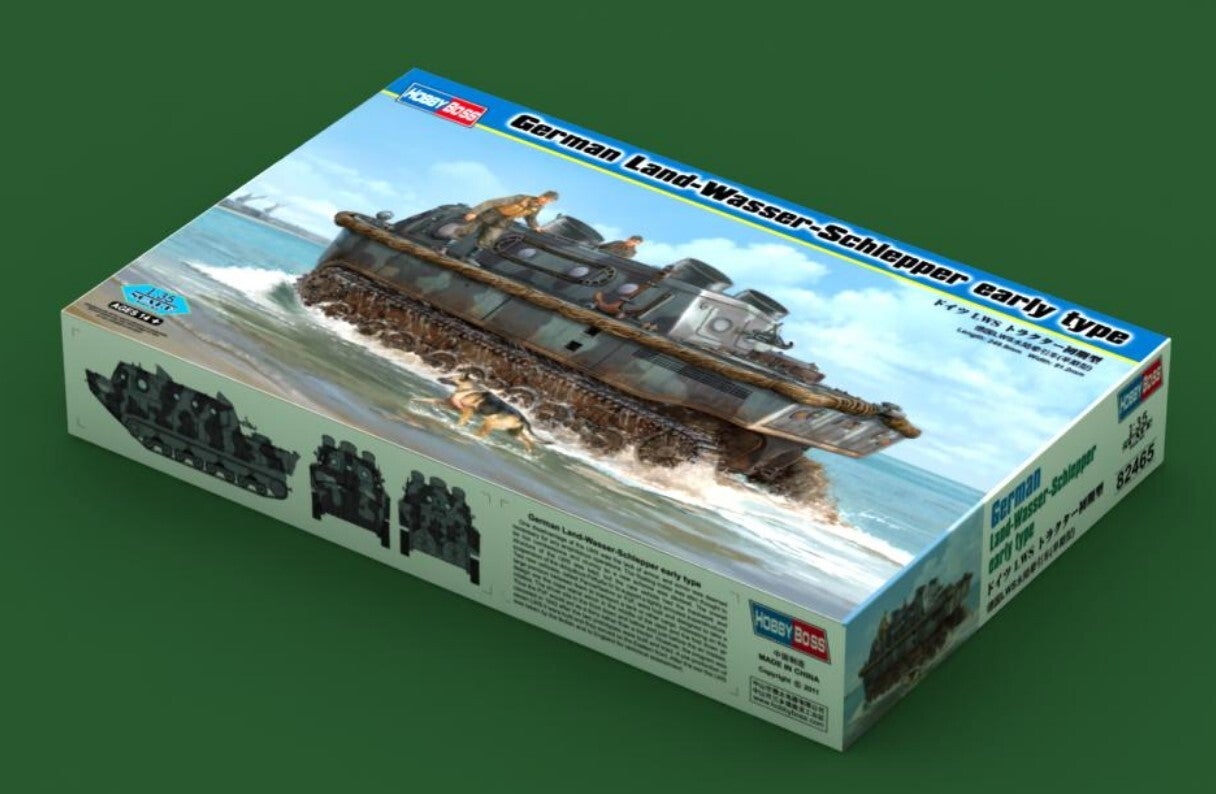
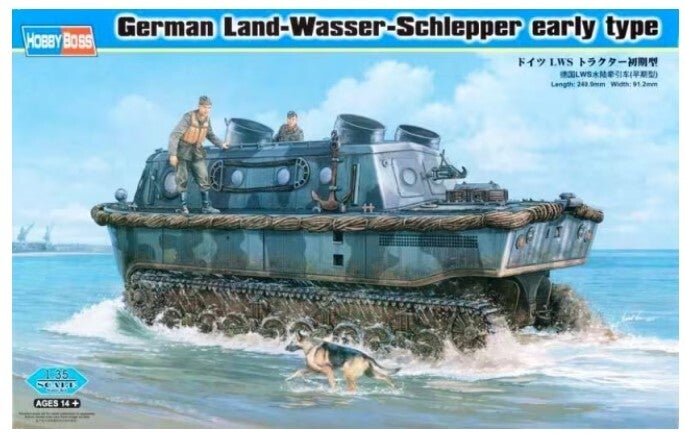
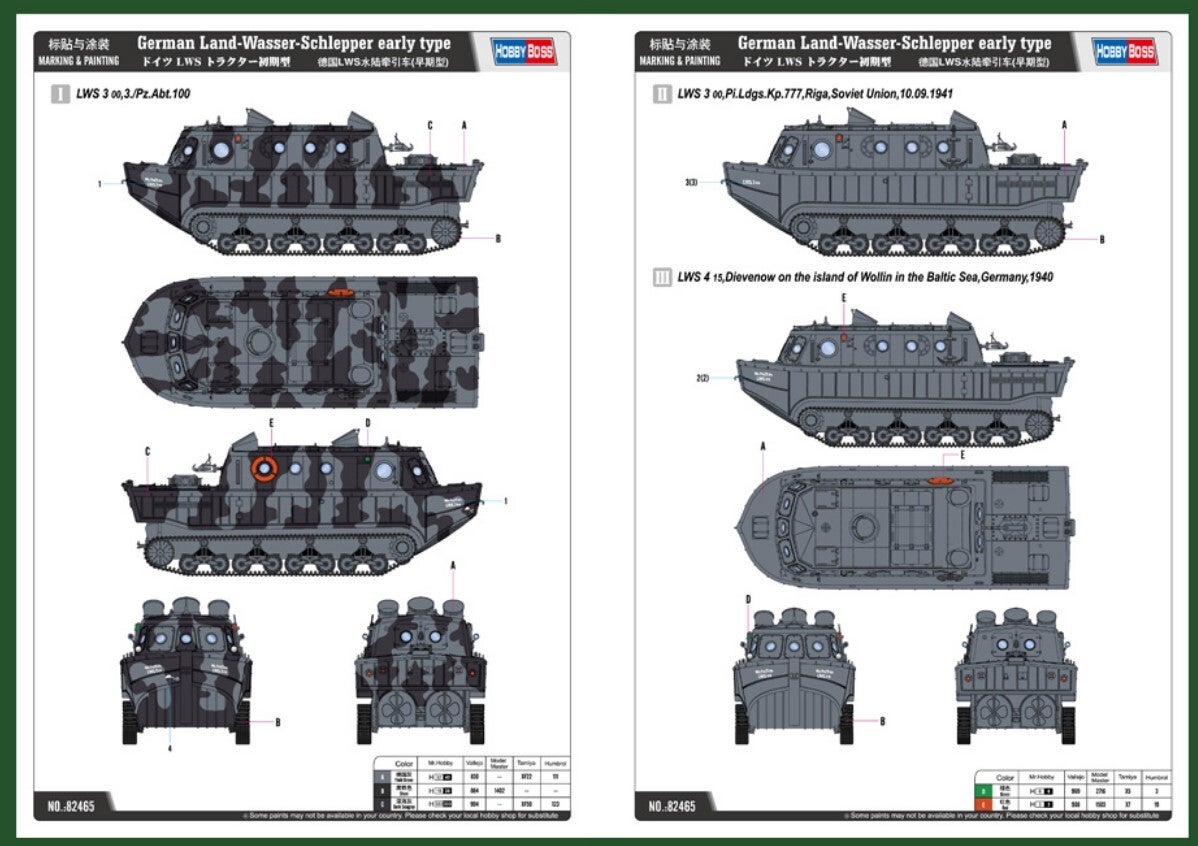
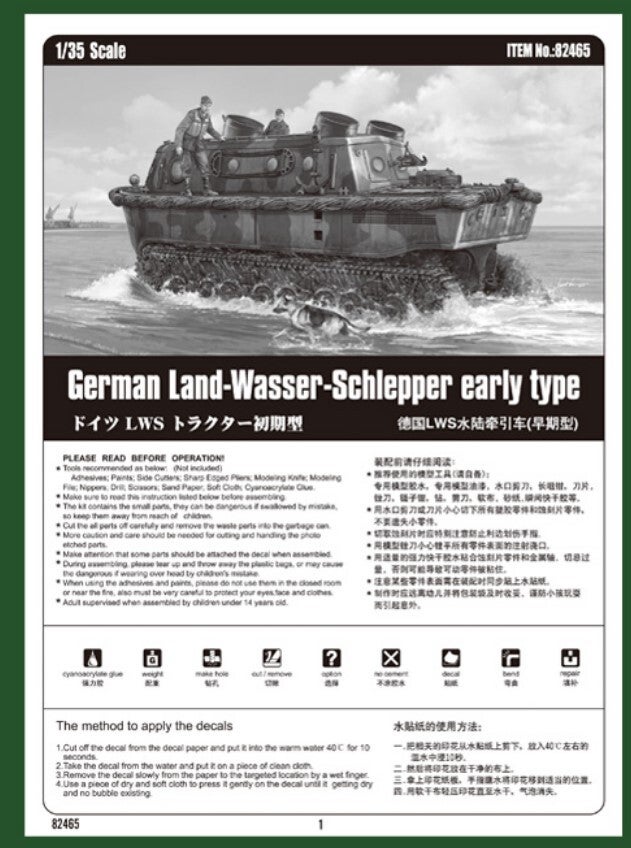
HOBBY BOSS REF :
82465
Manufacter :
HOBBY BOSS (CHINA).
GTIN : 6939319224651.
Scale :
1:35
---
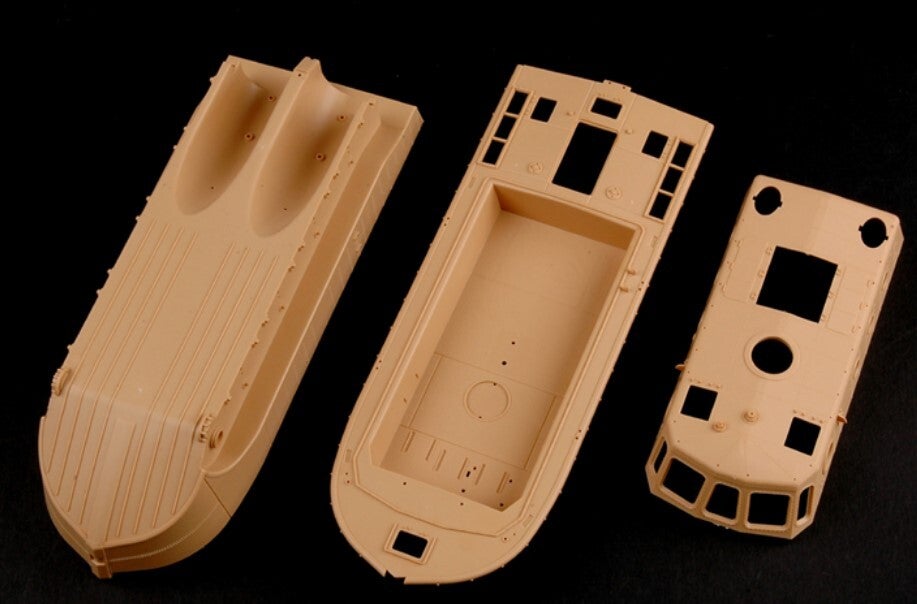
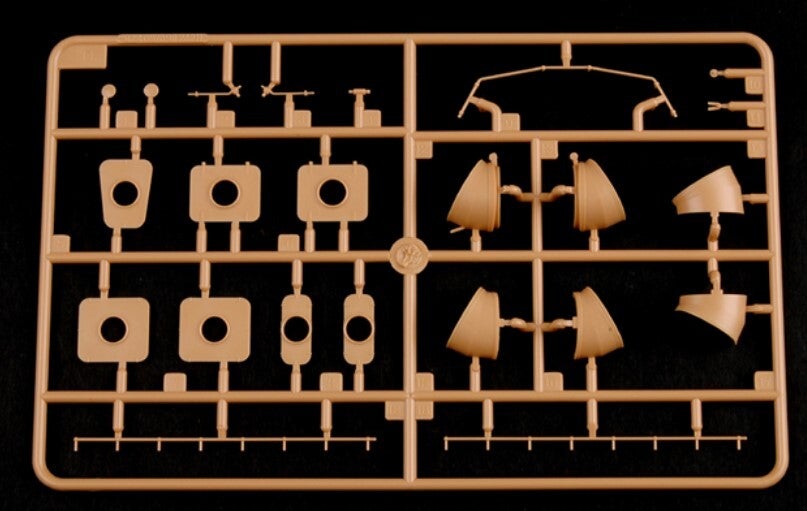
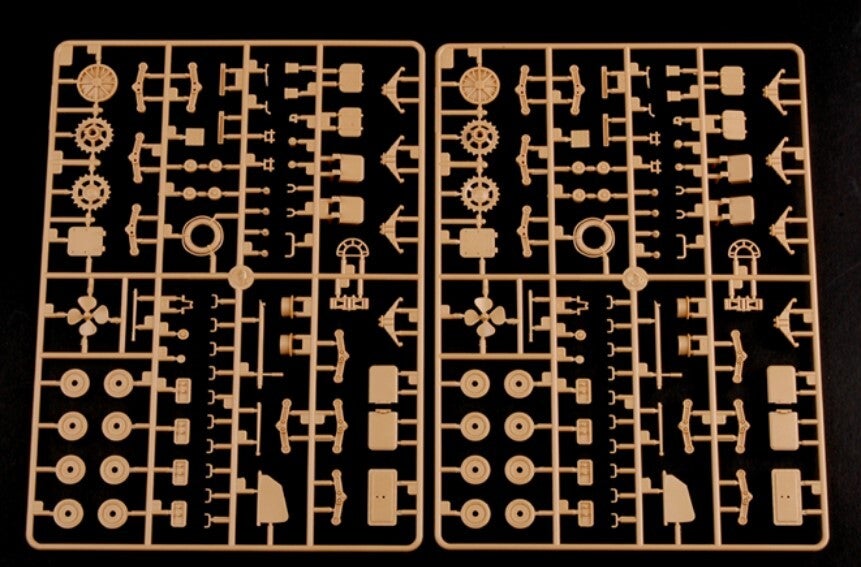
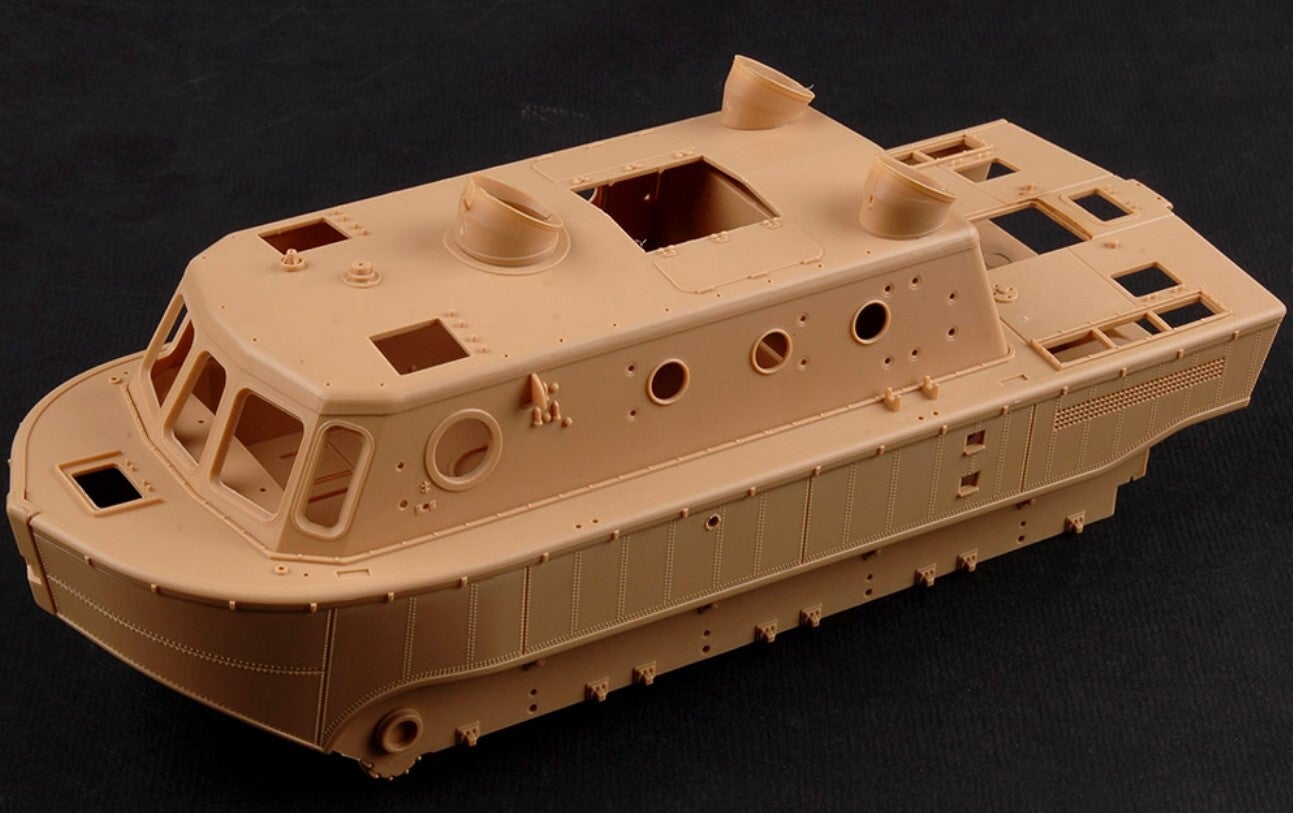
- Multi-directional slide moulded upper hull.
- Multi-directional slide moulded lower hull.
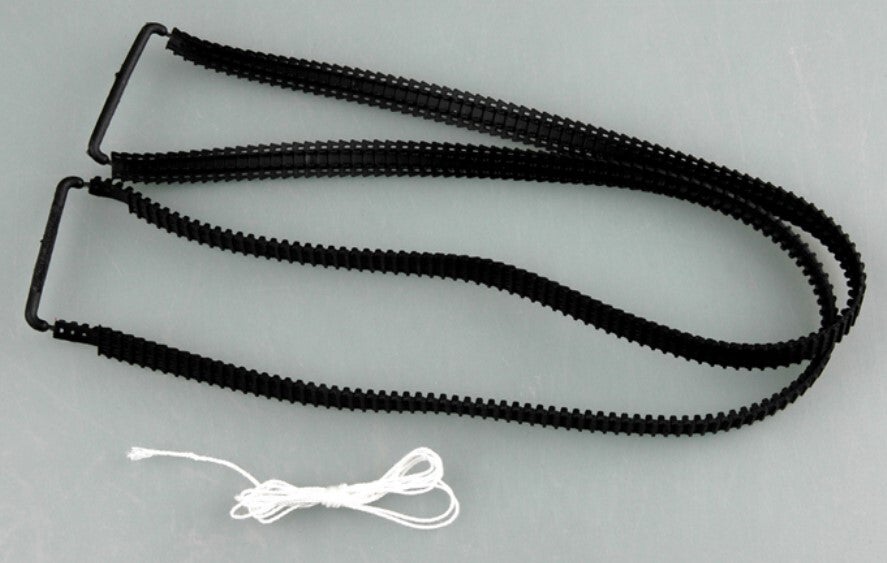
- Full length rubber tracks.
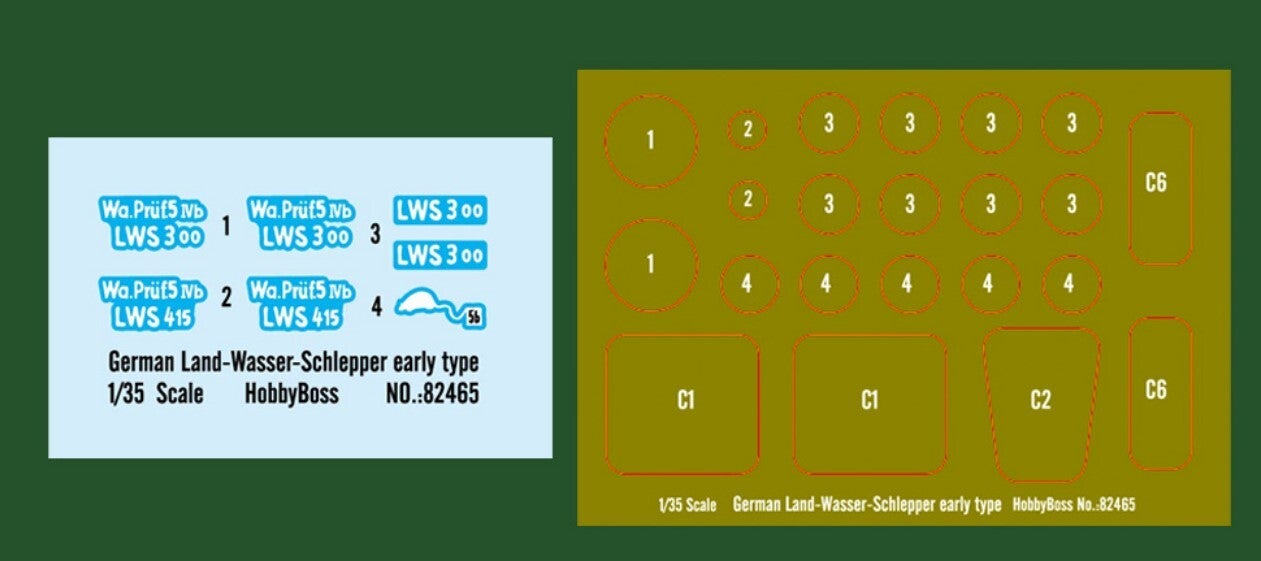
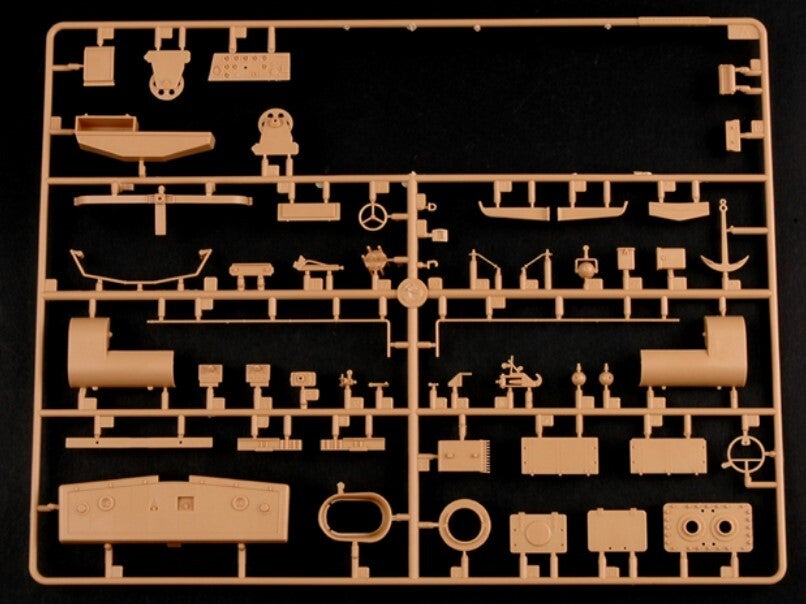
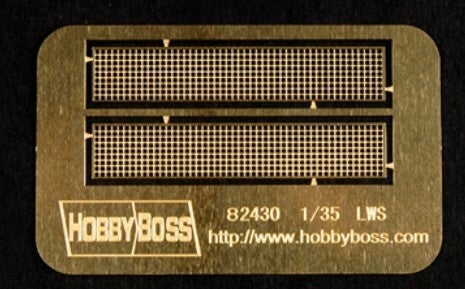
- Photo Etched parts for cover grill.
---
Product introduction:
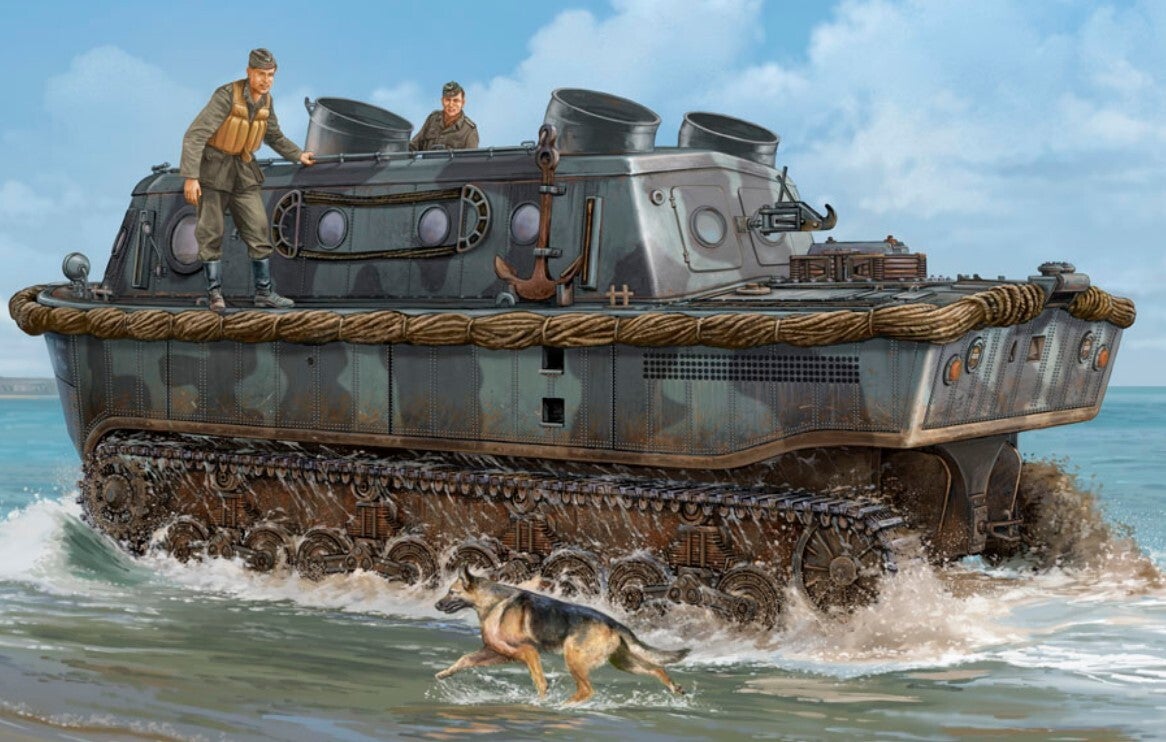
One disadvantage of the LWS was the lack of armor, and armor was deemed necessary for any amphibious operations. The floating trailer was also thought to be too cumbersome and clumsy so a new scheme was devised. The overall structure of the LWS was kept, but the new vehicle had the trackwork and suspension of the ubiquitous PzKpfw IV to support a lightly armored superstructure. Two new vehicles, called Panzerfaehre or PzF, were built and designed to take a large pontoon between them to transport a tank or other cargo. Interesting on this design are the cape stand winch in the middle of the deck and the fold down air intakes. The driver sits in the front down and below and just before the air intakes. Thus the PzF would act as a ferry rather than a tractor. However, the program was canceled in 1942 after the two prototypes were built and tried. A pre-production of seven LWS II were built and they served on the Eastern front. After the war the LWS was taken by the British and toEnglandfor technical assessment.
---
Présentation du produit :
L’un des inconvénients du LWS était son blindage insuffisant, pourtant jugé indispensable pour toute opération amphibie. La remorque flottante étant également considérée comme trop encombrante et peu maniable, un nouveau système fut mis au point. La structure générale du LWS fut conservée, mais le nouveau véhicule adopta les chenilles et la suspension du PzKpfw IV, omniprésent, pour supporter une superstructure légèrement blindée. Deux nouveaux véhicules, appelés Panzerfaehre ou PzF, furent construits et conçus pour embarquer un grand ponton afin de transporter un char ou autre cargaison. Ce modèle se distingue par son treuil de levage situé au milieu du pont et ses prises d’air rabattables. Le pilote prenait place à l’avant, en contrebas et juste devant les prises d’air. Le PzF devait ainsi servir de ferry plutôt que de tracteur. Cependant, le programme fut annulé en 1942 après la construction et les essais des deux prototypes. Une présérie de sept LWS II fut construite et engagée sur le front de l’Est. Après la guerre, le LWS fut emmené par les Britanniques en Angleterre pour une évaluation technique.
---
More Informations :
The Land-Wasser-Schlepper, or LWS, was a German "experimental" amphibious tractor used during World War II.
History :
Ordered by the Heereswaffenamt (Army Weapons Office) in 1935 for use by the German Army Engineering Corps, the Land-Wasser-Schlepper (or LWS) was designed as a light river tug with some land-based capability.
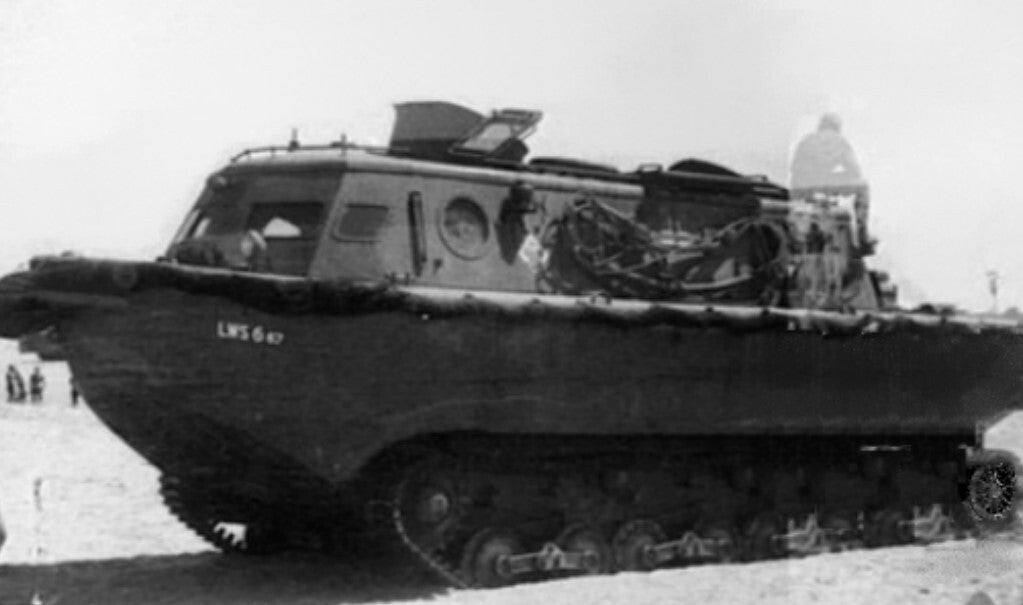
Intended to facilitate crossing and bridging operations, it was designed by Rheinmetall-Borsig of Düsseldorf. The hull was similar to that of a Motor Launch, resembling a towed boat with twin propellers mounted in a tunnel at the rear, along with twin rudders. On land, it ran on steel tracks with four bogies per side.
By the autumn of 1940, three prototypes had been completed and were assigned to Tank Detachment 100 as part of Operation Sea Lion. They were intended for use in hauling unpowered assault barges ashore during the invasion and for towing vehicles across the beaches. They would also have been used to transport supplies directly ashore during the six-hour ebb tide when the barges were hauled ashore. This involved towing a Kässbohrer amphibious trailer (capable of carrying 10 to 20 tons of cargo) behind the LWS.
The Land-Wasser-Schlepper was presented to General Franz Halder on August 2, 1940, by Reinhardt's test personnel on the island of Sylt, and although he criticized its high profile on land, he acknowledged the overall usefulness of the design. It was proposed to build enough LWSs so that each invasion craft could be equipped with one or two, but difficulties in mass production prevented this plan from being implemented.
Due to the prolonged development, the Land-Wasser-Schlepper did not enter regular service until 1942, and although it proved useful in Russia and North Africa, it was produced only in small numbers.
In 1944, a new design was introduced, the LWS II. This vehicle was based on a Panzer IV tank chassis and featured a small driver's cab with improved armor and a flat rear platform with four folding intake and exhaust nozzles.
The Land-Wasser-Schlepper remained operational until the end of the war in May 1945.
---
Le Land-Wasser-Schlepper, ou LWS était un tracteur "expérimental" amphibie Allemand utilisé pendant la Seconde Guerre mondiale.
Historique :
Ordonné par le Heereswaffenamt en 1935 pour un usage par le génie de l'armée allemande, le Land-Wasser-Schlepper (ou LWS) était conçu comme un remorqueur de rivière léger avec une certaine capacité d'opérer sur la terre.
Destinée à faciliter les opérations de traversée et de pontage, il a été conçu par Rheinmetall-Borsig de Düsseldorf. La coque était semblable à celle d'un Motor Launch, ressemblant à un bateau tracté avec les hélices jumelées arrière, montées en tunnel avec des gouvernails jumeaux. Sur terre, il roule sur des chenilles en acier avec quatre bogies par côté.
À l'automne de 1940, trois prototypes avaient été achevés et étaient affectés au Détachement de chars 100 dans le cadre de l'Opération Seelöwe (Opération Lion de mer). Il était destiné à être utilisé pour tirer à terre des barges d'assaut sans puissance pendant l'invasion et pour traîner des véhicules à travers les plages. Ils auraient également été utilisés pour transporter des provisions directement à terre au cours des six heures de marée descendante lorsque les barges ont été mises à la terre. Il s'agissait de tracter une remorque amphibie Kässbohrer (capable de transporter 10 à 20 tonnes de fret) derrière le LWS.
Le Land-Wasser-Schlepper a été présenté au général Franz Halder le 2 août 1940 par le personnel d'essai de Reinhardt sur l'île de Sylt et, bien qu'il ait critiqué sa haute silhouette sur terre, il a reconnu l'utilité globale de la conception. Il a été proposé de construire suffisamment de LWS pour que chaque embarcation d'invasion puisse être affectée à une ou deux d'entre elles, mais les difficultés de production en série du véhicule ont empêché la mise en œuvre de ce plan.
En raison du développement prolongé, le Land-Wasser-Schlepper n'est entré en service régulier qu'en 1942 et, bien qu'il ait été utile en Russie et en Afrique du Nord, il n'a été produit qu'en petit nombre.
En 1944, un nouveau design a été introduit, le LWS II. Ce véhicule était basé sur un châssis de char de Panzer IV et a comporté une petite cabine de conducteur avec un blindage amélioré et une plate-forme arrière plate avec quatre tuyères repliables d'admission et d'échappement.
Le Land-Wasser-Schlepper est resté opérationnel jusqu'à la fin de la guerre en mai 1945.
---
Sources Sup : Wikipedia.