LANMO MODEL : REF : MM35009 : 1:35 : ITALY (FIAT / ANSALDO) : L6/40 Light Tank
LANMO MODEL REF :
MM35005
Manufacturer :
LANMO Model (CHINA).
GTIN : 6977736610145.
Scale :
1:35
---
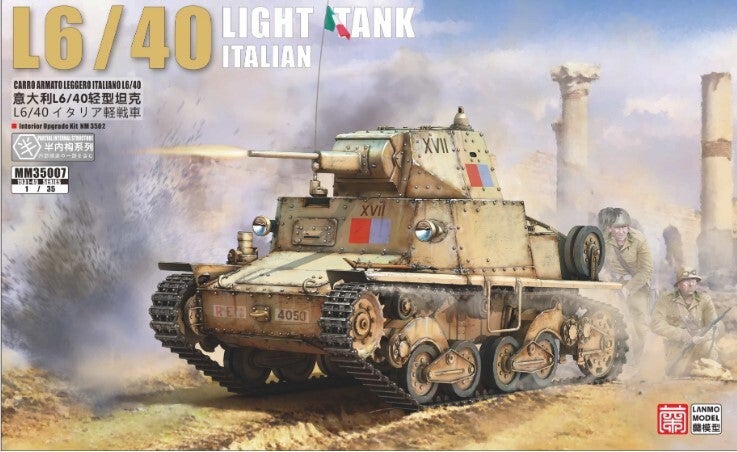
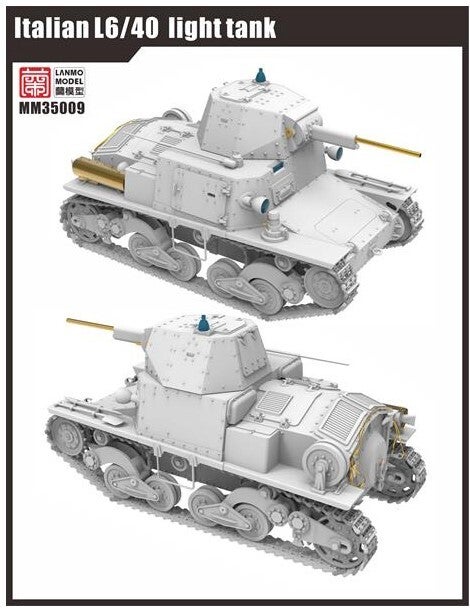
Plastic model kit of an Italian light tank, the Carro Armato FIAT-Ansaldo L6/40
Scale 1:35.
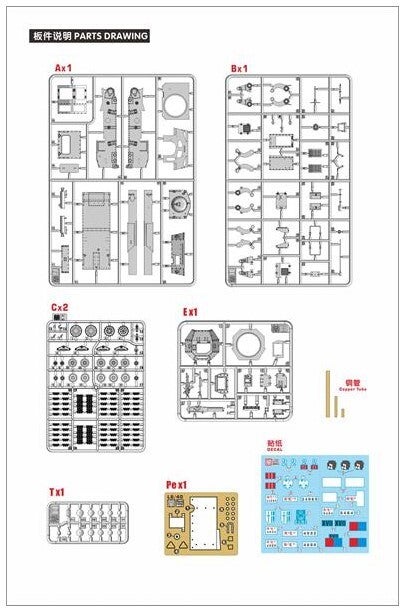
Metal and photo-etched parts included.
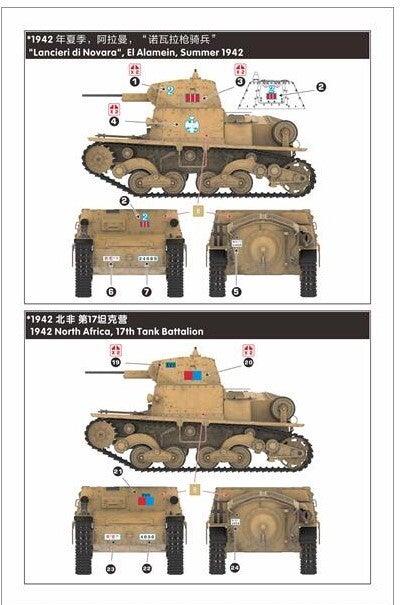
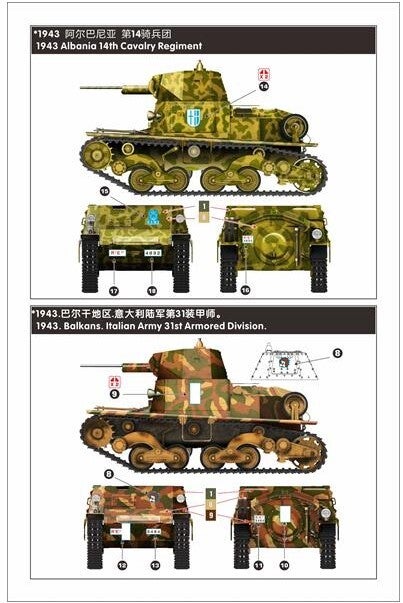
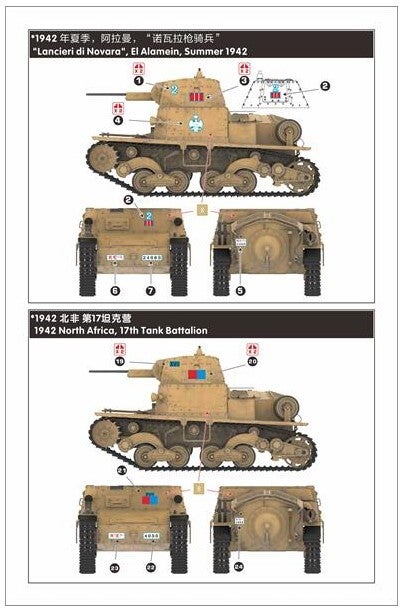
4 marking options.
1943, Albania, 14th Cavalry Regiment.
1943, Balkans, Italian Army, 31st Armored Division.
Summer 1942, "Lancieri di Novara", El Alamein.
1942, North Africa, 17th Tank Battalion.
Unbuilt, unpainted.
Paint and glue not included.
---
The Carro Armato L6/40 was the primary Italian light tank of World War II; it was put into service by Fiat-Ansaldo in 1940. Designed to replace the obsolete L3 tankettes, it was the first Italian light tank featuring a fully rotating turret to be produced in significant numbers. The designation "L6/40" stands for "Leggero" (light), referring to its weight of approximately 6 tonnes and its year of entry into service, 1940.
The tank featured a riveted structure and a one-man turret. Its main armament consisted of a 20mm Breda M35 autocannon, supplemented by a coaxial 8mm Breda machine gun. The crew consisted of only two men: the driver and the tank commander. The commander had to simultaneously aim, load, and command the vehicle, resulting in a heavy workload during combat. Its armor was adequate for a light tank but offered limited protection against more powerful anti-tank weapons.
Weighing approximately 6.8 tonnes, with a top speed of around 42 km/h and a range of about 200 kilometers, the L6/40 was highly maneuverable and particularly well-suited for reconnaissance missions. However, its armament quickly proved inadequate against Allied vehicles with increasingly heavy armor.
The L6/40 saw action in North Africa, the Balkans, Italy, and on the Eastern Front. In Russia, specifically, it was the most common Italian tank among the deployed units. A total of just over 400 units were built. The Semovente da 47/32 tank destroyer—equipped with a 47mm gun and considered a more effective combat variant—was also developed using its chassis. Overall, the L6/40 represented a significant improvement over Italian tankettes, yet it had already reached the limits of its capabilities by the time it entered service. While useful for reconnaissance and support, it was largely ineffective against modern medium and heavy tanks. Nevertheless, it marked an important milestone in the development of Italian armored vehicles and is today considered one of the most famous Italian tanks of the Second World War.
---
Maquette en plastique d'un char léger italien, le Carro Armato FIAT-Ansaldo L6/40.
Échelle 1/35.
Pièces en métal et photodécoupées incluses.
4 options de marquage.
1943, Albanie, 14e régiment de cavalerie.
1943, Balkans, Armée italienne, 31e division blindée.
Été 1942, « Lancieri di Novara », El Alamein.
1942, Afrique du Nord, 17e bataillon de chars.
À monter et à peindre.
Peinture et colle non incluses.
---
Le Carro Armato L6/40 était le principal char léger italien de la Seconde Guerre mondiale ; il fut mis en service par Fiat-Ansaldo en 1940. Conçu pour remplacer les chenillettes L3 devenues obsolètes, il fut le premier char léger italien doté d'une tourelle entièrement rotative à être produit en quantités significatives. La désignation « L6/40 » signifie « Leggero » (léger), en référence à son poids d'environ 6 tonnes et à son année de mise en service, 1940.
Ce char présentait une structure rivetée et une tourelle monoplace. Son armement principal consistait en un canon automatique Breda M35 de 20 mm, complété par une mitrailleuse coaxiale Breda de 8 mm. L'équipage ne comptait que deux hommes : le pilote et le chef de char. Ce dernier devait simultanément viser, charger et commander le véhicule, ce qui imposait une charge de travail considérable en situation de combat. Le blindage était adéquat pour un char léger, mais n'offrait qu'une protection limitée face aux armes antichars plus puissantes.
Avec un poids d'environ 6,8 tonnes, une vitesse de pointe avoisinant les 42 km/h et une autonomie d'environ 200 kilomètres, le L6/40 était très maniable et particulièrement adapté aux missions de reconnaissance. Toutefois, son armement s'avéra rapidement insuffisant face aux véhicules alliés au blindage de plus en plus épais.
Le L6/40 fut engagé en Afrique du Nord, dans les Balkans, en Italie et sur le front de l'Est. En Russie notamment, il constituait le char italien le plus répandu au sein des unités déployées sur place. Au total, un peu plus de 400 exemplaires furent construits. Le chasseur de chars Semovente da 47/32, équipé d'un canon de 47 mm et considéré comme une variante de combat plus efficace, fut également développé à partir de son châssis.
Dans l'ensemble, le L6/40 représentait une amélioration notable par rapport aux chenillettes italiennes, mais il avait déjà atteint les limites de ses capacités dès sa mise en service. S'il s'avérait utile pour la reconnaissance et le soutien, il était largement inefficace face aux chars moyens et lourds modernes. Il marque néanmoins une étape importante dans le développement des blindés italiens et est aujourd'hui considéré comme l'un des chars italiens les plus célèbres de la Seconde Guerre mondiale.
---