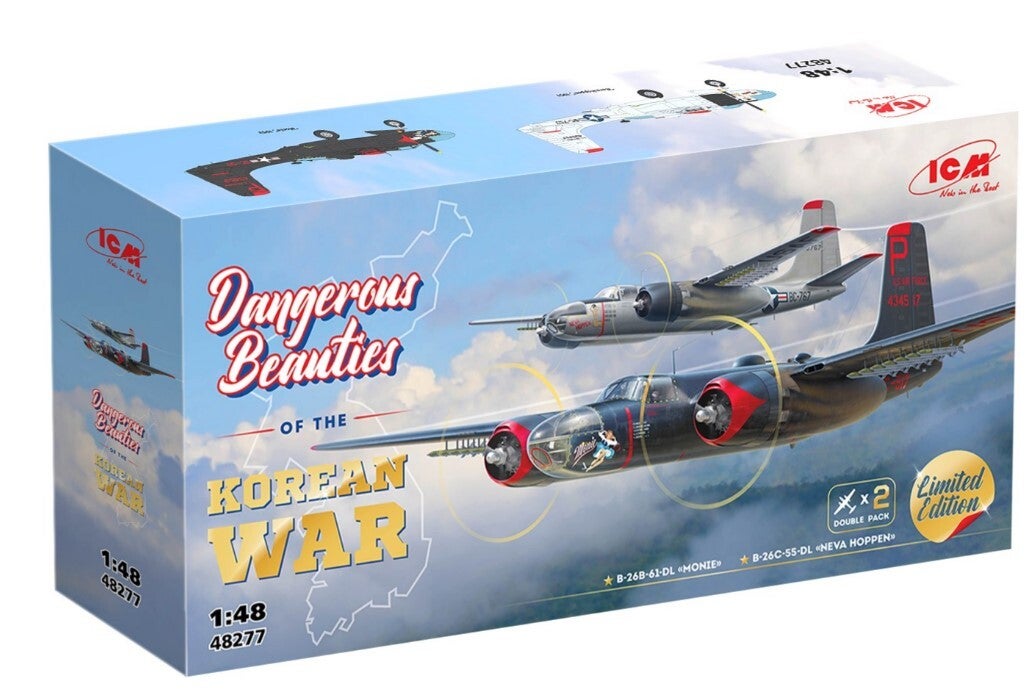
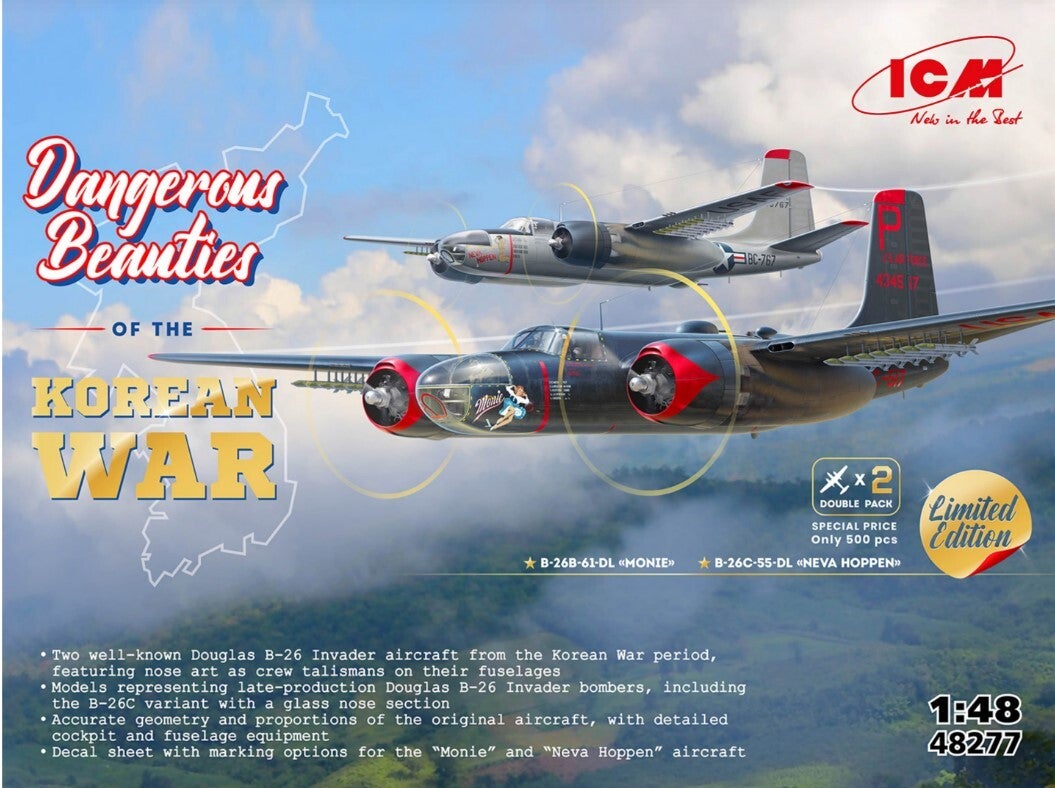
ICM : REF : 48277 : 1:48 : AIRCRAFT KIT : US : DOUGLAS : B-26 ("Dangerous Beauties") (LTD EDITION) (2) (KOREAN WAR ERA)
ICM REF :
48277
Manufacturer : ICM (Ukraine).
EAN : 4823044412303.
Scale-Model release Date : 18.09.2026.
Box Size : 410 x 260 x 55 mm.
Model Size : 410 x 260 x 55 mm.
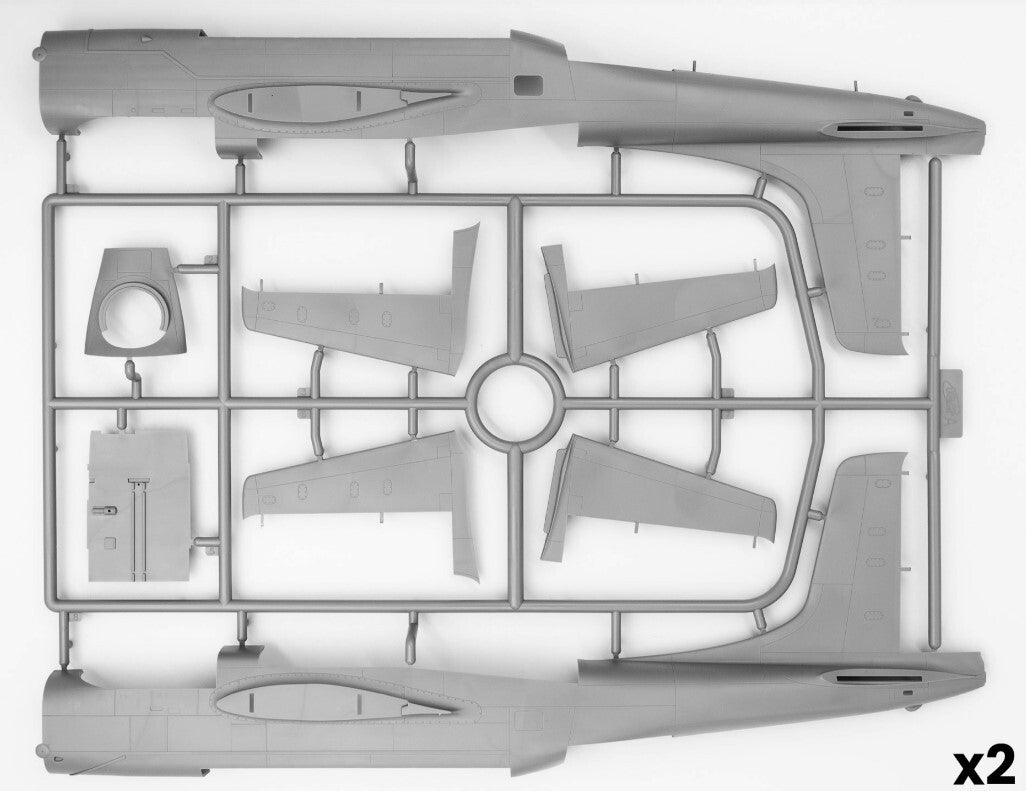
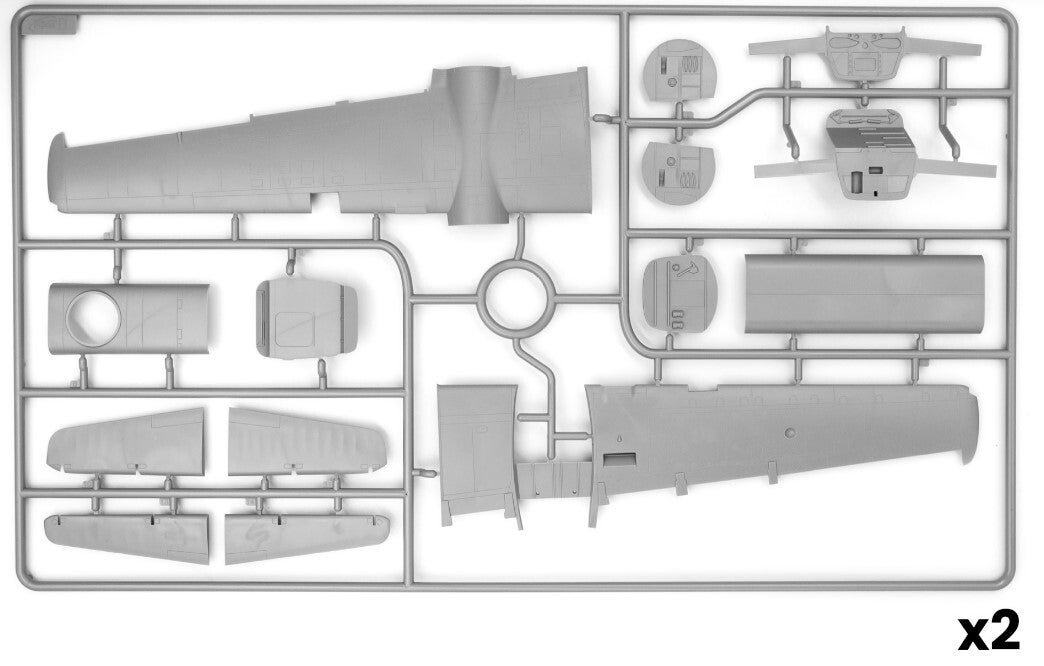
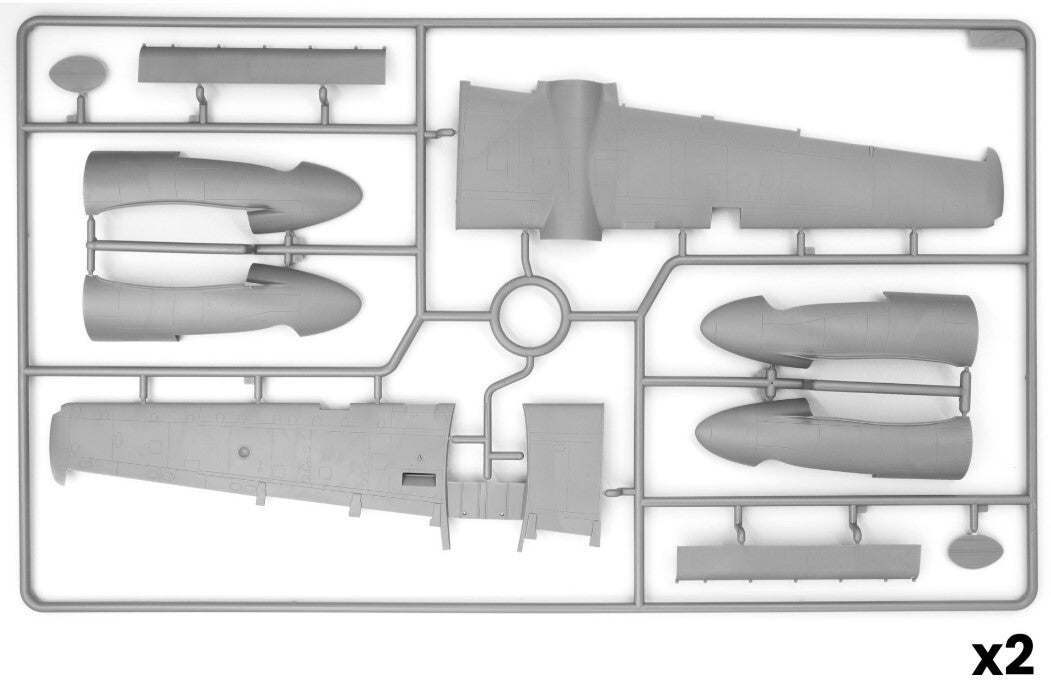
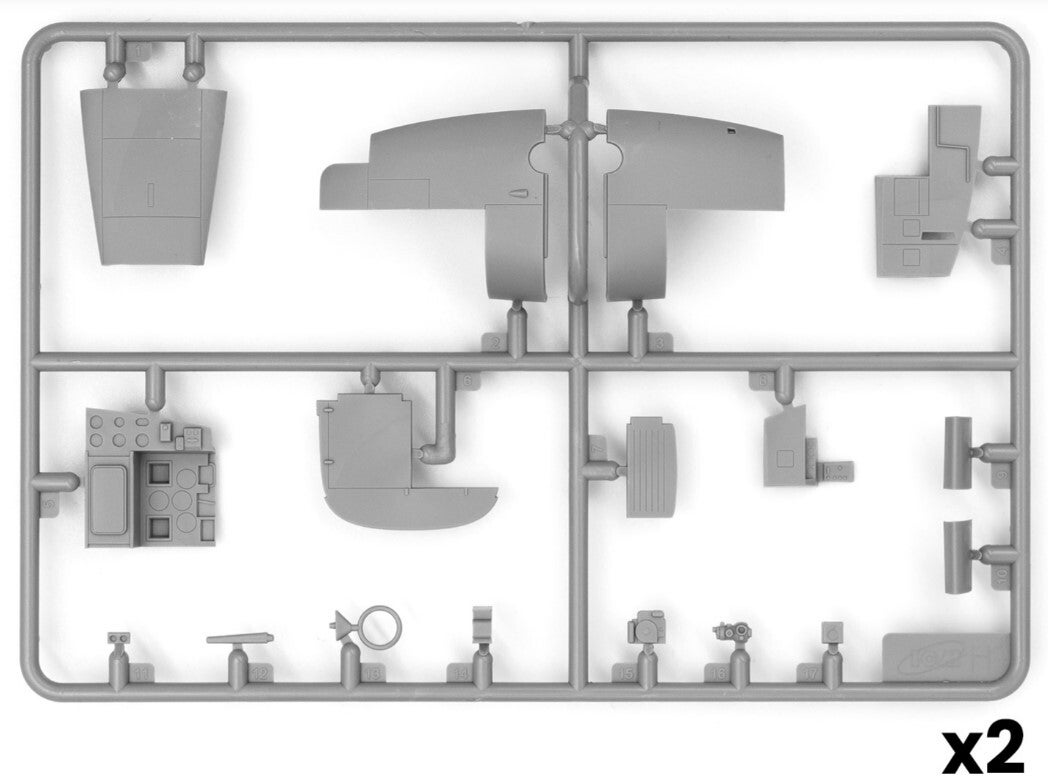
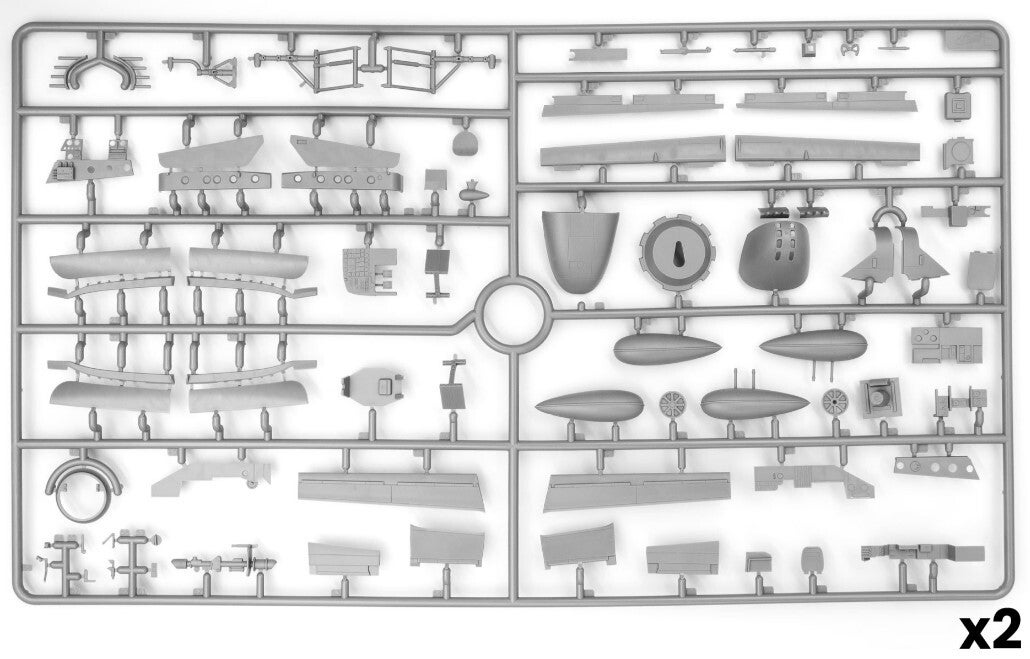
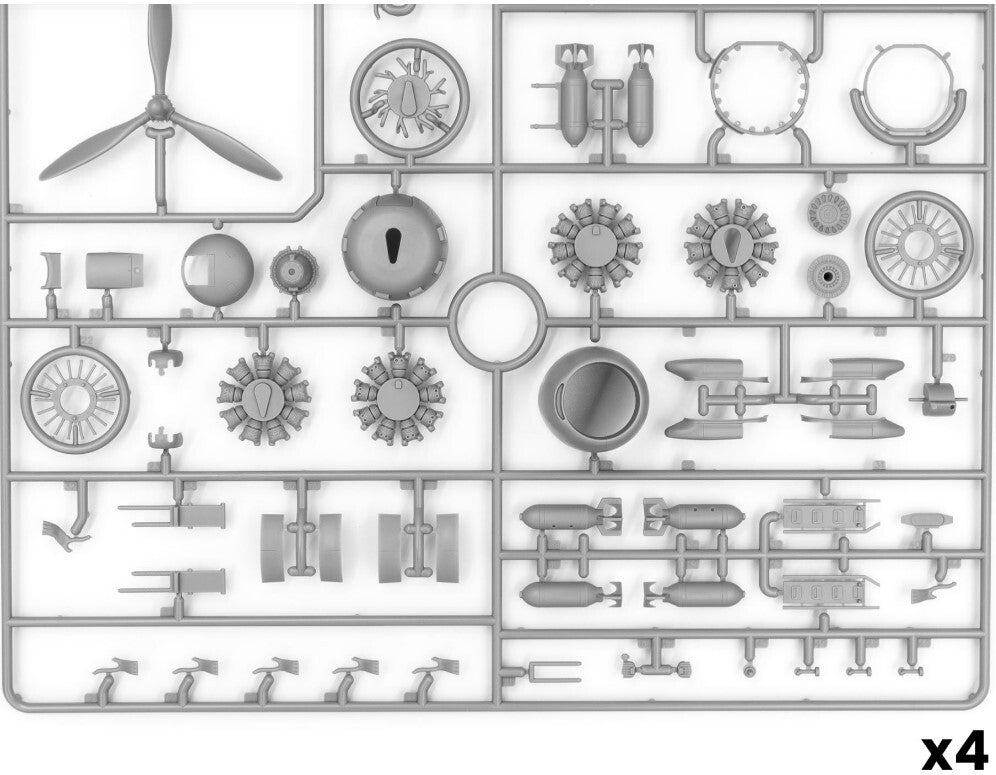
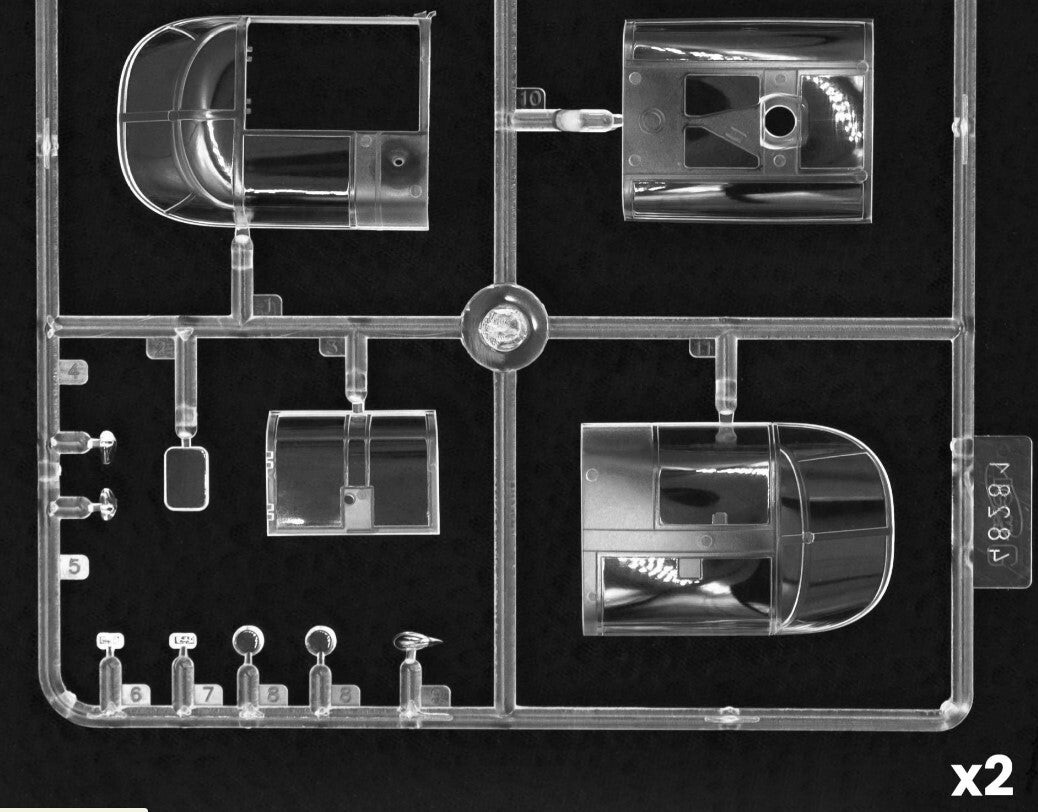
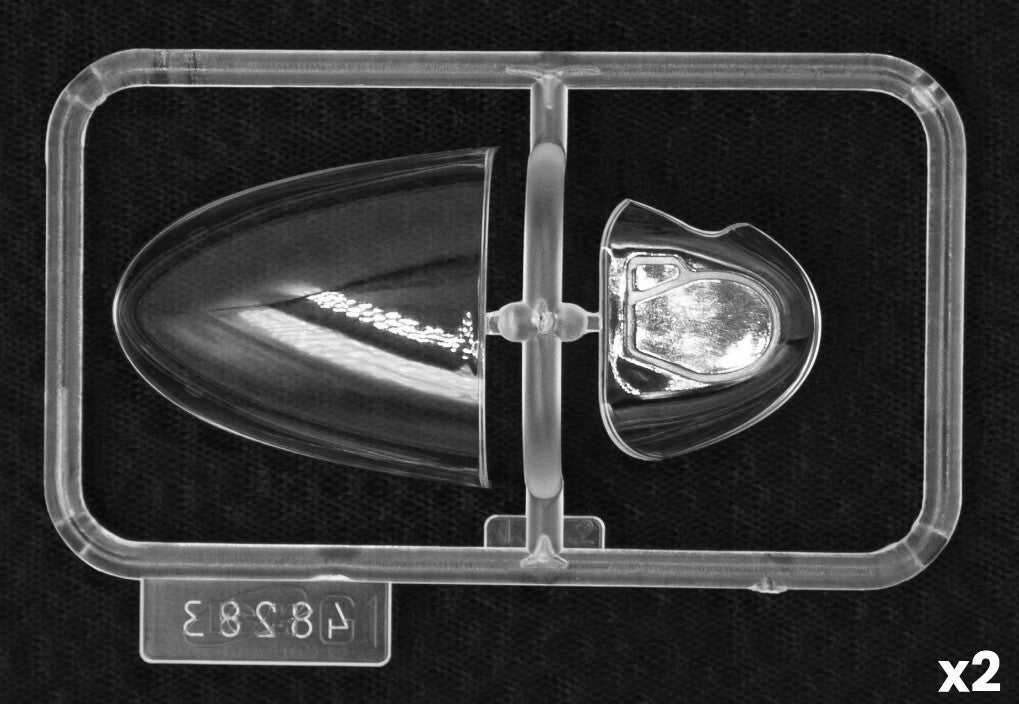
Number of details : 269+269.
Scale : 1:48
---
Models :
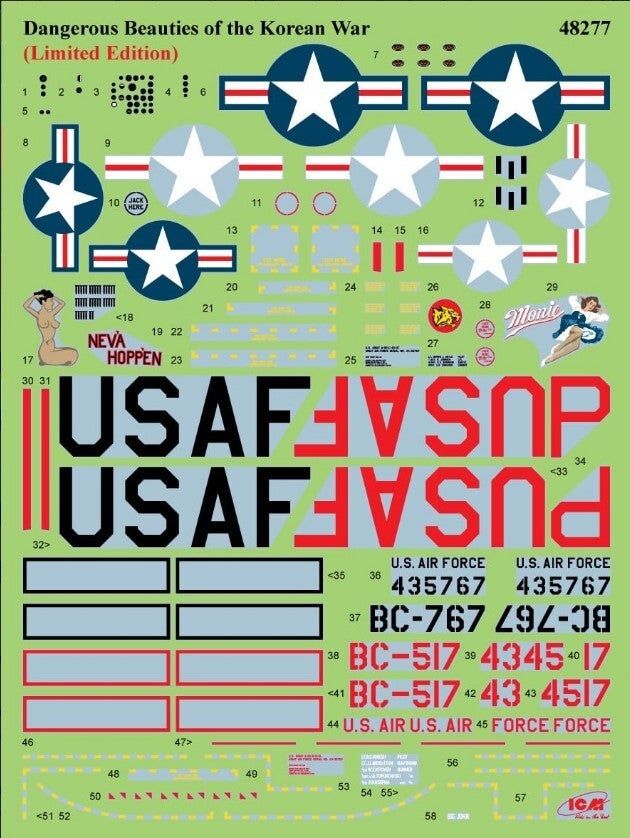
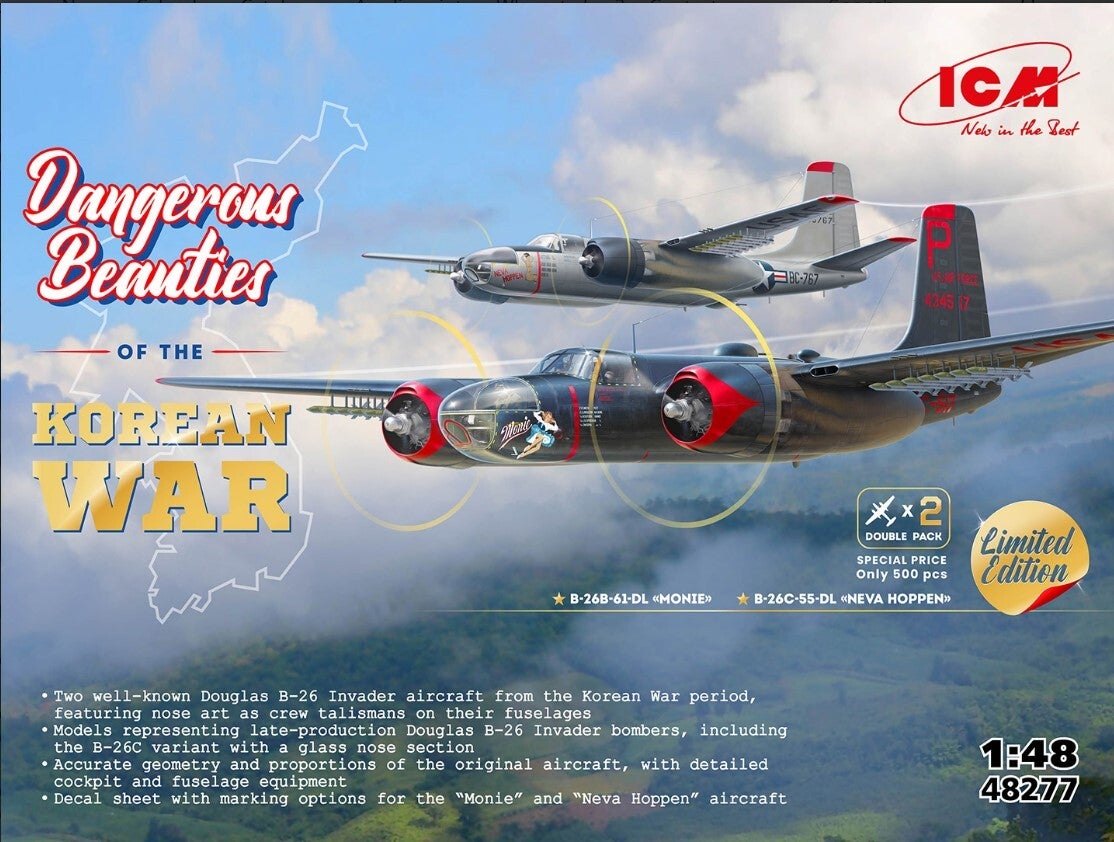
B-26B-21-DL "Monie".
B-26C-55-DL "Neva Hoppen".
---
Dangerous Beauties of the Korean War.
The Douglas B-26 Invader bomber, designated A-26 until 1948, entered U.S. service in 1944 and became one of the most capable American twin-engine bombers of the Second World War. During the Korean War (1950–1953), it remained in service as a strike aircraft, attacking enemy positions and lines of communication. Initially used for daylight raids, the B-26 later became the main aircraft for night operations against enemy convoys and trains. Its ability to carry up to three tons of bombs and its strong firepower made it particularly effective against transport routes.
A distinctive feature of many B-26 Invaders was their impressive nose art. Aircraft were often decorated with images of women, which served as personal talismans for the crews and helped maintain morale during combat missions. Two well-known aircraft were “Monie” (44-34517) of the 37th Squadron, 17th Group, flown by Lieutenant R. C. Mikesh, and the B-26C “Neva Hoppen” (44-35767) of the 452nd Group. Sergeant Lee M. Adams, who flew his first combat mission as an observer aboard “Neva Hoppen”, later described the intense experience of sitting in the glass nose section under heavy anti-aircraft fire.
The B-26 Invader served throughout the Korean War, carrying out both the first and the last bombing missions of the conflict.
---
Les beautés dangereuses de la guerre de Corée.
Le bombardier Douglas B-26 Invader — désigné A-26 jusqu'en 1948 — est entré en service au sein de l'armée américaine en 1944, s'imposant comme l'un des bimoteurs de bombardement les plus performants des États-Unis durant la Seconde Guerre mondiale. Pendant la guerre de Corée (1950-1953), il est resté en service en tant qu'appareil d'attaque, frappant les positions et les lignes de communication ennemies. D'abord utilisé pour des raids diurnes, le B-26 est devenu par la suite l'avion principal des opérations nocturnes contre les convois et les trains ennemis. Sa capacité à emporter jusqu'à trois tonnes de bombes, alliée à une puissance de feu considérable, le rendait particulièrement redoutable contre les axes de transport.
Une caractéristique marquante de nombreux B-26 Invader résidait dans les décorations spectaculaires ornant leur nez (« nose art »). Ces appareils étaient souvent décorés d'images féminines, qui servaient de talismans personnels aux équipages et contribuaient à soutenir le moral lors des missions de combat. Deux appareils sont restés célèbres : le « Monie » (44-34517) du 37e escadron (17e groupe), piloté par le lieutenant R. C. Mikesh, et le B-26C « Neva Hoppen » (44-35767) du 452e groupe. Le sergent Lee M. Adams, qui a effectué sa première mission de combat en tant qu'observateur à bord du « Neva Hoppen », a par la suite décrit l'expérience intense vécue depuis le nez vitré de l'appareil, sous un feu antiaérien nourri.
Le B-26 Invader a servi tout au long de la guerre de Corée, accomplissant aussi bien la première que la dernière mission de bombardement du conflit.
---