DRAMi : REF : 6259 : 1:35 : German : Pz.Kpfw.I Ausf.B 15cm s.IG.33 (Sf) auf (Beta Version with Magic Track)
DRAMi (PREVIOUSLY DRAGON) :
6259
Manufacturer :
DRAMi.
GTIN : 6978736091170.
Scale :
1:35
---
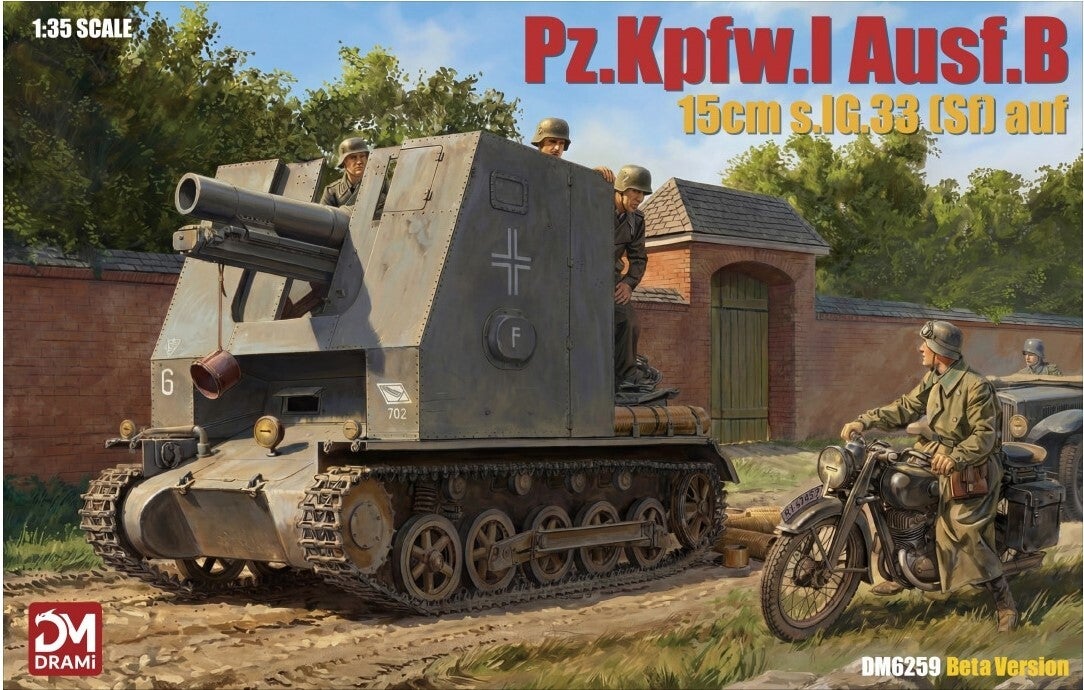
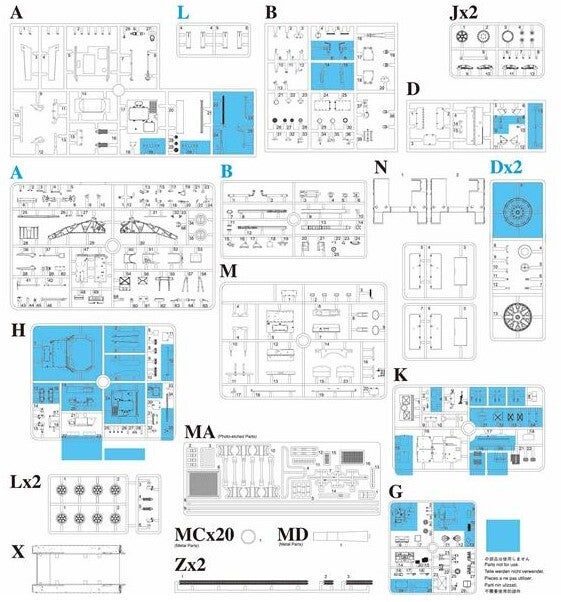
Plastic model kit for building a 15cm s.IG.33(Sf) on Pz.Kpfw.I Ausf.B "Bison I"
Scale: 1:35.
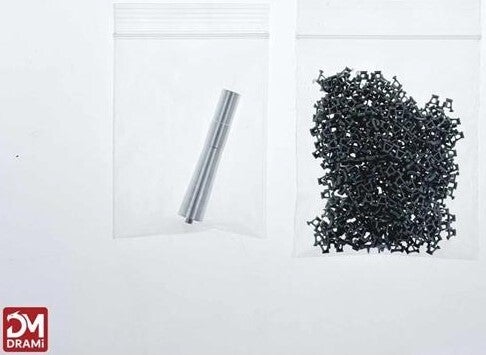
Aluminum gun barrel.
Individual-link tracks.
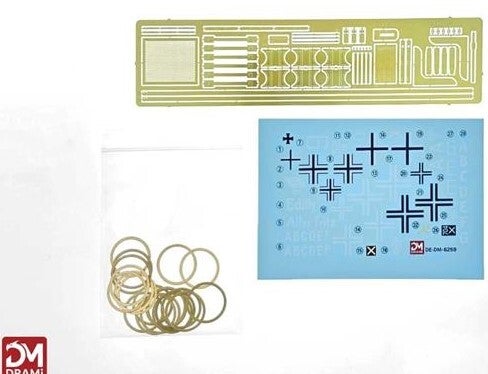
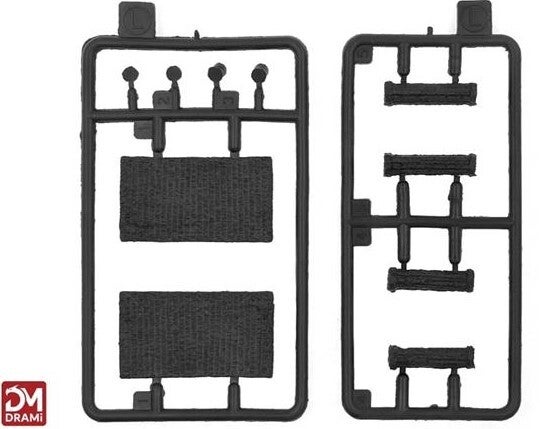
Includes vinyl and photo-etched parts.
Unassembled, unpainted.
Paint and glue not included.
With its thin armor and light armament - consisting of only two machine guns - the Pz.Kpfw.I was already obsolete as a tank by the start of the Second World War in September 1939. Nevertheless, it was still deployed during the early stages of the conflict.
Perhaps its greatest contribution to the German war effort was serving as the basis for a wide range of specialized vehicle conversions, including self-propelled artillery. It was recognized early on that mobile artillery could provide invaluable fire support to armored units. Consequently, a 15cm s.IG.33 infantry gun was mounted on a Pz.Kpfw.I Ausf.B chassis, creating the vehicle known as the s.IG.33 (Sf) on Pz.Kpfw.I Ausf.B. The gun was housed within a tall, box-like superstructure; however, the additional weight placed an excessive strain on the Panzer I chassis. The armor shield was only 10mm thick, offering protection solely from the front and sides, and there was no space for carrying spare ammunition. Ultimately, this ungainly and top-heavy artillery vehicle was not a great success; only 38 units were converted by Alkett in February 1940.
These vehicles saw service during the Battle of France and beyond, although as the war progressed, the 15cm s.IG.33 gun was subsequently mounted on alternative chassis.
---
Maquette en plastique à assembler : 15cm s.IG.33(Sf) sur châssis Pz.Kpfw.I Ausf.B (« Bison I »).
Échelle : 1/35.
Canon en aluminium.
Chenilles à maillons individuels.
Inclut des pièces en vinyle et des éléments en photodécoupe.
À assembler et à peindre.
Peinture et colle non incluses.
Avec son blindage mince et son armement léger — limité à deux mitrailleuses —, le Pz.Kpfw.I était déjà obsolète en tant que char de combat au début de la Seconde Guerre mondiale, en septembre 1939. Il fut néanmoins déployé durant les premières phases du conflit.
Sa contribution la plus notable à l'effort de guerre allemand fut sans doute de servir de base à diverses conversions, notamment en tant que pièce d'artillerie automotrice. Il fut rapidement compris qu'une artillerie mobile pouvait offrir un soutien-feu précieux aux unités blindées. C'est ainsi qu'un canon d'infanterie de 15 cm s.IG.33 fut monté sur un châssis de Pz.Kpfw.I Ausf.B, donnant naissance au véhicule désigné « s.IG.33 (Sf) sur Pz.Kpfw.I Ausf.B ». La pièce d'artillerie était installée au sein d'une superstructure élevée en forme de caisson ; toutefois, ce poids supplémentaire imposait une contrainte excessive au châssis du Panzer I. Le blindage, d'une épaisseur de seulement 10 mm, n'offrait une protection que sur l'avant et les flancs, et aucun espace n'était prévu pour transporter des munitions de réserve. En fin de compte, cet engin, peu maniable et doté d'un centre de gravité trop élevé, ne connut pas un grand succès ; seuls 38 exemplaires furent convertis par Alkett en février 1940.
Ces véhicules furent engagés durant la bataille de France et au-delà ; cependant, au fil du conflit, le canon de 15 cm s.IG.33 fut par la suite monté sur d'autres types de châssis.
---