ICM : REF : 35722 : 1:35 : German (Empire) : Infantry in Armor (4 Fig.) (WWI)
ICM REF :
35722
Manufacter : ICM (UKRAINE).
EAN : 4823044409044.
Scale-Model release Date : 17.07.2022.
Box Size : 247 x 183 x 33 mm.
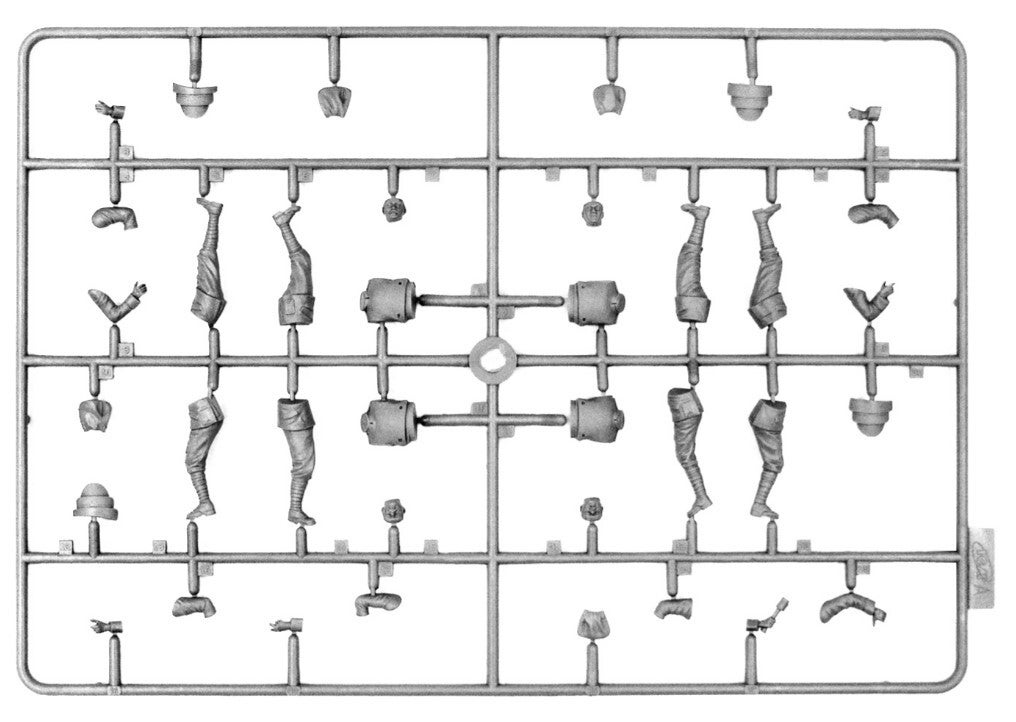
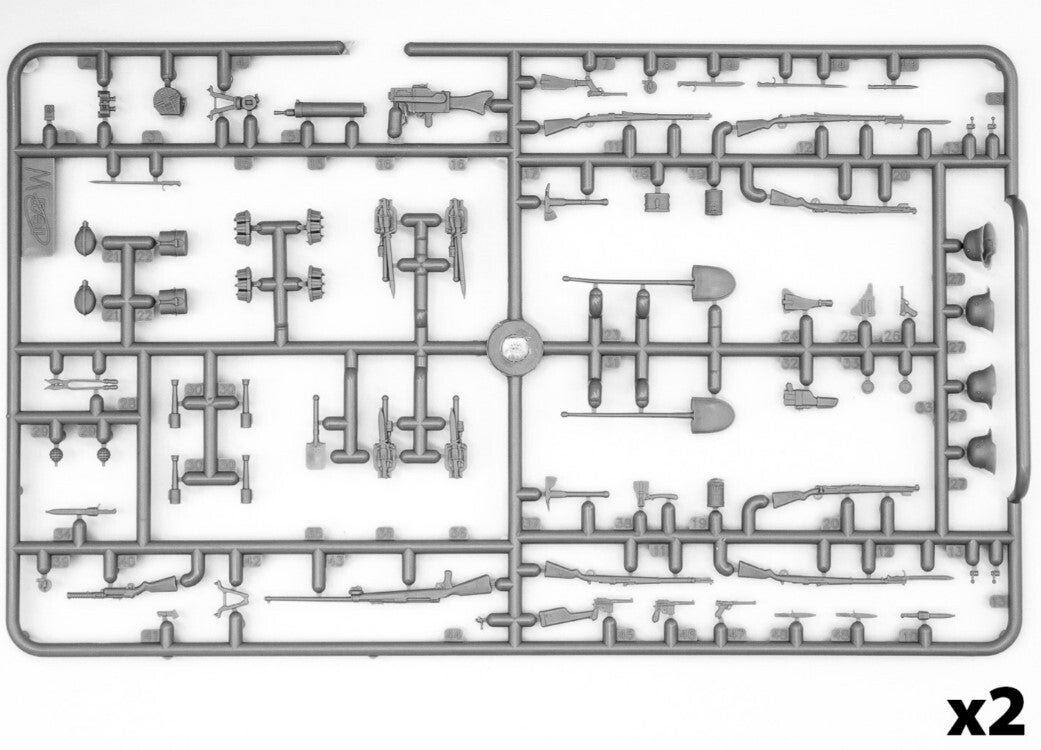
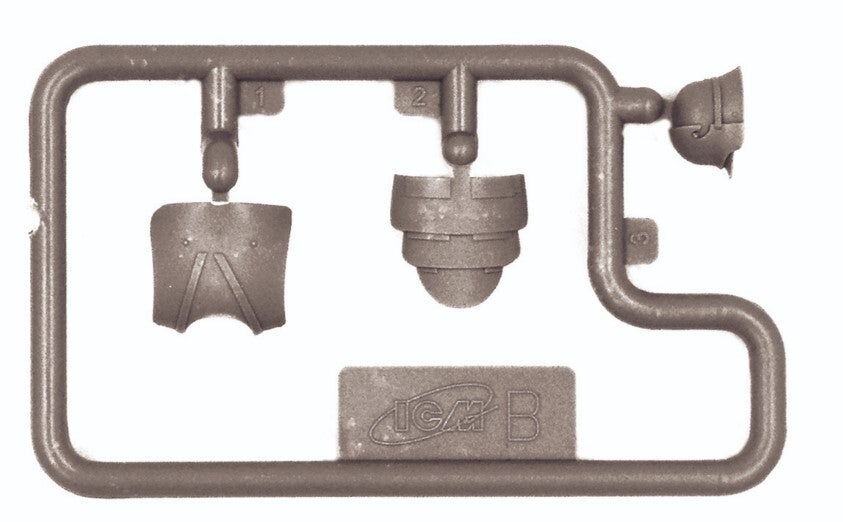
Number of details : 49.
Scale : 1:35
---
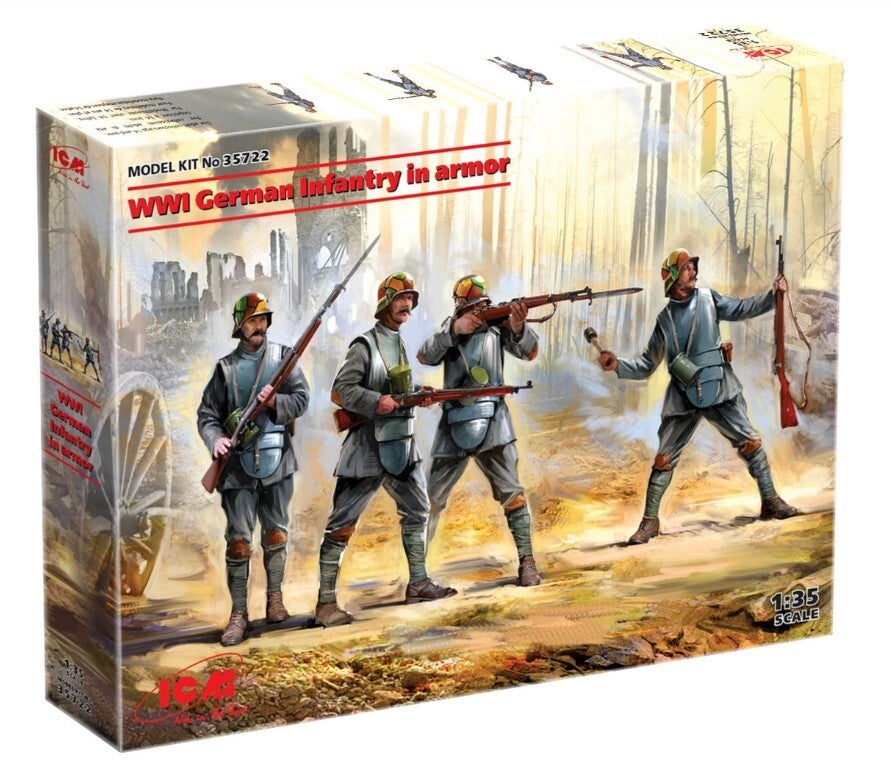
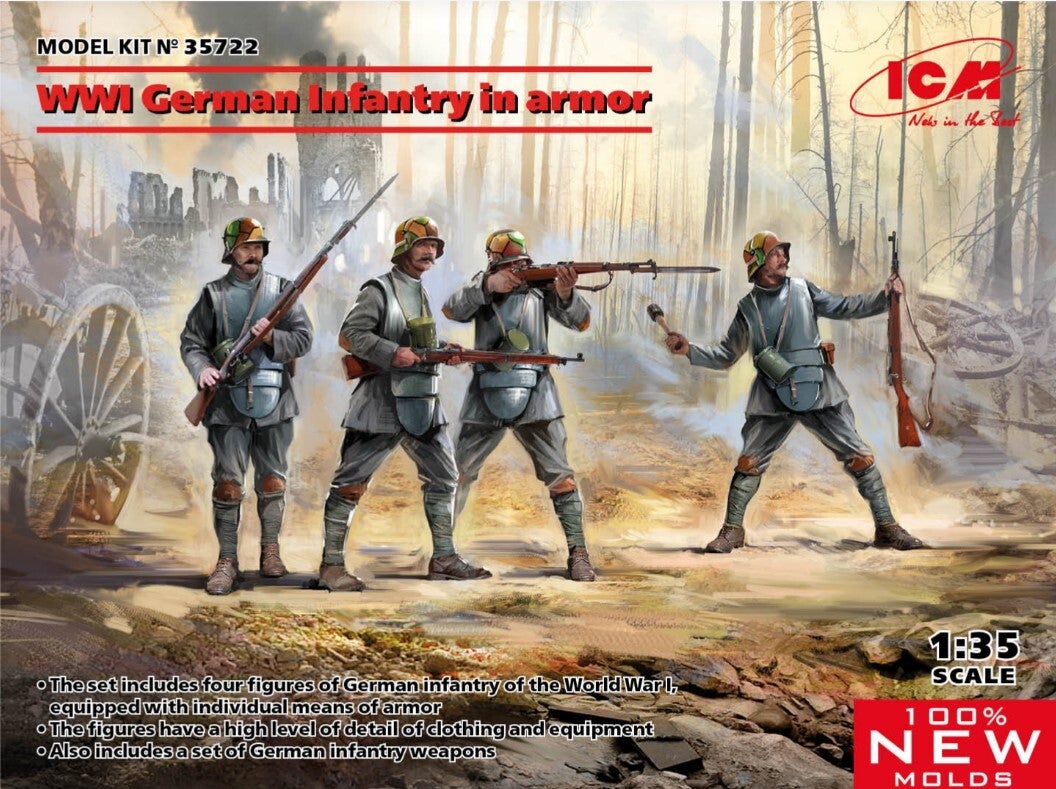
WWI German Infantry in аrmor.
During the First World War, the positional nature of hostilities and the high saturation of combat formations with machine guns and rapid-fire artillery forced them to look for ways to protect soldiers individually. In the German army, shells made of multicomponent steel became such protection. The release of this armor, also known as the Grabenpanzer, began in the spring of 1916. The weight of these shells reached about 10 kg, and its armor thickness was about 3 mm. The structure consisted of four plates connected by straps, which in turn gave the armor some mobility. Grabenpanzer was quite effective in protecting against pistol bullets and projectile fragments, and in part against bullets fired from rifles. The production of this armor continued until the end of the war, and the number of kits released, according to some estimates, reached about 500,000 copies.
---
Infanterie allemande en armure pendant la Première Guerre mondiale.
Durant la Première Guerre mondiale, la nature positionnelle des hostilités et la forte saturation des formations de combat par les mitrailleuses et l'artillerie à tir rapide ont contraint les armées à rechercher des moyens de protéger individuellement leurs soldats. Dans l'armée allemande, les obus en acier multicomposant sont devenus la solution. La production de ce blindage, également connu sous le nom de Grabenpanzer, a débuté au printemps 1916. Le poids de ces obus atteignait environ 10 kg et leur épaisseur était d'environ 3 mm. La structure était composée de quatre plaques reliées par des sangles, ce qui conférait au blindage une certaine mobilité. Le Grabenpanzer était assez efficace pour protéger contre les balles de pistolet et les éclats de projectiles, et partiellement contre les balles de fusil. La production de ce blindage s'est poursuivie jusqu'à la fin de la guerre et, selon certaines estimations, environ 500 000 exemplaires ont été produits.
---