RODEN : REF : 059 : 1:72 : AIRCRAFT KIT : FRANCE : Nieuport 24 (WWI)
RODEN REF :
059
Manufacturer :
RODEN MODEL (Ukraine).
GTIN : 4823017701182.
Scale :
1:72
---
History :
Aircraft in WWI often became obsolete, though having barely taken to the air. The fast pace of invention in aircraft design often led to nothing, and some ideas and developments became outmoded, which a year or two before had been considered as progressive and innovative. However, some design approaches, which might be considered simple in many respects, ensured not only great success for certain aircraft, but also a kind of rebirth in later types and variants.
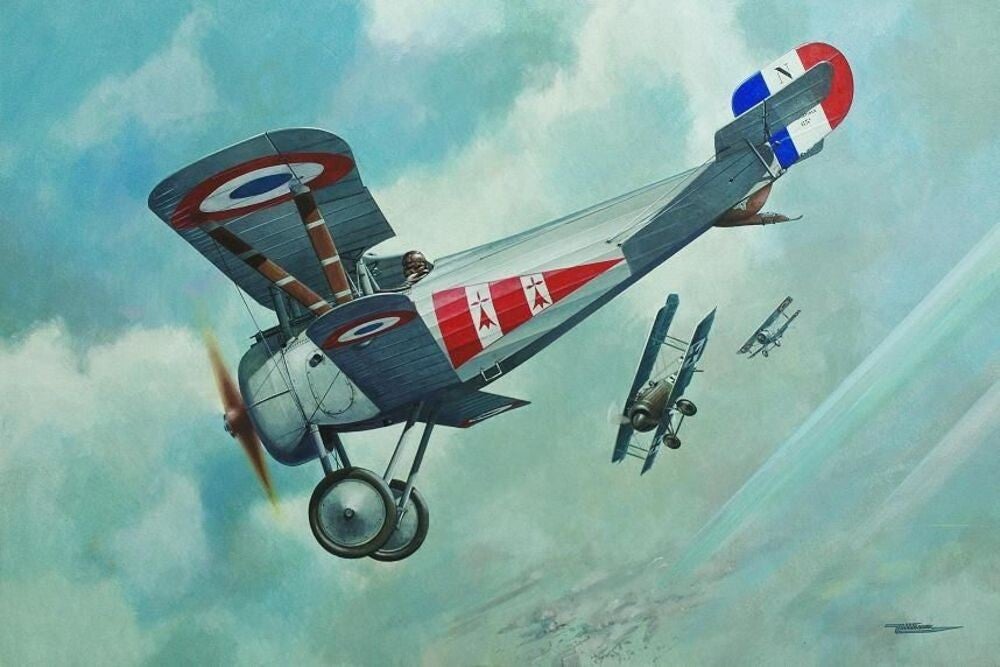
One such aircraft was the Nieuport 17, which can undoubtedly be named among the ten most famous types of the Great War. Built in 1916 it became a real salvation for the Allies' air arms and was built in large numbers. Later there appeared the Nieuport 17bis with a modified fuselage, and in the spring of 1917 the designer Gustav Delage developed
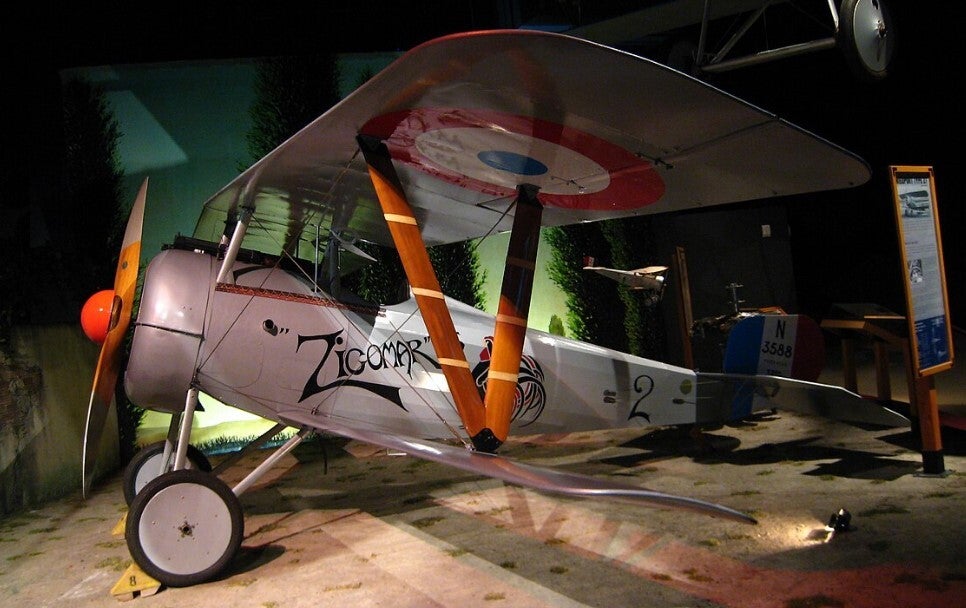
the next new version of the fighter, the Nieuport 24. The fuselage gained a more rounded cross section in comparison with its predecessor and the wings were rounded at their tips. The horizontal and vertical tail surfaces were also very different from previous models, having a more rounded outline. A powerful 130-hp Le Rh?ne engine was installed in the plane.
However, in operational use it was quickly apparent that despite the aircraft's improved flight characteristics, the plane had significant problems in control, because of faults in the tail assembly. Although it was elegant, testing proved it to be too fragile. The designers were persuaded to give up the 'elegance' of the aircraft in favor of the old but time-proven and battle-tested tail design, the same as in the Nieuport 17. This machine could not be considered a brand new type, and so it was designated the Nieuport 24bis. This modification process took until the summer of 1917, and then when the 24bis started to arrive in the combat units, it was found that its predecessor the Nieuport 17 had been completely dislodged by SPAD fighters. For the Nieuport 24bis a place was found mainly in training units, but many machines did appear at the front. The famous French ace Charles Nungesser flew a Nieuport 24bis in combat.
At this time the United States, which had just entered WWI, started organising their own Air Force from scratch, and they bought from the Allies all available types of aircraft to make up the complement of their air arm. France sold at least 140 Nieuport 24bis to the U.S., about a hundred Nieuport 24, and almost three hundred of the Nieuport 27. None of these several hundred planes saw combat, their fate until the end of the war limited to the training of future pilots. After the war many Nieuports were sold to private owners, while all other machines were sent for scrap.
Apart from France and the U.S., the Nieuport 24, 24bis and 27 were used to a limited degree by the Royal Air Force of Great Britain. A small amount were sent to Russia where they survived the October Revolution of 1917, and appeared in the ranks of the White as well as the Red Army. Several machines were used by the Air Forces of Poland, Japan and Romania.
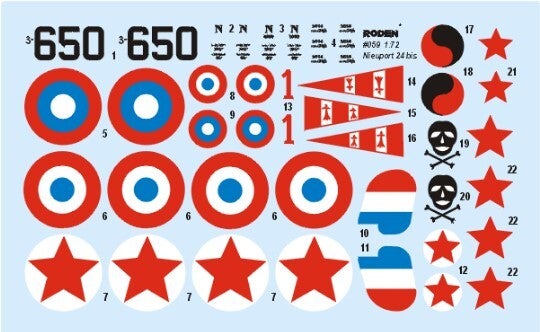
Nieuport 24c1bis, (s/n and pilot unknown), Escadrille N.97, Aviation Militare, 1917.
Nieuport 24bis, (serial and pilot unknown), Soviet Army, Slavnoe's Air Group, 13 Fighter Detachment, Priyamino airfield (now in Belorussia), May 1920.
Nieuport 24bis, no. N3263, Unknown Training Squadron, USAS, France, late 1917.
---
Histoire :
Durant la Première Guerre mondiale, les avions devenaient souvent obsolètes, parfois peu après leur entrée en service. Le rythme effréné des innovations en matière de conception aéronautique rendait rapidement caduques des idées ou des développements qui, un an ou deux plus tôt, étaient pourtant considérés comme avant-gardistes. Néanmoins, certaines approches de conception — parfois simples à bien des égards — ont non seulement assuré un immense succès à certains appareils, mais ont également permis une forme de renaissance à travers des modèles et des variantes ultérieurs.
Le Nieuport 17 est l'un de ces appareils ; il figure sans conteste parmi les dix types d'avions les plus célèbres de la Grande Guerre. Construit en 1916, il constitua un véritable salut pour les forces aériennes alliées et fut produit en grand nombre. Par la suite apparut le Nieuport 17bis, doté d'un fuselage modifié ; puis, au printemps 1917, l'ingénieur Gustav Delage développa
une nouvelle version de ce chasseur : le Nieuport 24. Son fuselage présentait une section plus arrondie que celle de son prédécesseur, et ses ailes arboraient des extrémités arrondies. L'empennage — tant horizontal que vertical — différait également nettement des modèles précédents, adoptant des lignes plus courbes. L'appareil était propulsé par un puissant moteur Le Rhône de 130 ch.
Toutefois, en conditions opérationnelles, il apparut rapidement que, malgré des caractéristiques de vol améliorées, l'avion souffrait de problèmes de pilotage majeurs, dus à des défauts au niveau de l'empennage. Bien qu'élégante, cette conception s'avéra, lors des essais, trop fragile. Les concepteurs durent renoncer à cette « élégance » au profit d'une configuration d'empennage plus ancienne, mais éprouvée et validée au combat : celle du Nieuport 17. Comme cet appareil ne pouvait être considéré comme un modèle entièrement nouveau, il fut désigné « Nieuport 24bis ». Ce processus de modification se poursuivit jusqu'à l'été 1917 ; mais, au moment où le 24bis commença à rejoindre les unités combattantes, on constata que son prédécesseur, le Nieuport 17, avait déjà été totalement supplanté par les chasseurs SPAD. Le Nieuport 24bis fut principalement affecté aux unités d'entraînement, bien que de nombreux exemplaires aient également été déployés au front. Le célèbre as français Charles Nungesser a notamment piloté un Nieuport 24bis au combat.
À cette époque, les États-Unis, qui venaient d'entrer dans la Première Guerre mondiale, entreprirent de constituer leur propre force aérienne en partant de zéro ; ils achetèrent aux Alliés tous les types d'appareils disponibles pour équiper leur aviation. La France vendit aux États-Unis au moins 140 Nieuport 24bis, une centaine de Nieuport 24 et près de 300 Nieuport 27. Aucun de ces appareils ne fut engagé au combat, leur rôle se limitant, jusqu'à la fin du conflit, à la formation des futurs pilotes. Après la guerre, de nombreux Nieuport furent vendus à des propriétaires privés, tandis que les autres furent envoyés à la ferraille.
Outre la France et les États-Unis, les Nieuport 24, 24bis et 27 furent utilisés, dans une moindre mesure, par la Royal Air Force britannique. Quelques exemplaires furent envoyés en Russie, où ils survécurent à la Révolution d'Octobre 1917 et apparurent aussi bien dans les rangs de l'Armée blanche que dans ceux de l'Armée rouge. Plusieurs appareils furent également utilisés par les forces aériennes de la Pologne, du Japon et de la Roumanie.
Nieuport 24c1bis (numéro de série et pilote inconnus), escadrille N.97, Aviation militaire, 1917.
Nieuport 24bis (numéro de série et pilote inconnus), Armée soviétique, groupe aérien de Slavnoïe, 13e détachement de chasse, aérodrome de Priiamino (situé aujourd'hui en Biélorussie), mai 1920.
Nieuport 24bis, n° N3263, unité d'entraînement non identifiée, USAS (United States Air Service), France, fin 1917.
---
Sources : Roden Website.