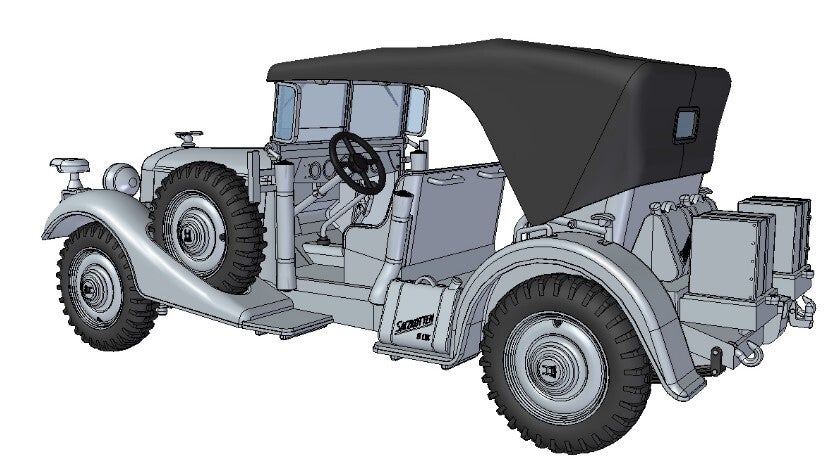
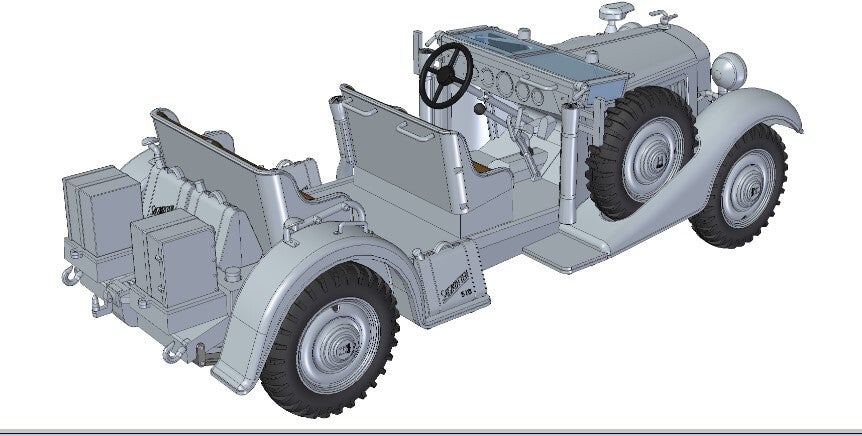
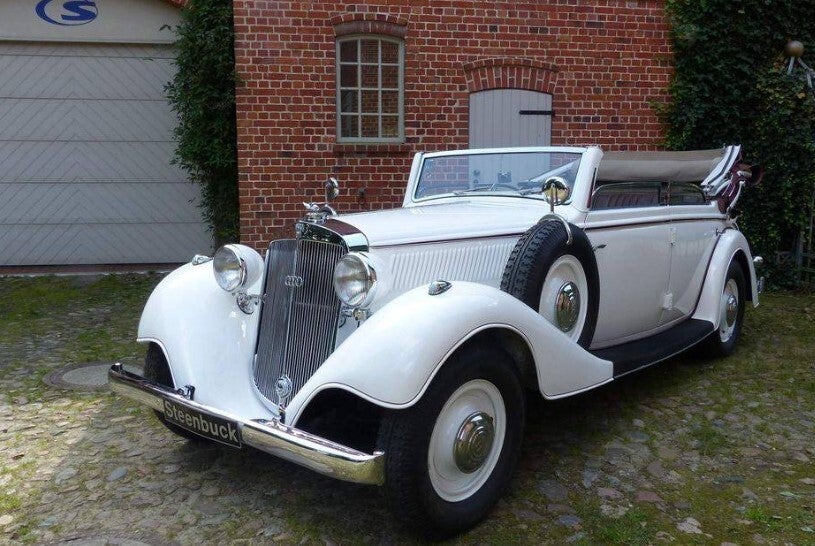
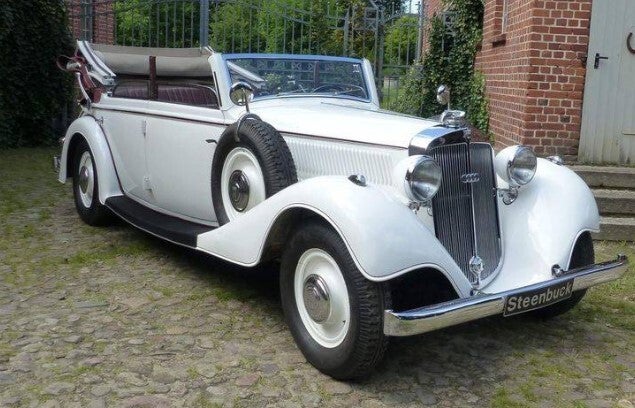
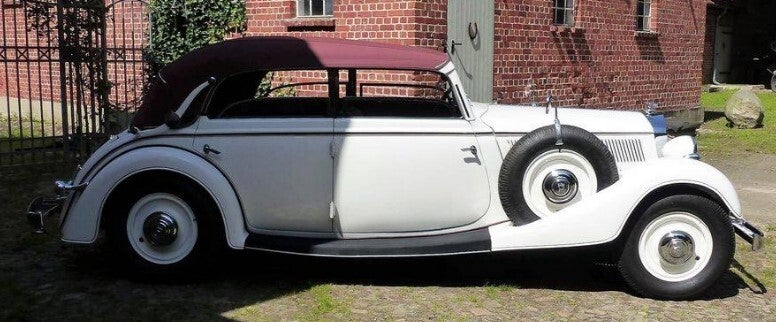
RODEN : REF : 825 : 1:35 : German Horch : V8 Type 830R (1934-1937)



RODEN REF :
825
Manufacter :
RODEN MODEL (Ukraine).
EAN : 4823017702622.
Scale :
1:35
---
More History :
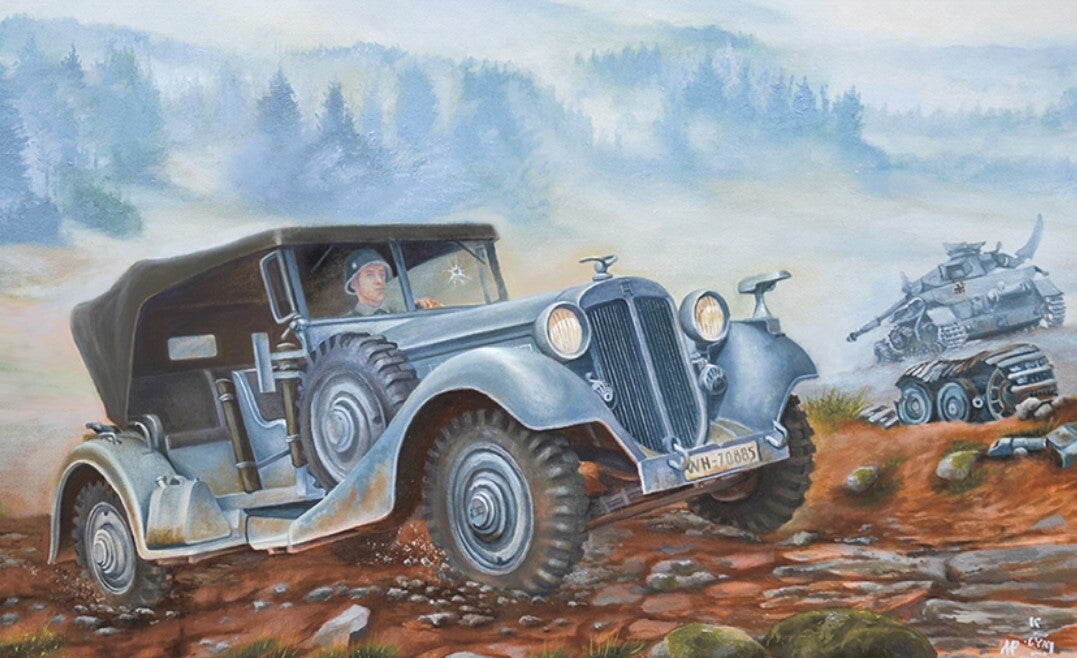
In the late 1920s, when Germany was still under the strict restrictions of the Versailles Treaty, which prohibited it from having a large army and heavy equipment, as well as combat aviation, the main efforts of the military leadership of the Reichswehr were directed to the improvement of the army's motor vehicle fleet. This applied to both military trucks and passenger cars, the main task of which, as always, was the transportation of officers. The main goal was the simplification of the design and its maximum unification with already available serial civilian models.
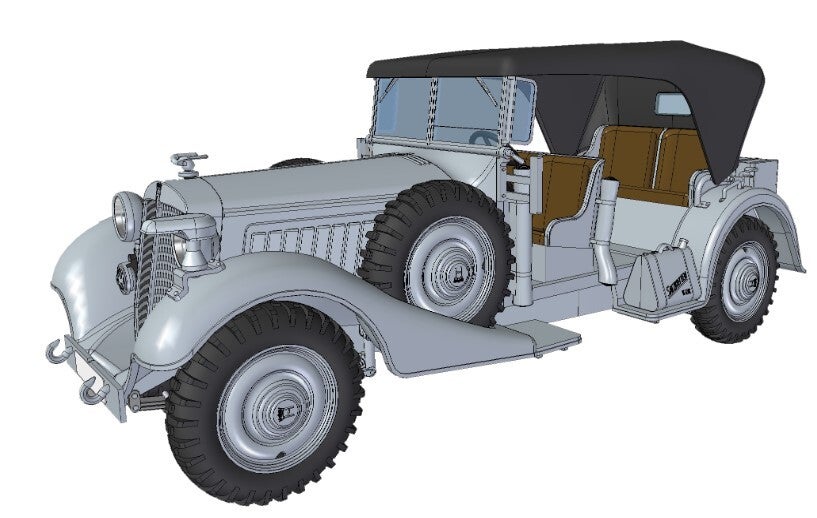
The Horch automobile company was founded back in 1909 by the engineer August Horch, who had previously worked for the founder of the industry Karl Benz. In 1932, together with three other manufacturers, it joined the AutoUnion concern, which quickly became one of the leaders of the automotive industry. Sensing the change in the policy of the new government of the country, Horch began to pay more attention to the development of the military direction. In 1933, after the appearance of the new civilian car Horch 830, work began on its military modification, Horch 830R (military index, Kfz.11). The developers, based on the requirements of the military, did not limit themselves to simply replacing the civilian body with a simplified military one.
The chassis was significantly strengthened, the track became wider, profiled rubber was installed on the slightly enlarged wheels to improve patency. It ended up being a typical simplified design with canvas scrolls instead of doors, rifle mounts and greatly simplified seating for four. A hook for towing 37 mm light guns was mounted in the rear part of the frame. In 1934, they managed to produce 6 units of this car, but the main orders were ahead.
After the departure of the authorities from compliance with the Versailles agreements, the newly created Wehrmacht needed all kinds of weapons in an insane amount, and at that moment Horch was the only one who could offer a light army vehicle in significant quantities. From 1935 to 1937, another 3,972 units of the Horch 830R were produced, until more modern models appeared.
Immediately after the beginning of the Second World War, the Horch 830R, together with other types of light army vehicles, were widely used during the occupation of European countries, but in 1941, after the invasion of the boundless spaces of the Soviet Union, where there was no road infrastructure at all, for them, as well as hard times have begun for many other types of machines. Drive only on the rear axle significantly limited their capabilities, which immediately affected the number of losses. Already in 1943, their number at the front was insignificant, and in the units on the front lines they had long since been absent at all.
The Horch 830R is rightfully considered the first of the Kubelwagen type machines - the most simplified civilian models for the needs of the army. Each of the countries had cars of a similar purpose, and each country was looking for its own way to create the most convenient army car. And in this sense, the Horch 830R can be considered a classic of military automobile construction.
---
Plus d'Histoire :
À la fin des années 1920, alors que l'Allemagne était encore soumise aux strictes restrictions du traité de Versailles, qui lui interdisait de disposer d'une armée importante, d'équipements lourds et d'une aviation de combat, les principaux efforts de l'état-major de la Reichswehr furent consacrés à l'amélioration du parc automobile militaire. Cela concernait aussi bien les camions militaires que les voitures particulières, dont la fonction première restait, comme toujours, le transport des officiers. L'objectif principal était de simplifier la conception et de l'harmoniser au maximum avec les modèles civils de série déjà disponibles.
La société automobile Horch fut fondée en 1909 par l'ingénieur August Horch, qui avait auparavant travaillé pour Karl Benz, le fondateur de l'industrie. En 1932, elle rejoignit, avec trois autres constructeurs, le groupe AutoUnion, qui devint rapidement l'un des leaders de l'industrie automobile. Pressentant le changement de politique du nouveau gouvernement, Horch commença à se concentrer davantage sur le développement de son secteur militaire. En 1933, après l'apparition de la nouvelle voiture civile Horch 830, les travaux commencèrent sur sa version militaire, la Horch 830R (désignation militaire : Kfz.11). Les concepteurs, se basant sur les exigences militaires, ne se contentèrent pas de remplacer la carrosserie civile par une version militaire simplifiée.
Le châssis fut considérablement renforcé, la voie élargie et des pneus profilés furent installés sur les roues légèrement agrandies pour améliorer la motricité. Le résultat fut un modèle simplifié typique, avec des portes à volets en toile, des supports pour fusils et une configuration de sièges quatre places fortement réduite. Un crochet d'attelage pour canons légers de 37 mm fut monté à l'arrière du châssis. En 1934, six exemplaires furent produits, mais les commandes principales restaient à venir.
Suite au non-respect des accords de Versailles par les autorités, la Wehrmacht, nouvellement créée, avait un besoin criant d'armements de toutes sortes, et Horch était alors le seul constructeur capable de fournir un véhicule militaire léger en quantité significative. De 1935 à 1937, 3 972 exemplaires supplémentaires du Horch 830R furent produits, avant l'apparition de modèles plus modernes.
Dès le début de la Seconde Guerre mondiale, le Horch 830R, ainsi que d'autres véhicules légers de l'armée, fut largement utilisé lors de l'occupation des pays européens. Cependant, en 1941, après l'invasion des vastes territoires de l'Union soviétique, dépourvus de toute infrastructure routière, ce type de véhicule, comme beaucoup d'autres, connut des difficultés. La transmission sur l'essieu arrière seulement limitait considérablement ses capacités, ce qui entraîna rapidement des pertes. Dès 1943, son nombre au front était devenu insignifiant, et il avait depuis longtemps complètement disparu des unités en première ligne.
Le Horch 830R est considéré à juste titre comme le premier véhicule de type Kübelwagen, une version simplifiée du modèle civil adaptée aux besoins de l'armée. Chaque pays disposait de véhicules destinés à un usage similaire et cherchait à concevoir le véhicule militaire le plus pratique possible. De ce point de vue, la Horch 830R peut être considérée comme un classique de la construction automobile militaire.
---
Sources : Roden Website.